The Intelligence Revolution and the Mandatory Restructuring of Marketing Agency Operating Models

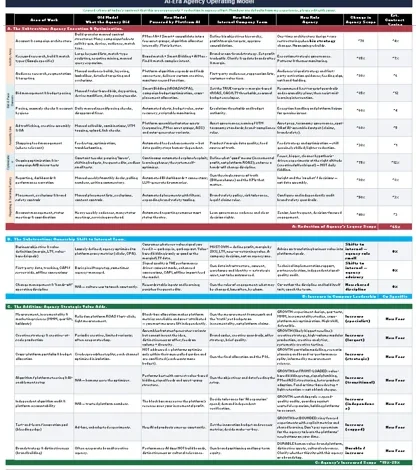
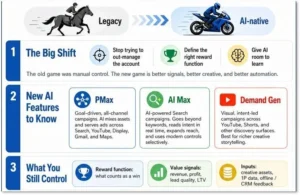
The global marketing landscape is currently undergoing a structural transformation driven by the rapid maturation of artificial intelligence and automation, forcing a comprehensive reassessment of how agencies—ranging from creative and media to performance and CRM—operate and bill their clients. This "intelligence revolution" has moved beyond theoretical disruption into a practical mandate for change, signaling the end of traditional manual-labor-intensive service models. As platforms like Google and Meta integrate increasingly sophisticated AI tools, the traditional agency "Statement of Work" (SOW) is becoming obsolete, necessitating a shift from paying for activity to paying for outcomes and high-level strategic judgment.
The Economic Realignment: Savings and Reinvestments
The most immediate impact of this technological shift is a significant recalibration of agency fees. Industry frameworks now suggest that by July 2026, the reduction in manual work currently listed in standard agency contracts will translate into a 25% to 75% savings in traditional fees. This reduction applies across the spectrum of agency types, including media, creative, performance, brand, measurement, and lifecycle marketing.
However, this is not merely a cost-cutting exercise. While old-world manual tasks are being automated, new high-value work streams are emerging. These new requirements, which are currently underpowered or entirely unlisted in most agency contracts, are expected to command a 15% to 25% increase in fees for agencies capable of delivering them. The net result for brands is a model that simultaneously saves money on execution while delivering materially better business outcomes through deep, indispensable partnerships.
In performance marketing specifically, contracts are expected to shrink by 75% to 80% regarding execution-based fees. Conversely, brand marketing is seeing a resurgence in strategic importance. While the execution of brand assets will also see fee reductions of 25% to 40% due to automation, the overall budget for brand strategy is likely to increase as companies seek to differentiate themselves in an AI-saturated market.
Chronology of the Shift: From Manual Labor to Agentic AI
The transition toward an AI-led marketing ecosystem has followed a distinct timeline, moving from basic automation to the current era of "Agentic AI."
- The Manual Era (Pre-2020): Agencies focused on "renting" execution armies. Value was derived from the number of hours spent on keyword research, audience segmentation, manual bidding, and campaign trafficking.
- The Automation Inception (2021–2023): Platforms introduced automated features like Smart Bidding and basic responsive search ads. Many agencies resisted these changes to protect billable hours, often citing a need for "human control."
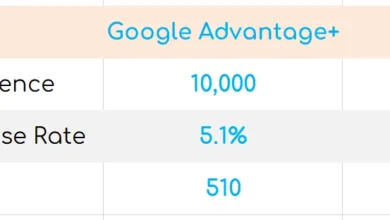
- The Intelligence Explosion (2024–Present): The introduction of Generative AI and comprehensive platform AI (such as Google’s Performance Max and Meta’s Advantage+) has moved the "levers" of marketing into the hands of algorithms.
- The July 2026 Milestone: This date represents the projected "tipping point" where the majority of global brands will have transitioned their contracts to reflect an AI-first operating model, eliminating the "execution army" model entirely.
The Flawed Incentive of "Percent of Media Spend"
A critical barrier to this transformation is the legacy compensation model where agency fees are calculated as a percentage of media spend. This structure creates a fundamental conflict of interest: it rewards the agency for spending more and touching the account more frequently, even when such actions are detrimental to AI performance.
In an AI-led environment, "over-touching" an account can sabotage the machine learning process. Every manual "rescue" or bid adjustment resets the algorithm’s learning cycle, leading to degraded performance. Consequently, a contract that rewards manual activity is essentially paying the agency to hinder the brand’s success. Industry experts are now calling for a shift toward "Percent of Outcome" or "Incremental Profit" models, which align agency incentives with the brand’s actual growth.
A New Three-Tiered Operating Model
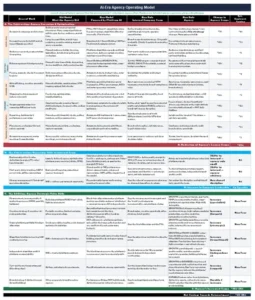
To navigate the 2026 landscape, the industry is moving toward a restructured fee architecture consisting of three primary components:
- Lean Base Retainer (40%–50% of total fees): Focused on governance, steering, and data engineering. This ensures the technical infrastructure is robust and the brand’s strategic guardrails are maintained.
- Project-Based Fees (30%–40% of total fees): Allocated for creative concepts, pre-testing, complex strategic analytics, and portfolio strategy. These are high-value, human-centric tasks that AI cannot yet replicate.
- Outcome Incentives (15%–25% of total fees): Tied directly to incremental profit or verified revenue lift. This ensures the agency is a "skin-in-the-game" partner rather than a service vendor.
Five Clusters of Agency Subtractions
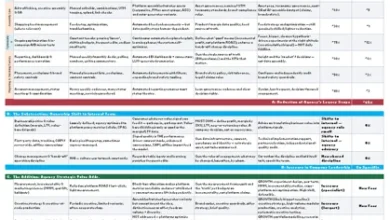
The transition requires a granular "subtraction" of tasks that machines now perform more efficiently than humans. These subtractions are categorized into five key clusters:
1. The Activity Army
This includes account architecture, keyword research, and audience segmentation. Historically, these tasks accounted for roughly 22% of contract costs. With the advent of algorithms that read intent rather than just keywords, this work can be reduced by approximately 78%. The agency’s role shifts from "building" to "deciding" the reward functions and brand safety red lines.
2. The Bid and Pace Dancers
Manual bidding, budget adjustments, and daily pacing checks once consumed 14% of agency fees. AI-driven value-based bidding has surpassed human capability in these areas. By allowing the AI to manage the learning cycle without human interference, agencies can reduce effort in this area by 73%.
3. The Assembly Line
Trafficking, ad builds, and tagging are being devoured by GenAI and platform-native assembly tools. These tools can generate thousands of creative variants tailored to individual users in real-time. This cluster, representing 12% of costs, is seeing a 45% reduction in manual labor, leaving agencies to focus on high-level asset preparation and data quality.
4. Optimization Theater
The "ritual" of pausing losers and making small A/B tweaks is often the most destructive activity an agency can perform in an AI world. Modern platforms run continuous "explore-exploit" cycles that far exceed human speed. This area, often 16% of an agency’s cost, can be reduced by 75%, shifting the focus to a few high-impact experiments rather than hundreds of micro-optimizations.
5. The Reporting and Servicing Factory
The manual creation of weekly decks and update emails currently accounts for a staggering 30% of agency fees. Automated dashboards and LLM-fronted data lakes are making these manual reports redundant. By automating in-flight optimization and reporting, agencies can reduce this workload by 60%, focusing instead on "Data Storytelling"—explaining what to do rather than just what happened.
Implications for the Workforce: From $50 to $1,000 per Hour
This revolution is expected to create a "flight to quality" within agency talent pools. As low-value, repetitive tasks disappear, the demand for senior judgment, strategic governance, and innovation will skyrocket. Agencies will no longer be able to justify their existence by hiring large numbers of junior employees to perform manual tasks. Instead, they will need to employ a smaller number of highly experienced professionals who can command significantly higher hourly rates—moving from $50/hr execution to $500/hr or $1,000/hr strategic consulting.
For the employees themselves, this transition offers a path away from the "hamster wheel" of manual labor toward more fulfilling, high-impact work. This evolution is expected to lead to the birth of "Modern Agencies"—smaller, leaner, and structurally built to be outcome-centered strategic partners.
Governance, Ownership, and the Path Forward
As brands move toward this new model, data governance has become an existential priority. Experts warn that brands must maintain complete ownership of their ad accounts, pixels, and data pipelines. Relying on an agency to "own" the data creates a hostage situation that prevents the brand from fully embracing AI.
Furthermore, the elimination of "Percent of Media Spend" models will also help eliminate "toxic" industry practices such as undisclosed markups and rebates. While these changes may cause discomfort for agencies accustomed to the old ways of doing business, the "pragmatic truth" is that agencies that embrace the present will find a future that is more profitable and more prestigious.
The transition is already underway. By 2027, the agencies that remain relevant will be those that have successfully migrated from being execution vendors to becoming "Agentic Wranglers" and strategic navigators. The shift is no longer a matter of if, but how quickly a brand can renegotiate its contracts to stop paying for the past and start investing in the future.