The Shift Toward Profit-Centric Marketing Why Accountability Metrics are Replacing Traditional Activity Data

The digital marketing landscape is currently undergoing a fundamental transformation as global enterprises shift their focus from mere traffic volume to rigorous financial accountability. For decades, marketing departments have relied on "activity-based" metrics—such as impressions, views, and sessions—to justify multi-million dollar budgets. However, recent strategic shifts within global consulting and the emergence of sophisticated artificial intelligence in search engines are rendering these traditional KPIs obsolete. The modern mandate, driven by the need for alignment between the Chief Marketing Officer (CMO) and the Chief Financial Officer (CFO), prioritizes Profit on Investment (POI) over the more commonly cited Return on Ad Spend (ROAS).
The catalyst for this shift is a growing recognition that high-volume activity does not inherently correlate with bottom-line profitability. In many large-scale marketing engagements, teams have historically celebrated metrics like "Cost Per Session" (CPS), treating the acquisition of site traffic as the ultimate goal. Industry veterans and analytics experts are now challenging this "traffic-at-any-cost" mentality, arguing that it creates a disconnect between marketing efforts and actual business health. By focusing on Outcomes and Accountability rather than just Activity, organizations can identify which channels are truly driving incremental growth and which are merely "providing employment" for the advertising sales teams of major tech platforms.
The Evolution of Marketing Measurement: A Chronology
The methodology of measuring marketing success has evolved through several distinct phases since the inception of digital advertising. Understanding this chronology is essential for modern professionals attempting to navigate the transition to AI-powered analytics.
In the early 2000s, the "Era of Visibility" dominated, where raw impressions and "hits" were the primary currencies. This was followed by the "Era of Traffic" in the 2010s, which saw the rise of the session and the click as the standard units of value. During this time, metrics like Cost Per Click (CPC) and Cost Per Session (CPS) became the industry standard.
By the mid-2010s, the focus shifted toward the "Era of Conversion." Marketers began to prioritize the Outcome—the sale, the lead, or the prescription—rather than the visit. This led to the widespread adoption of Conversion Rate (CR) and Cost Per Acquisition (CPA). However, even these metrics failed to account for the actual cost of goods sold (COGS) or the long-term profitability of the acquired customer.
Today, the industry is entering the "Era of Accountability." This phase is characterized by a push for transparency in how marketing spend impacts the company’s net profit. It moves beyond the revenue-based ROAS to profit-based metrics like POI. This evolution is necessitated by the increasing complexity of AI-driven ad platforms, such as Google Advantage+ and Meta’s automated campaign tools, which can generate massive revenue while simultaneously eroding profit margins through high campaign costs.
Comparative Data Analysis: Google Advantage+ vs. Email Marketing
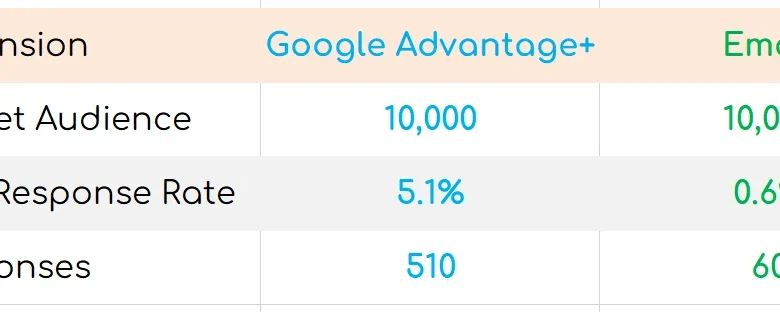
To understand the necessity of this shift, one must examine the disparity between revenue-centric reporting and profit-centric reporting. A recent case study involving a global company operating in 75 countries highlights the dangers of relying on traditional "Outcome" views.
In this scenario, two primary channels were compared: Google Advantage+ (an AI-powered automated ad solution) and traditional Email Marketing. When viewed through the lens of Activity and Outcomes, Google Advantage+ appeared to be the clear winner. It generated 173 orders compared to Email’s 14 orders, and produced $17,000 in revenue against Email’s $1,400. To a standard marketing team, these figures would justify a massive shift in budget toward Google.
However, the "Accountability View" tells a drastically different story. When incorporating Campaign Costs and the Cost of Goods Sold (COGS), the financial reality is revealed:
-
Google Advantage+:
- Revenue: $17,000
- Campaign Cost: $7,000
- COGS: $5,000
- Net Profit: $5,000
- Profit on Investment (POI): $0.70 (For every $1 spent, the company earned back $0.70 in profit).
-
Email Marketing:
- Revenue: $1,400
- Campaign Cost: $100
- COGS: $730
- Net Profit: $570
- Profit on Investment (POI): $5.70 (For every $1 spent, the company earned back $5.70 in profit).
The data demonstrates that while Google Advantage+ delivers scale, it does so at a loss of net profit per dollar spent. In contrast, Email Marketing, despite its lower volume, is significantly more efficient. A CFO reviewing these numbers would conclude that the company is effectively subsidizing its revenue growth through unprofitable ad spend on the Google platform.
The Hierarchy of Accountability: From ROAS to POI
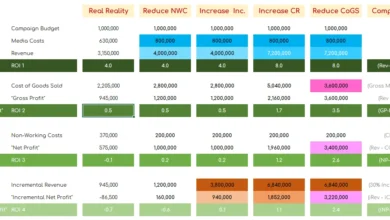
For organizations looking to implement a more resilient marketing strategy, analysts recommend a hierarchy of metrics that increase in "CFO-friendliness." This hierarchy allows companies to transition away from value-deficient metrics like impressions toward those that withstand strict financial scrutiny.
Level 1: Return on Ad Spend (ROAS)
Calculated as (Revenue / Ad Spend), ROAS is the most common metric used by agencies. However, it is fundamentally flawed because it gives marketing full credit for revenue without accounting for the cost of the ads themselves or the cost of the products sold. A high ROAS can mask a net loss.
Level 2: Return on Investment (ROI)
ROI improves upon ROAS by subtracting the campaign cost from the revenue. This provides a clearer picture of whether the marketing activity is paying for itself, though it still ignores the underlying cost of the business (COGS).
Level 3: Profit on Ad Spend (POAS)
POAS incorporates the Cost of Goods Sold. The formula (Revenue – COGS) / Ad Spend allows a company to see if the gross profit generated by a sale covers the cost of the advertising used to generate that sale.
Level 4: Profit on Investment (POI)
The gold standard for accountability, POI is calculated as (Revenue – COGS – Campaign Cost) / Campaign Cost. This metric reveals the true net contribution of every dollar assigned to the marketing budget. Achieving a "green" or positive POI ensures that marketing is a profit center rather than a cost center.
Strategic Implications of AI-Powered Search
The urgency of moving away from traffic-based metrics like Cost Per Session is further amplified by the transition of major search engines into "AI Mode." Google’s rollout of AI Overviews and the rise of conversational search engines like ChatGPT and Perplexity are fundamentally changing user behavior.
In an AI-driven search environment, the traditional "click" is becoming less frequent but more valuable. Google’s own guidance for the AI era suggests that when users click through to a website from an AI Overview, those clicks are of significantly higher quality. Because the AI has already provided context and summarized information, the visitor arriving at the site is more informed and further along in the decision-making process.
Consequently, focusing on the "Cost Per Session" in an AI world is counterproductive. If a company optimizes for the lowest possible CPS, it may inadvertently prioritize low-quality bot traffic or "one-night stand" visits that have no intention of converting. Google’s official documentation now explicitly encourages businesses to look at the "overall value of visits" rather than the volume of clicks. This includes measuring micro-conversions, engaged time, and information lookups rather than raw session counts.
Implementing a Five-Step Recovery Strategy
For companies currently trapped in unprofitable marketing cycles, a structured recovery plan is necessary to realign activity with profit. Experts suggest a five-step process to audit and optimize digital spend:
- Immediate Spend Suspension: If a channel is delivering a negative POI, the first step is to pause spend entirely. This sends a clear signal to internal teams and external agencies that unprofitable growth is no longer acceptable.
- The "Suck Less" Metric: If the organization is not yet ready to track profit, it should at least shift from "Cost Per Session" to "Cost Per Non-Bounced Session." By removing "puke" traffic (users who leave immediately), the cost-per-unit will rise, forcing a re-evaluation of current tactics.
- Intent Alignment: Re-evaluate the intent available on the ad platform. Does the current creative and offer match what the user is actually looking for, or is the campaign simply casting a wide, expensive net?
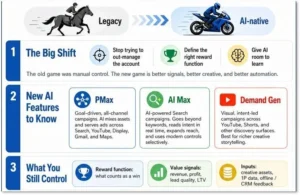
- AI Turbocharging: Once intent and tactics are aligned, companies should use AI-powered features to optimize for specific outcomes rather than just volume. This involves moving away from manual bidding to value-based bidding.
- The POI Mandate: Re-establish spend only when there is a clear path to a high, green POI. This ensures that as marketing scales, the company’s bottom line grows in tandem.
Conclusion: The Path to Professional Longevity
The shift from Activity to Accountability is not merely a change in reporting; it is a fundamental shift in the culture of marketing. As AI continues to automate the "doing" of marketing—the bidding, the creative generation, and the targeting—the human value-add will increasingly reside in the "thinking."
Marketing professionals who can speak the language of the CFO and demonstrate a resilient, incremental impact on business profit will find their careers "AI-proof." Conversely, those who remain wedded to superficial metrics like impressions and sessions risk being replaced by automated systems that can generate those same "activities" more efficiently. In the era of AI and fiscal scrutiny, the goal is no longer to be the loudest brand in the room, but the most profitable. By prioritizing Outcomes over Activity and Accountability over Outcomes, organizations can build a marketing strategy that is not only successful today but sustainable for the next generation.