Four ways Google Analytics delivers actionable insights for your business


The landscape of digital measurement is undergoing a fundamental transformation as businesses shift away from legacy tracking methods toward more privacy-centric, AI-driven architectures. As Google Analytics 4 (GA4) matures into its role as the industry standard, Google has unveiled a series of strategic updates designed to provide marketers with greater clarity, predictive capabilities, and cross-channel integration. These enhancements arrive at a critical juncture: the complete sunsetting of Universal Analytics (UA) on July 1, 2024, which marks the end of an era for the platform that defined web analytics for over a decade.
The Evolution of Digital Measurement
For nearly 15 years, Universal Analytics relied heavily on session-based tracking and third-party cookies. However, the rise of stringent global privacy regulations, such as the General Data Protection Regulation (GDPR) in Europe and the California Consumer Privacy Act (CCPA), rendered this model increasingly obsolete. Google Analytics 4 was introduced five years ago as a proactive response to these shifts, utilizing an event-based data model that treats every user interaction—whether a click, a scroll, or a purchase—as a distinct event.
This transition has not been without friction. As of mid-2024, the final transition from Universal Analytics to GA4 is mandatory. Organizations that have not yet migrated their properties face the permanent loss of historical data, as Google has confirmed that after the July 1, 2024, cutoff, users will no longer be able to view or export data from legacy properties. This deadline serves as a catalyst for the current suite of product updates, which focus on ensuring that GA4 is not merely a replacement for UA, but a superior tool for modern, data-driven decision-making.
AI-Generated Insights: Bridging the Data Gap
One of the most significant challenges for modern marketing teams is the "data deluge"—having access to vast amounts of information without the internal resources to synthesize it into strategy. To address this, Google is deploying advanced generative AI features that act as a virtual data analyst.
In the coming months, GA4 will begin providing "generated insights." These are natural language summaries that explain fluctuations in performance data. For example, if a company experiences an uncharacteristic spike in purchase events, the AI engine will perform a multi-dimensional analysis to identify the root cause—such as a specific referral source, a successful social media campaign, or a demographic shift—and present the findings in plain, conversational English. This represents a departure from static dashboards, moving toward a more proactive, intelligent reporting system.
Unified Measurement Across the Full Funnel
The fragmentation of the modern consumer journey across multiple devices and platforms has made cross-channel attribution notoriously difficult. A user might discover a product through a Pinterest advertisement, conduct research on a mobile app, and eventually finalize the purchase on a desktop browser.
To combat this, Google is integrating more granular data sources into the GA4 advertising workspace. By incorporating aggregated impressions from Campaign Manager 360, marketers will be able to visualize the performance of their media spend from the top of the funnel down to the conversion. Furthermore, Google is streamlining the integration of non-Google advertising channels. New cost data import features will allow businesses to connect platforms like Reddit, Snap, and Pinterest directly to GA4. This means that "ads cost," "ads clicks," and "ads impressions" from these platforms will be automatically mapped to GA4 traffic source dimensions, providing a holistic view of return on ad spend (ROAS) without the need for complex, manual CSV uploads.
Advancing Budgeting and Financial Planning
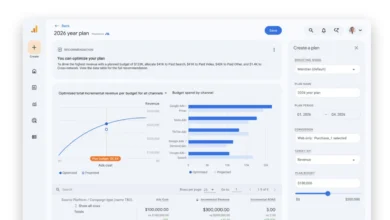
The ability to measure performance is only half the battle; the ability to adjust strategy in real-time is what drives growth. To bridge the gap between analytics and financial planning, Google is introducing a beta feature for cross-channel budgeting.
This tool will include a projections report that allows marketers to track media pacing against specific revenue objectives. By simulating the impact of budget shifts across different channels, teams can optimize their spend while the campaign is still active. This shift represents a move toward "in-flight" optimization, where data is used not just to report on what happened last month, but to influence the allocation of capital for the month ahead.
Privacy-First Durability in a Post-Cookie World
The most profound challenge facing the digital advertising industry is the erosion of third-party tracking. With major browsers restricting cookies and privacy-conscious consumers opting out of tracking, measurement "blind spots" have become the norm. GA4 is engineered to be "durable," meaning it is designed to function accurately even in the absence of complete user-level data.
Google is moving to integrate support for Chrome’s Privacy Sandbox APIs, which provide a framework for interest-based advertising without tracking individual users across sites. Furthermore, the platform’s "enhanced conversions" feature has become a cornerstone of this strategy. By hashing and matching consented first-party data with Google’s own logged-in user data, GA4 can fill the gaps left by missing cookies.

These privacy-first integrations, including Consent Mode, allow GA4 to utilize behavioral modeling. When a user declines cookies, Google’s AI models use the data from consented users to infer the behavior of the non-consented cohort. This provides a statistically significant picture of total site traffic and conversion rates while remaining compliant with global privacy frameworks.
The Broader Implications for Industry
Industry analysts observe that these changes reflect a broader consolidation of power within the Google ecosystem. By making GA4 the mandatory repository for all data, and by embedding AI-driven insights that favor Google’s own advertising products, the company is creating a "walled garden" that is increasingly difficult to navigate without total commitment to its suite of tools.
For businesses, the implication is clear: the era of "set it and forget it" analytics is over. The complexity of the new digital environment requires a sophisticated approach to data governance. The requirement to export legacy data from Universal Analytics before the July 1, 2024, cutoff is not just a technical task; it is a fundamental shift in how businesses must archive their historical context to remain compliant and informed.
"The future of measurement is not about tracking every single move a user makes," notes Steve Ganem, Director of Product Management for Google Analytics. "It is about building a durable foundation that respects user choice while using machine learning to fill in the gaps."
Conclusion: Preparing for the Next Decade
As the digital ecosystem continues to move toward a privacy-centric model, the tools used to measure success must evolve at the same pace. The transition to Google Analytics 4 is more than a platform migration; it is an adaptation to a new reality where data is scarcer, privacy is paramount, and AI is the primary interpreter of consumer behavior.
For marketing professionals, the path forward involves mastering these new tools—specifically the integration of non-Google advertising data and the application of AI-generated insights—to maintain a competitive advantage. As the sunset of Universal Analytics passes, the focus of the industry will shift entirely toward maximizing the potential of this new,, more durable, and more intelligent measurement framework. The winners in this new era will be those who can most effectively translate these high-level analytics into the concrete business decisions that drive growth.