Mastering Python Descriptors for Advanced Attribute Control and Data Integrity

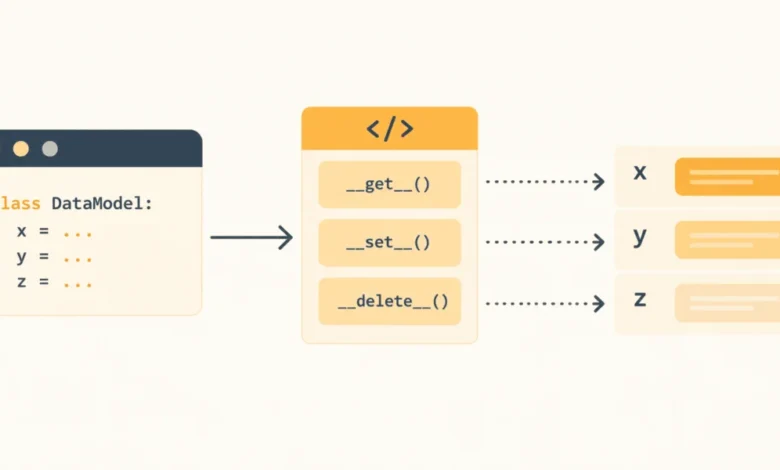
The evolution of modern software development, particularly within the Python ecosystem, has necessitated increasingly sophisticated methods for managing class state. At the heart of this architecture lies the descriptor protocol—a powerful, often misunderstood feature that governs how attributes are accessed, modified, and retrieved. By implementing specialized methods such as __get__, __set__, and __delete__, developers can move beyond simple variable assignments to create "controlled attributes." This transition from static data storage to dynamic, logic-driven attribute management is essential for building scalable, maintainable, and robust enterprise-grade applications.
Understanding the Descriptor Protocol
In the hierarchy of Python’s object-oriented features, descriptors occupy a foundational position. A descriptor is defined as any object that defines at least one of the core access methods. When a class attribute is assigned an instance of such a descriptor, the standard dot-notation access (e.g., obj.attribute) is intercepted. Instead of returning the raw value stored in the object’s __dict__, Python redirects the request to the descriptor’s logic.
This mechanism serves as the engine behind many of Python’s most ubiquitous features. For instance, the standard @property decorator, which many developers use to create getters and setters, is effectively a built-in wrapper for the descriptor protocol. However, while @property is convenient for single-use cases, it often leads to "boilerplate bloat" when the same validation or transformation logic must be applied across multiple attributes in a large codebase. Descriptors solve this by encapsulating logic into reusable classes, thereby adhering to the Don’t Repeat Yourself (DRY) principle.
Chronology and Evolution of the Descriptor Mechanism
The descriptor protocol has been a part of Python since version 2.2, introduced as part of the unification of types and classes. However, its adoption for general application logic remained niche until the introduction of __set_name__ in Python 3.6. Before this update, descriptors were often difficult to implement because they lacked an inherent way to know the name of the attribute they were assigned to, requiring developers to pass the attribute name as a string manually during initialization—a frequent source of errors and maintenance overhead.
The __set_name__ method resolved this by automatically notifying the descriptor of the name of the attribute it controls at the moment the class is created. This enhancement, combined with the increasing demand for data-intensive applications, has led to a resurgence in the use of descriptors for complex data modeling in fields such as data science, financial modeling, and web framework development.
Practical Implementation: Validated Attributes
Data integrity is a critical concern in enterprise software. Relying on manual validation checks inside an __init__ method often results in fragile code that is prone to human error. By using a validated descriptor, developers can enforce type safety and range constraints directly at the attribute level.
Consider a scenario in a travel management system—such as a Japan-based tourism application—where a rating attribute must strictly fall between 1.0 and 5.0. By creating a ValidatedRating class, the developer ensures that any attempt to assign a value outside this range—or an incorrect data type—triggers an immediate ValueError or TypeError.
class ValidatedRating:
    def __init__(self, min_val=1.0, max_val=5.0):
        self.min_val = min_val
        self.max_val = max_val

    def __set_name__(self, owner, name):
        self.public_name = name
        self.private_name = f"_name"

    def __get__(self, obj, objtype=None):
        if obj is None: return self
        return getattr(obj, self.private_name)

    def __set__(self, obj, value):
        if not isinstance(value, (int, float)):
            raise TypeError(f"self.public_name must be a number.")
        if not (self.min_val <= value <= self.max_val):
            raise ValueError(f"self.public_name must be between self.min_val and self.max_val.")
        setattr(obj, self.private_name, float(value))
This approach shifts the burden of validation from the business logic to the data structure itself, creating a self-validating model that is inherently more reliable.
Dynamic Computations and Currency Conversion
Another significant use case for descriptors is the management of computed attributes. In global applications, data often exists in a raw state, such as prices stored in Japanese Yen (JPY), but requires real-time conversion for international users. A computed descriptor can intercept read requests to perform calculations on the fly, ensuring that the displayed data is always synchronized with the current exchange rate without requiring redundant storage.
By defining a ComputedUSDPrice descriptor, the system can dynamically fetch the base JPY price from the parent instance, apply the conversion logic, and return the USD value. Because this attribute is read-only by design, the __set__ method can be implemented to explicitly raise an AttributeError, preventing accidental modification of derived data. This maintains a "single source of truth" while providing flexible access to processed information.
Efficiency through Lazy Loading
In high-performance computing, minimizing latency is paramount. When an object contains attributes that require "expensive" operations—such as querying a remote database for Shinkansen train schedules or parsing a large JSON file—loading that data during the object’s initialization is inefficient.
A lazy-loading descriptor addresses this by deferring the computation until the moment the attribute is accessed. Upon the first request, the descriptor performs the expensive task, caches the result in the object’s __dict__, and returns the value. Subsequent requests bypass the descriptor’s logic entirely, retrieving the cached value from memory. This pattern, known as "memoization," significantly improves the startup time of applications that handle massive, multifaceted objects.
Broader Impact and Implications
The adoption of the descriptor protocol represents a move toward more declarative programming in Python. By defining what an attribute should be (e.g., validated, computed, or lazy) rather than how it should be managed on every line of code, developers can significantly reduce the surface area for bugs.
Industry experts have noted that while descriptors introduce a layer of complexity for junior developers, the long-term maintenance benefits are substantial. In large-scale systems, such as the Django ORM or Pydantic, descriptors are the invisible infrastructure that allows for complex data validation and serialization. As Python continues to dominate the data science and backend development landscapes, mastering these underlying mechanisms is no longer optional for senior developers; it is a prerequisite for building high-integrity systems.
Future Perspectives
As the Python community continues to focus on performance improvements—such as the "Faster CPython" project—the efficiency of the descriptor protocol remains a focal point. While the overhead of calling methods on access is negligible in most applications, the ability to control state transitions programmatically provides a foundation for more advanced features, such as automatic change tracking, audit logging, and cross-service data synchronization.
In conclusion, descriptors offer a sophisticated, elegant solution to the perennial challenges of attribute management. By transitioning from traditional getters and setters to a declarative descriptor-based approach, developers can ensure that their objects are not just data containers, but intelligent, self-regulating components of a larger, robust ecosystem. This level of control is essential for the future of professional software development, where data integrity and system performance are of paramount importance.