The digital landscape has undergone a seismic shift as the binary era of “allow or block” crawlers gives way to an complex ecosystem of autonomous agents, retrieval bots, and generative AI training models. For over two decades, the Search Engine Optimization (SEO) industry relied on the simple mechanism of the robots.txt file to govern site access. However, as of late 2026, this voluntary protocol is proving insufficient against a sophisticated array of non-human traffic that does not necessarily adhere to traditional web standards. The challenge is no longer just about preventing scrapers; it is about managing a digital presence in an environment where content is consumed by machines rather than humans.
The Evolution of Web Crawling: From Indexing to Reasoning
To understand the current crisis in bot management, one must look at the historical trajectory of web crawlers. Throughout the 2000s and early 2010s, the primary purpose of a bot was to index text for search engines like Google or Bing. These crawlers were predictable, transparent, and largely respectful of the directives laid out in the robots.txt file.
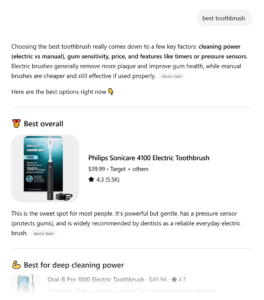
The turning point arrived with the proliferation of Large Language Models (LLMs) and Generative AI. These systems require vast datasets for training, leading to a surge in “training bots” that vacuum up entire site structures. Simultaneously, the rise of RAG (Retrieval-Augmented Generation) has introduced “retrieval bots” that do not index content for traditional search results but instead pull specific data to synthesize answers for AI-driven interfaces. By 2026, the complexity reached a breaking point with the emergence of autonomous agents—programs designed to mimic human behavior, complete with the ability to click buttons, navigate complex menus, and interact with dynamic elements, making them virtually indistinguishable from organic human traffic.

The Breakdown of Traditional Enforcement
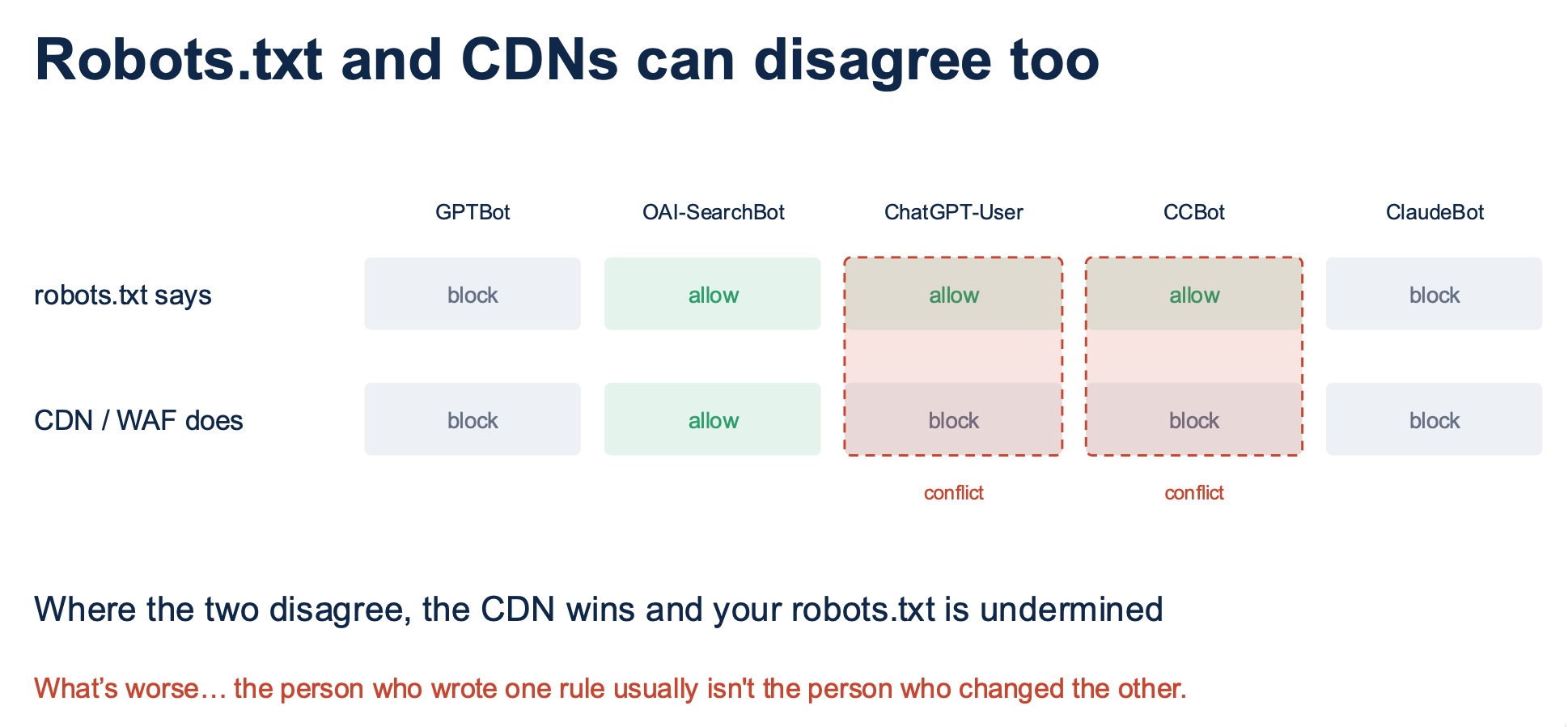
The reliance on robots.txt has created a false sense of security for many SEO departments. While SEO professionals may painstakingly update their directives, the actual enforcement of these rules often occurs at the infrastructure level—specifically through Content Delivery Networks (CDNs) and Web Application Firewalls (WAFs).
In many enterprise environments, the IT or Security team manages the CDN configurations. If these teams implement broad, automated blocking policies to mitigate security threats like DDoS attacks, they may inadvertently block legitimate search crawlers or AI agents essential for brand visibility. This leads to a scenario where the SEO team believes they are “allowing” search engines to crawl, while the server-level infrastructure is silently denying access. This discrepancy between the digital marketing strategy and the technical implementation has become a leading cause of sudden, unexplained drops in search performance and AI-driven visibility.
Data and Infrastructure: The Cost of Mismanagement
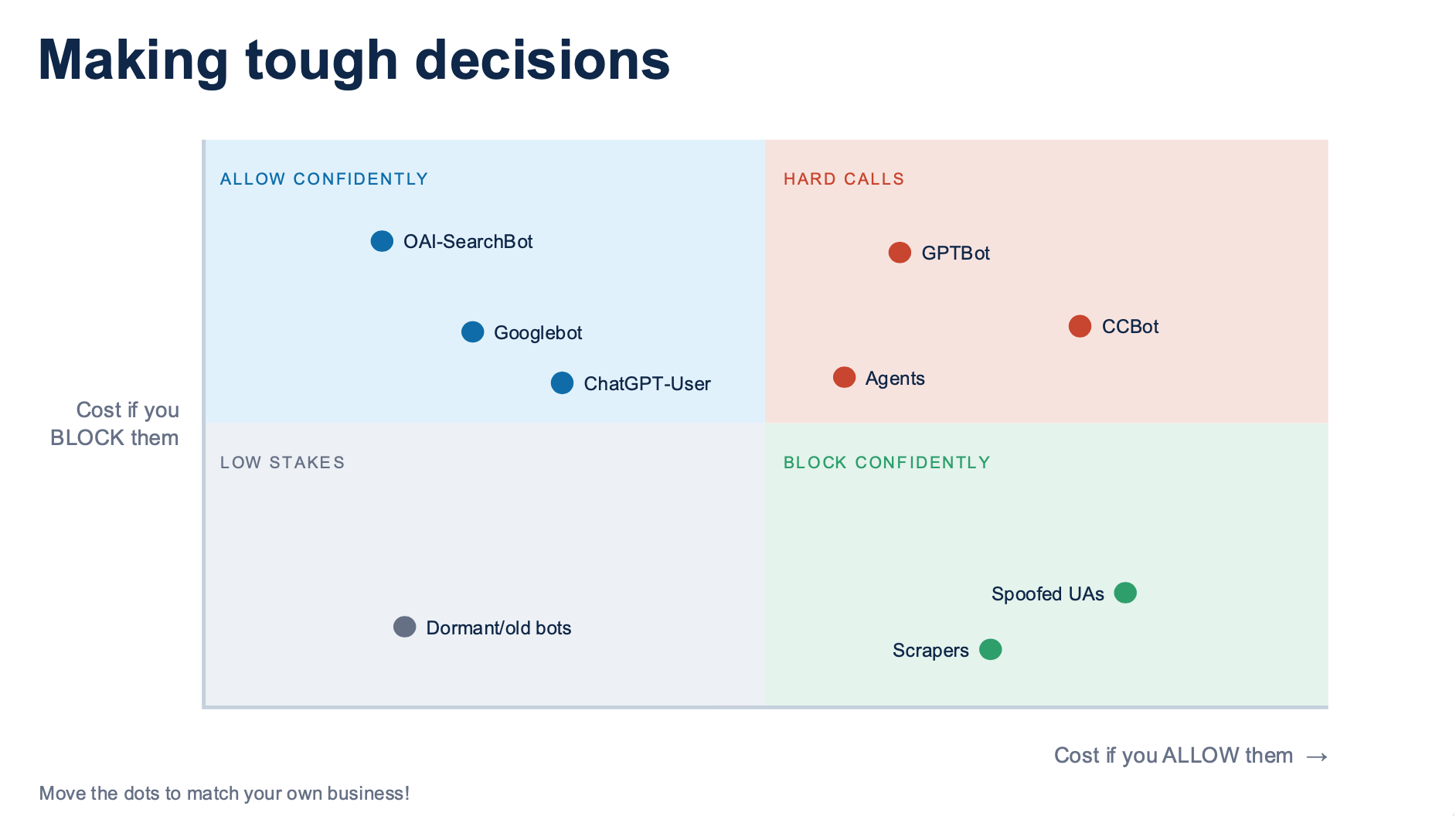
Recent industry audits suggest that nearly 40% of web traffic is now non-human. Of that traffic, a significant portion is comprised of “good” bots—those that facilitate search rankings or provide value-added services—and “bad” bots, which are malicious or resource-draining. The difficulty for site owners lies in the granularity of this classification.
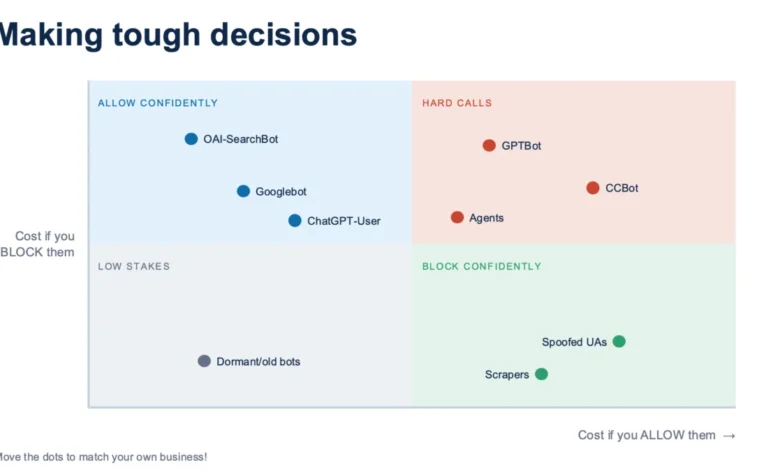
When a company employs a blunt-force approach to bot management, the economic impact can be severe. For instance, if an e-commerce site blocks all automated agents to prevent price scraping, they may inadvertently block an AI shopping assistant that was directing high-intent customers to their products. Data from the 2026 GEO (Generative Engine Optimization) Elite forum indicates that businesses with a unified, policy-based bot management strategy experience a 15% higher retention of referral traffic from AI sources compared to those relying on static, legacy block lists.
A Chronology of Policy Shifts
- 2020-2022: The era of “polite” crawling. SEOs focus on optimizing crawl budgets and using robots.txt to prevent indexing of redundant pages.
- 2023-2024: The “AI Awakening.” The sudden influx of OpenAI, Anthropic, and other AI-related crawlers forces a debate over content ownership and the need for explicit opt-out mechanisms.
- 2025: The rise of autonomous agents. AI agents begin to simulate user sessions, rendering traditional User-Agent filtering obsolete.
- 2026: The shift toward Governance. Organizations begin integrating legal, technical, and marketing teams to establish “Bot Policies” rather than simple technical restrictions.
The Necessity of Cross-Departmental Governance
The current consensus among digital infrastructure experts is that bot management is no longer an SEO-only task. It has evolved into a cross-functional imperative. The modern approach requires a coordinated strategy involving four key pillars:
- Legal and Compliance: Determining which AI entities have the right to scrape content based on existing copyright law and licensing agreements.
- Engineering and DevOps: Ensuring that the CDN and WAF settings are aligned with the SEO strategy, preventing accidental blocking of essential crawlers.
- SEO and Content Marketing: Monitoring how content is appearing in AI-generated answers and adjusting technical schemas to better facilitate that appearance.
- Security: Monitoring for malicious bots that mimic human behavior to perform credential stuffing or competitive data theft.
Implications for Future Search Visibility
The shift from “search results” to “answer engines” necessitates a paradigm shift in how we think about visibility. If a website is blocked from the view of an AI agent, it effectively becomes invisible to users of those systems. Unlike traditional search, where a user might click through to the source, AI-driven answers provide a synthesized response. If the source material is unavailable, the AI will simply bypass the site in favor of one it can access.
This creates a new competitive dynamic. Sites that are “AI-friendly” through deliberate, transparent bot policies are more likely to be cited as authoritative sources in AI-generated responses. Conversely, those that remain locked down may find themselves excluded from the primary information-gathering tools of the future.
Strategic Recommendations
To navigate this new environment, organizations must move away from the set-it-and-forget-it model. Practical steps include:
- Auditing Traffic Logs: Regularly reviewing server logs to identify which bots are accessing the site, and distinguishing between beneficial crawlers and parasitic scrapers.
- Implementing API-based Access: Instead of allowing full-scale scraping, some organizations are experimenting with offering restricted APIs to reputable AI developers, ensuring they get the data they need while the site owner retains control and potentially gains analytics on usage.
- Standardizing Identity Verification: As bots become more sophisticated at mimicking humans, site owners must adopt more robust identification methods beyond simple user-agent strings, such as verified IP ranges or cryptographic tokens provided by search engine providers.
- Regular Policy Reviews: Just as SEO audits occur periodically, bot policy reviews should be scheduled quarterly to account for new AI crawlers and shifts in the search ecosystem.
Conclusion
The complexity of the current bot landscape is a direct reflection of the rapid advancement in machine learning and information retrieval. While the urge to block unknown crawlers is natural, the unintended consequences can be detrimental to long-term digital growth. By moving toward a more nuanced, policy-driven approach, companies can ensure that they remain active participants in the new era of AI search while protecting their content and infrastructure from unwanted exploitation. The future of search visibility will belong to those who treat bot management as a strategic business asset rather than a technical nuisance.