Whoop Launches Whoop Humans To Combat Artificiality In The Digital Fitness Landscape

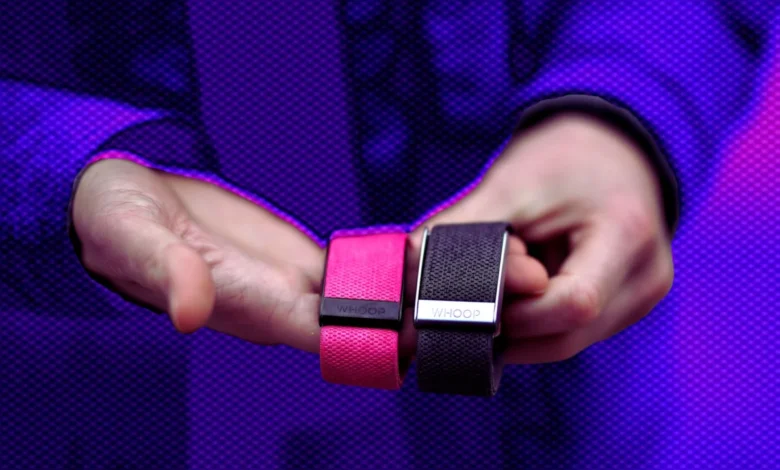
The landscape of personal wellness technology is undergoing a fundamental shift as Whoop, the prominent wearable fitness company known for its screenless wristbands, officially enters the social networking space. This week, the company announced the launch of "Whoop Humans," a dedicated social feature integrated directly into its mobile application. Billed by the company as "the most verifiably human social network," the platform aims to leverage biometric data to foster genuine interpersonal connections, positioning itself as an antithesis to the bot-saturated environments that characterize many contemporary social media platforms.
By requiring an active, heart-rate-monitoring device for participation, Whoop is attempting to solve the "identity verification" problem that has long plagued digital communities. In an era where generative AI and automated accounts dominate online discourse, the company is betting that physical, physiological proof of life will create a more authentic environment for users to share their fitness journeys, recovery metrics, and health goals.
The Evolution of Whoop: From Tracker to Community
The emergence of Whoop Humans marks a significant pivot in the company’s business model. While Whoop began 14 years ago as a niche tool for professional athletes—focused strictly on the cold, hard data of sleep cycles, heart rate variability (HRV), and strain—it has since evolved into a mass-market health companion.
The growth trajectory of the company has been nothing short of exponential. CEO Will Ahmed recently noted on the All-In Podcast that the company’s path to success was a slow build that suddenly accelerated. It took 12 years to reach the first million members, but the following two million were added in roughly 24 months. As of late 2024, the company is on track to surpass four million total members by the end of the year. This density of users provides the critical mass necessary to make a social network viable. With members currently opening the Whoop app an average of eight times per day, the company already possesses the high engagement rates that many social platforms struggle to achieve.
How Whoop Humans Operates
The mechanics of the new social network are designed to prioritize empathy and accountability over the vanity metrics often found on mainstream platforms. Users who choose to opt into the network can follow friends, family members, and peers. Within the interface, members share workout milestones, recovery scores, and sleep data.
Unlike traditional platforms where engagement is measured in "likes" or "shares," Whoop Humans is designed for active check-ins. A key feature allows users to monitor the recovery status of their contacts. If a user’s physiological data indicates a low recovery score—often a sign of overtraining, illness, or stress—their peers can see this information and offer support. As member Mika Bublitz highlighted in the launch statement, the platform facilitates a new layer of interpersonal care. If a friend’s data reflects a dip in wellness, a contact can provide the social permission needed to rest, creating a support system that is rooted in biological reality rather than curated lifestyle imagery.
The Strategic Value of Data-Driven Socialization
The introduction of this social network is not merely a feature update; it is a calculated business move to deepen the "moat" around the company’s ecosystem. By building a social layer into its product, Whoop is increasing the "switching costs" for its members. When a user’s community and support network are tethered to their specific fitness band, they are statistically less likely to migrate to a competitor.
This move comes at a time when the wearable market is becoming increasingly crowded. Tech giants such as Google have entered the fray with the Fitbit Air, and industry reports suggest that Apple is actively investigating the development of a screenless, sensor-focused wearable. By differentiating itself through a social, human-centric interface, Whoop is attempting to shift the conversation away from hardware specs—where it faces immense competition from multi-billion dollar corporations—toward the value of the community experience.
Scientific Foundations and User Impact
The decision to focus on the "human" element is supported by internal data regarding the efficacy of the Whoop ecosystem. Research published last year in the journal Sensors provides a compelling argument for the role of daily tracking in habit formation. The study, which monitored nearly 12,000 members over a 12-week period, found that daily wearers of the device were significantly more active than those who used the tracker intermittently.
Specifically, those who wore the device consistently logged an additional 90 minutes of exercise per week compared to sporadic users. Furthermore, the data showed a correlation between consistent wear and improved sleep hygiene, with daily users gaining an average of 20 minutes of extra sleep per night. Whoop’s leadership believes that by adding a social component—a "human" accountability partner—these metrics can be improved even further. If a user feels that their friends are observing their recovery, they are theoretically more likely to adhere to the behavioral changes suggested by the app’s algorithms.
Industry Context: The War Against the Artificial
The timing of this launch is significant within the broader context of the internet’s decline in trust. With the proliferation of deepfakes and automated bot farms, platforms that can guarantee the authenticity of their user base are becoming increasingly valuable. Will Ahmed’s statement that the company is building "something deeply human" is a direct critique of the current state of digital social media.
By tying every account to a verified, beating heart, Whoop is setting a high bar for "proof of humanity." While the system is currently limited to existing hardware owners, this restriction serves as a natural gatekeeper, ensuring that the network remains exclusive to those committed to their personal health. This approach mirrors the broader trend in the tech industry toward "walled gardens" and private, community-based digital spaces.
Future Implications for the Wearable Industry
As Whoop moves forward with this initiative, industry analysts will be watching to see if this social integration leads to higher retention rates and reduced churn. The fitness tracker market has historically struggled with "device fatigue," where users abandon their trackers after the novelty wears off. By transforming the device from a static monitor into a gateway to a social network, Whoop is attempting to solve this retention issue by making the platform a daily necessity for social interaction.
If successful, Whoop Humans could serve as a template for other health-tech companies. We may see a shift where wearable manufacturers pivot from being "data companies" to "community companies," leveraging the vast amount of physiological data they collect to facilitate deeper social interactions.
However, the expansion also invites questions regarding privacy and data security. By sharing recovery and sleep data with peers, users are entering a new realm of health transparency. Whoop has emphasized that participation is entirely optional, and the company maintains that the privacy of health data remains a top priority. Nevertheless, as the social network grows, the company will likely face increased scrutiny regarding how it manages the intersection of private biological data and public social engagement.
In conclusion, the launch of Whoop Humans is a bold assertion that the future of social media may not lie in the cloud, but in the physical reality of the human body. By prioritizing "verified heartbeats" over algorithms, Whoop is positioning itself as a leader in the next generation of wellness technology, betting that the most valuable digital connection is one that is rooted in the most basic human function: the rhythm of the heart. As the company marches toward its goal of four million members by year-end, the success of this social experiment will likely redefine what it means to be connected in the digital age.