Sprout Social Outlines 2027 Social Strategy Blueprint with Advanced AI Integrations and Multi-Platform Expansion at Breaking Ground Q4 Event


As social media marketing enters an increasingly complex era defined by massive volumes of unstructured data and shifting digital ecosystems, industry leaders are under mounting pressure to transform raw metrics into immediate, strategic execution. Addressing this operational bottleneck, Sprout Social hosted its final quarterly virtual innovation event of the year, Breaking Ground, delivering a comprehensive three-step framework designed to help brands optimize their 2027 social media strategies. Broadcasted to an audience of digital marketing professionals, the 30-minute session spotlighted cutting-edge product enhancements, AI-driven analytics, and expanded publishing integrations aimed at redefining how enterprise teams interpret consumer behavior and market trends.
The overarching theme of the Q4 2026 conference centered on shifting social media management away from passive observation toward proactive, data-informed execution. Industry analysts note that contemporary marketing departments frequently grapple with a surplus of information coupled with a deficit of actionable insight. To combat this phenomenon, Sprout Social introduced a series of robust technological upgrades designed to streamline data analysis, contextualize brand sentiment against broader market realities, and accelerate campaign deployment across emerging digital channels.
Chronologically, the digital event unfolded through a structured triad of operational phases: first, analyzing proprietary social data for actionable insights; second, contextualizing those findings with external market behaviors; and third, immediately deploying those insights across diversified publishing networks and influencer campaigns. By breaking down the enterprise workflow into these discrete yet interconnected stages, Sprout Social provided organizations with a clear roadmap to navigate the technological and cultural shifts anticipated in the coming year.

Transforming Big Data Into Actionable Intelligence
The initial phase of the 2027 strategy blueprint addresses the perennial challenge of data saturation. Modern brands collect billions of data points annually across multiple platforms, yet many struggle to extract meaningful narratives from the noise. During the Breaking Ground session, product leaders emphasized that the primary objective for marketing teams moving forward is not accumulating higher volumes of quantitative metrics, but rather achieving a deeper qualitative understanding of what those numbers signify for future business decisions.
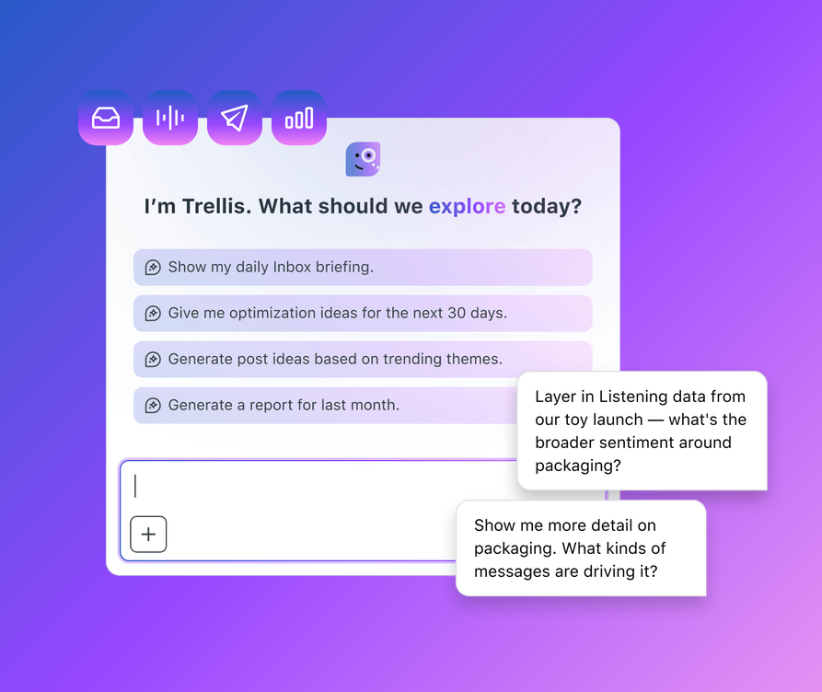
To bridge this analytical gap, Sprout Social unveiled significant enhancements to Trellis, its proprietary conversational AI teammate. Designed to operate through plain-language prompts, Trellis allows users to query their organization’s social performance data conversationally. Marketers can initiate broad inquiries—such as identifying the primary drivers of annual engagement—and seamlessly drill down into specific follow-up questions regarding high-yielding content strategies or experimental initiatives. Because the AI builds contextually upon previous answers, users can maintain a continuous analytical dialogue until they arrive at a definitive strategic path.
Complementing this conversational capability is a new platform-wide search functionality. This feature consolidates disparate data repositories, enabling professionals to simultaneously query tags, labels, users, and brand profiles from a centralized interface. Behind the scenes, Trellis aggregates and synthesizes the relevant information, drastically reducing the time required to compile cross-channel performance reports.
Further augmenting the analytical framework are structural improvements to platform tagging systems. Recognized widely as the foundational bedrock of qualitative analysis, tagging has been modernized through AI-recommended categorization, mandatory tag enforcement to eliminate human error, and a deep hierarchical structure allowing tags to be nested up to seven levels deep. This granular classification enables teams to slice their data with surgical precision, isolating niche trends and consumer sentiments that might otherwise remain obscured within macro-level metrics.
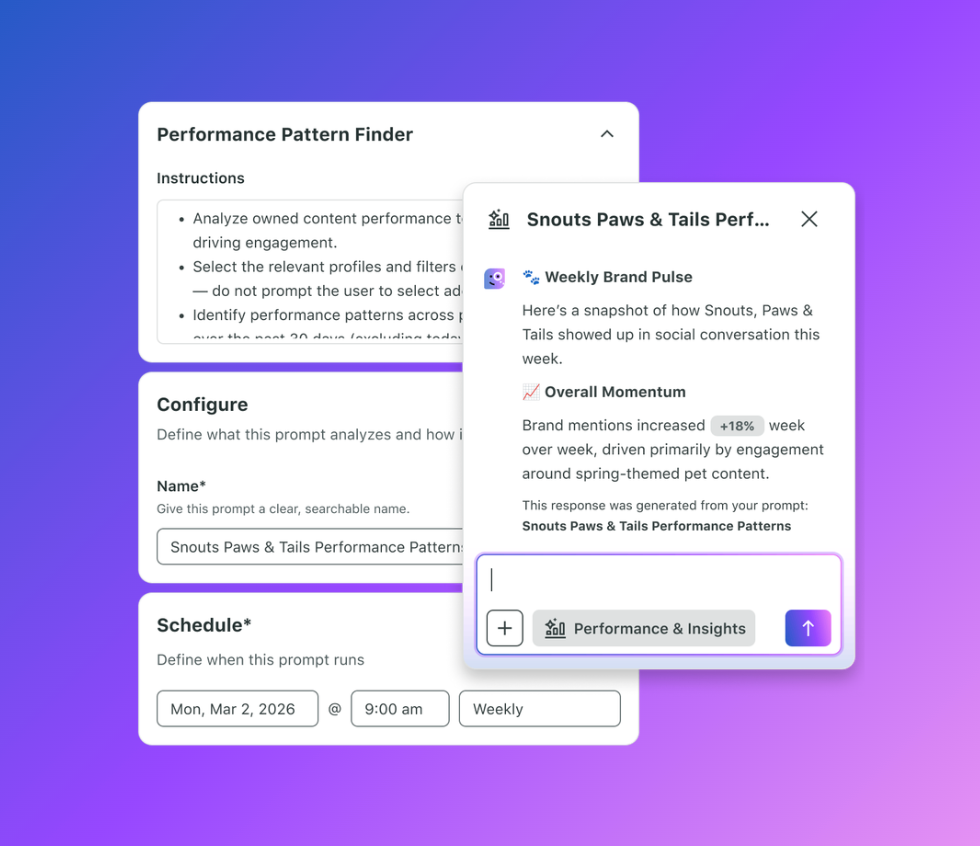
To ensure continuous operational oversight, Sprout Social also introduced Trellis Studio. This feature empowers marketing departments to automate recurring analytical tasks by selecting custom operational skills—such as monitoring sentiment spikes or tracking specific thematic trends—and running them on a predetermined schedule. Upon completion, the system delivers automated notifications, prompting analysts to engage with Trellis in a real-time conversation regarding the newly surfaced data anomalies. To accommodate expanding enterprise needs, Sprout Social rolled out flexible credit options, including Trellis Plus: Shared Credits, which pools account-level resources rather than restricting usage to individual user caps.
Contextualizing Brand Performance Within Broader Market Realities
While internal channel analytics reveal direct consumer interactions, successful modern brands must also account for the external macroeconomic and cultural environments in which they operate. The second pillar of Sprout Social’s strategic framework emphasizes the necessity of zooming out to monitor broader market conversations, industry perceptions, and competitor dynamics.
To facilitate this external surveillance, the platform launched Listening Topic Highlights. Operating continuously in the background, the feature automatically reviews an organization’s configured listening topics every day, proactively flagging statistically meaningful shifts in public discourse. Crucially, the system goes beyond merely alerting teams to volume spikes; it generates concise explanations detailing what changed, why the shift occurred, and its potential significance to the enterprise. This automation eliminates the labor-intensive requirement for analysts to manually scan complex charts and piece together fragmented narratives across the web.
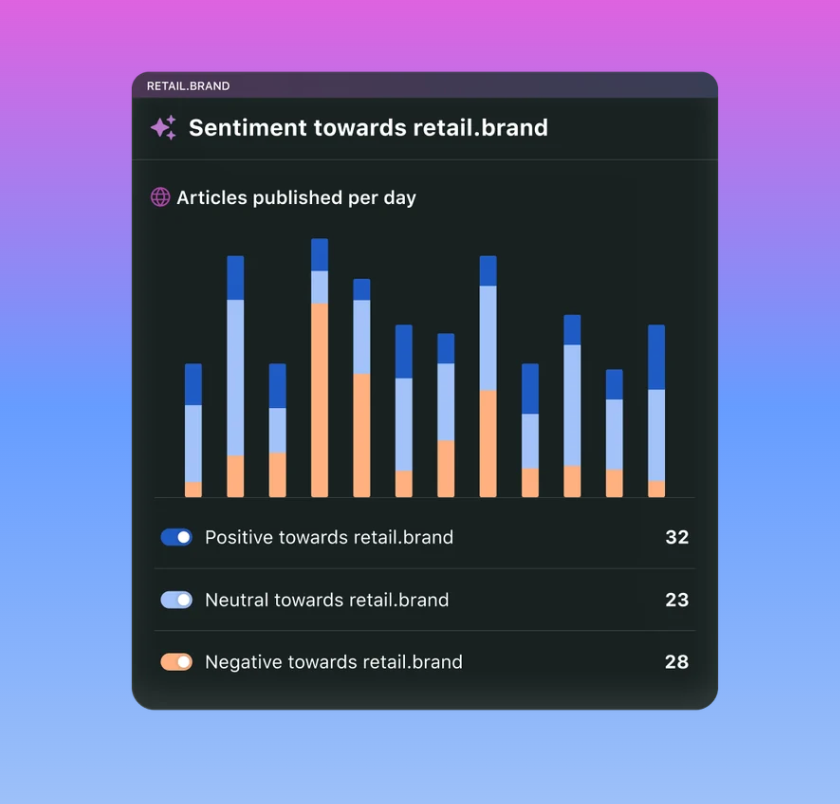
Building upon this capability, Sprout Social announced the official launch of NewsWhip AI Sentiment Analysis. Developed to answer the executive-level question of how external news coverage impacts specific brand equity, the tool ingests real-time news articles and web publications, filtering them through the unique contextual lens of the brand. By evaluating media sentiment, tracking core messaging pillars, and categorizing coverage into positive, negative, or neutral trajectories, NewsWhip AI equips communications leaders with rapid, evidence-based answers regarding brand reputation in the public sphere.
Industry observers note that the integration of external news monitoring with social listening data represents a critical maturation point for enterprise marketing software. As public perception is increasingly shaped by a volatile mix of traditional journalism and viral social commentary, tools capable of unifying these disparate information streams provide a vital competitive advantage for crisis management and proactive brand positioning.
Executing Strategy Across Expanded Digital Ecosystems
Having analyzed internal metrics and contextualized external market behavior, the final stage of the 2027 strategy focuses on execution. Consumer attention is notoriously fragmented across a proliferation of digital touchpoints, necessitating agile publishing workflows that meet audiences precisely where they consume content.
Sprout Social addressed this operational reality by announcing major network expansions within its publishing suite. Throughout the preceding year, the platform extended native publishing capabilities to Snapchat and Reddit, allowing brands to integrate these vital demographic strongholds into their existing operational routines without resorting to disjointed, manual posting methods. Furthermore, the company confirmed the upcoming Q4 rollout of native YouTube Posts support, enabling marketers to publish, schedule, and manage content natively within their centralized Sprout workflows to drive deeper audience engagement on the world’s leading video platform.
In tandem with core publishing updates, Sprout Social revealed a comprehensive technological overhaul for its Influencer Marketing Campaigns module. Recognizing that influencer partnerships frequently bog down marketing teams in manual setup procedures and cumbersome spreadsheets, the upgraded system leverages artificial intelligence to streamline the entire lifecycle. Users can upload standard campaign briefs, after which the AI automatically provisions the campaign framework, identifies compatible content creators, and assists in drafting initial outreach communications. Creator data is subsequently organized into a unified, customizable table featuring AI-driven summary columns that distill the latest performance metrics, ensuring brands can act swiftly on emerging updates rather than digging through raw data.
To maintain corporate transparency, Sprout Social noted that several features highlighted during the presentation constitute forward-looking statements subject to standard market risks, economic uncertainties, and regulatory variables as outlined in the company’s official SEC filings and periodic earnings disclosures.
Industry Perspectives and Future-Proofing for 2027
To ground these technological innovations in practical application, the Breaking Ground event featured an executive panel discussion with prominent social media leaders Jill Trimbach of Indiana University and Marie Obsuna of Bell Bank. Drawing from their extensive institutional experience, the panelists reflected on the structural challenges of the past year and outlined how their respective organizations are recalibrating operations for the upcoming fiscal cycle.
Trimbach and Obsuna engaged in a detailed dialogue regarding the indispensable workflows that sustain their daily operations, detailing protocols for executing rapid responses when unexpected cultural moments or crises achieve viral velocity. The leaders also shared strategic advice on foundational organizational adjustments that marketing departments should implement immediately to secure a competitive advantage heading into January. The discussion underscored a shared industry consensus: institutional agility, supported by sophisticated automation and unified data structures, will separate thriving enterprise brands from their lagging competitors in the years ahead.
Concluding the 30-minute broadcast, Sprout Social presented attendees with a pragmatic 2027 starter checklist designed to facilitate immediate adoption of the newly announced capabilities. The actionable guide advises digital marketing teams to begin by auditing and refining their tagging hierarchies using AI recommendations, initiating exploratory conversations within Trellis AI to establish baseline brand benchmarks, and configuring recurring Trellis Skills tailored to specific organizational reporting cadences. Additionally, the company recommended its comprehensive professional education

course on social intelligence to help practitioners master advanced analytical methodologies ahead of the new year.
As digital platforms continue to multiply and consumer expectations accelerate, the convergence of conversational artificial intelligence, deep external market listening, and unified multi-network publishing represents the new baseline for enterprise social strategy. Through its Breaking Ground Q4 event, Sprout Social has established a rigorous, technology-forward blueprint designed to empower brands to navigate this complex ecosystem with confidence, precision, and strategic foresight.
Related posts: