Pinterest Overhauls Ads Manager Campaign Objectives to Streamline Advertiser Experience

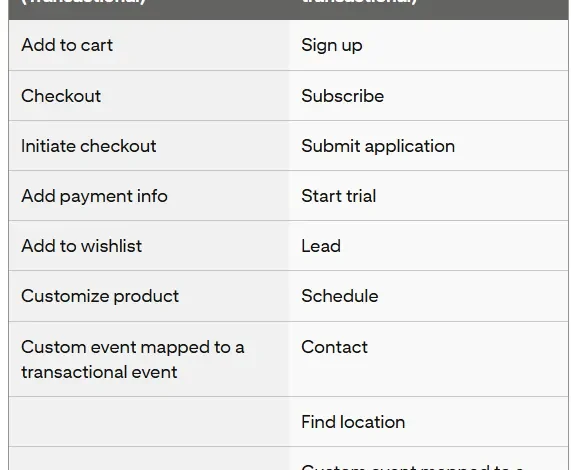
Pinterest has announced a strategic update to its advertising platform, renaming several key campaign objectives within its Ads Manager to help marketers better align their budgets with specific business outcomes. The changes, which primarily affect how conversion and catalog sales are categorized, are designed to remove ambiguity from the campaign setup process. By transitioning to more intuitive, goal-oriented terminology, the visual discovery platform aims to make its ad infrastructure more accessible to both seasoned enterprise brands and small-to-medium-sized businesses (SMBs) newly venturing into paid social media marketing.
The updates reflect a broader industry trend among digital advertising ecosystems. Major platforms including Meta, Google, and TikTok have all undergone similar structural revisions in recent years, shifting away from technical or metric-driven nomenclature toward plain-language business objectives. As digital marketing budgets face increased scrutiny and ROI demands tighten, simplifying ad creation tools has become a critical competitive differentiator for platforms vying for advertiser spend.
An Overview of the Objective Restructuring
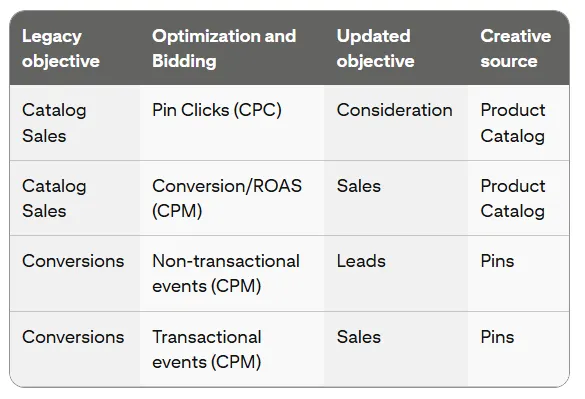
Under the newly rolled-out framework, Pinterest is renaming and refining its existing Conversions and Catalog Sales objectives. The platform is shifting toward distinct labels—specifically Leads, Sales, and Consideration—depending on the context of the marketing funnel.
According to Pinterest’s updated documentation, the structural definitions are now bifurcated based on the nature of the desired consumer action:
- Leads campaigns are engineered to drive non-transactional outcomes. This encompasses actions such as newsletter signups, form submissions, whitepaper downloads, and initial inquiries.
- Sales campaigns are explicitly dedicated to driving transactional outcomes. This covers traditional e-commerce metrics, including add-to-cart events, catalog purchases, and final checkouts.
By decoupling non-transactional lead generation from bottom-funnel revenue transactions, Pinterest is providing marketers with cleaner segmentation. Previously, advertisers navigating the Ads Manager often had to decipher whether a catalog-based campaign should fall under broad conversions or specialized sales categories, occasionally leading to misconfigured optimization parameters.
Background and Context of the Platform Evolution
To understand the necessity of this update, it is essential to examine Pinterest’s evolution as an advertising medium. Unlike traditional search engines, where users express immediate intent through text queries, or social media networks driven by interpersonal connection and real-time news, Pinterest operates primarily as a visual search and discovery engine. Users frequently turn to the platform months in advance of a purchase—ranging from holiday planning and home renovations to weddings and major life events.

This unique user journey means that advertising on Pinterest often spans a longer consideration window compared to impulse-driven platforms. Consequently, ad objectives must accurately reflect where a consumer sits in the inspiration-to-purchase pipeline. Over the past several years, Pinterest has aggressively scaled its commerce capabilities, introducing features like verified merchant programs, integrated product catalogs, and checkout-without-leaving-the-app capabilities.
As these commerce tools matured, the Ads Manager backend grew increasingly complex. Advertisers attempting to leverage dynamic retargeting through product catalogs frequently reported friction in selecting the appropriate campaign objectives. The current simplification initiative serves as a structural cleanup, harmonizing Pinterest’s ad creation workflow with its advanced commerce ecosystem.
Migration Timeline and Deprecation Schedule
A critical consideration for media buyers managing active accounts is the transition timeline established by Pinterest. Sudden structural changes to ad managers can often disrupt ongoing campaigns if not managed with sufficient runway. To mitigate potential disruption, Pinterest has implemented a phased deprecation schedule that gives brands ample time to adapt.
- Immediate Implementation: The newly renamed objectives and updated listings are live globally within the Pinterest Ads Manager. New campaigns must utilize the updated terminology.
- Backward Compatibility: Existing Conversions and Catalog Sales campaigns will remain fully functional and editable. Advertisers do not need to instantly pause and recreate live campaigns that utilize the legacy naming conventions.
- Hard Sunset Date: Pinterest has set a definitive expiration date of April 30, 2027. Until this date, legacy campaigns will continue to serve impressions and optimize normally. After April 30, 2027, all remaining legacy campaigns will be automatically archived by the system.
Performance and Delivery Continuity
One of the primary concerns for digital marketers whenever an ad platform modifies its user interface or backend taxonomy is the potential impact on algorithmic delivery, machine learning ramp-up times, and cost-per-action (CPA) efficiency.
Pinterest has proactively addressed these concerns, assuring advertisers that the updates are purely cosmetic and structural rather than algorithmic. The underlying machine learning models powering delivery, audience targeting, and bid optimization remain unchanged.
According to official platform guidance, advertisers will not experience any immediate performance fluctuations as a direct result of the renaming. Furthermore, campaign ramp times—the initial learning phase required for Pinterest’s algorithms to stabilize delivery based on creative sources and audience signals—will remain identical to pre-update standards. Media buyers are not required to alter their creative assets, bidding strategies, or budget allocations to accommodate the change.
Fact-Based Analysis of Implications for Advertisers
While the update does not alter algorithmic performance, it carries several important strategic implications for digital marketing agencies, internal marketing teams, and programmatic buyers.
Reduced Onboarding Friction
For brands scaling across multiple channels, training junior media buyers or onboarding new agency partners can be resource-intensive. By aligning its objective naming conventions with industry standards used by larger platforms like Meta and Google Ads, Pinterest reduces the learning curve. A marketer familiar with setting up a "Lead Generation" or "Sales" campaign on other networks will find an intuitive, friction-free environment within Pinterest Ads Manager.
Cleaner Reporting and Funnel Analysis
Separating non-transactional lead generation from transactional sales ensures that performance reporting is less prone to misinterpretation by cross-functional stakeholders. When presenting campaign outcomes to executive leadership, clear categorizations—Leads versus Sales—prevent confusion regarding whether a campaign was intended to capture direct revenue or build a prospective customer pipeline.
Long-Term Strategic Planning
With a deprecation window extending through April 2027, advertisers have a generous buffer of more than two years to audit their historical campaign templates, update standard operating procedures (SOPs), and migrate automated rules. However, digital agencies and enterprise brands are advised to update their internal account templates immediately to prevent the creation of new campaigns utilizing soon-to-be-deprecated naming conventions.
Broader Industry Context and Platform Strategy
Pinterest’s latest UX refinement is part of a broader, sustained effort to capture a larger share of global digital advertising budgets, which continue to tilt heavily toward performance-driven, measurable channels. As privacy regulations, cookie deprecation, and signal loss make cross-site attribution increasingly difficult, walled-garden platforms like Pinterest are heavily incentivized to make their native measurement and campaign creation tools as foolproof as possible.
By investing in usability enhancements, Pinterest is signaling its commitment to lowering the barrier to entry for performance marketers. While the platform has historically been viewed primarily as an upper-funnel branding tool for lifestyle, fashion, and home decor brands, these ongoing refinements to lead and sales objectives reinforce its viability as a full-funnel performance marketing channel.
As the digital advertising landscape continues to mature, platforms that successfully bridge the gap between sophisticated machine learning capabilities and simple, intuitive user interfaces will retain a distinct advantage in securing sustained marketing investment. Pinterest’s targeted overhaul of its Ads Manager objectives represents a measured, practical step toward achieving that balance.
Related posts: