The Complete Guide to B2B Procurement Platforms: Navigating Software versus Marketplaces

A B2B procurement platform is software or an online marketplace a business uses to request, approve, order, and pay for what it buys from other businesses. In the modern corporate landscape, the terminology has become increasingly blurred, leading many organizations to invest in high-cost enterprise software when simpler, more accessible solutions would suffice. Understanding the distinction between internal procure-to-pay (P2P) systems and external buying marketplaces is no longer just a technical necessity—it is a critical fiscal decision for operations and finance teams.
The current market landscape is bifurcated. On one side, P2P and source-to-pay (S2P) software—such as Procurify, Precoro, Coupa, and SAP Ariba—serves as the internal command center for business workflows. On the other side, B2B marketplaces like Amazon Business, Alibaba.com, and Faire function as digital retail environments designed to aggregate supply and simplify sourcing. Misinterpreting these two categories often results in a 15-person startup sitting through a high-pressure sales demonstration for a suite priced at $50,000 annually, when the company’s actual needs could be met with a free Amazon Business account coupled with the native purchase order modules in QuickBooks Online.
The Evolution of Procurement Technology
The history of corporate procurement is a transition from manual, paper-based purchase orders to digital, automated ecosystems. Throughout the early 2000s, procurement was largely decentralized, with individual departments handling their own vendor relationships. As businesses grew more global, the risk of "maverick spend"—purchases made outside of approved channels—led to the rise of centralized procurement software.
By the mid-2010s, the emergence of the "consumerization of B2B" forced a change in how these platforms were designed. Users who were accustomed to the frictionless experience of consumer e-commerce sites demanded the same ease of use in their workplace tools. This shift birthed the modern era of "punch-out" catalogs, which allow employees to shop on external marketplaces while maintaining the internal governance required by their finance departments.
Distinguishing P2P Software from Marketplaces
The primary objective of procurement software is control. These platforms manage the lifecycle of a purchase: requisition, approval, purchase order (PO) generation, invoice processing, and, ultimately, payment. They are designed to sit atop a company’s existing ERP or accounting system, acting as a gatekeeper for cash flow.
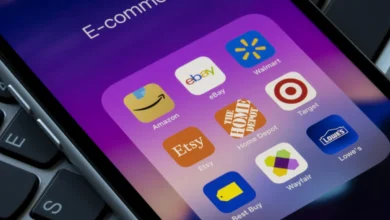
In contrast, B2B marketplaces are designed for discovery and convenience. They provide a unified interface to access thousands of vendors, often with business-exclusive pricing and specialized shipping terms. While P2P software is a closed loop, marketplaces are an open network. For growing product-based companies, the most effective strategy often involves a hybrid approach: utilizing marketplaces for inventory sourcing and P2P software to enforce spending policies and audit trails.
The Mechanism of the Three-Way Match
For organizations dealing with physical goods, the "three-way match" is the gold standard of financial control. This automated process reconciles three distinct documents: the original purchase order, the receiving report (confirming the goods have arrived), and the vendor’s invoice.
The necessity of this process cannot be overstated. A purchase order may authorize a shipment of ten units, but a supplier might ship six, and the invoice might reflect a charge for eight. Without a robust P2P system to conduct a three-way match, these discrepancies often go unnoticed, leading to "leakage" in the procurement budget. A two-way match—which only compares the PO against the invoice—is sufficient for services or digital assets, but it remains a dangerous oversight for inventory-heavy industries. Data from APQC (American Productivity & Quality Center) suggests that firms utilizing automated three-way matching reduce their invoice processing costs by over 60% compared to those relying on manual verification.
Connectivity via Punch-Out Catalogs
Punch-out catalogs serve as the technological bridge between the two procurement worlds. By utilizing protocols such as cXML (Commerce eXtensible Markup Language) or OCI (Open Catalog Interface), a procurement system can "punch out" to a supplier’s live e-commerce site.
When an employee shops via a punch-out catalog, the interface looks and feels like a standard consumer website. However, once the checkout button is pressed, the cart is transmitted back to the internal procurement system as a requisition, triggering the company’s internal approval workflow. This ensures that even when employees shop at large marketplaces like Amazon Business, the finance team retains complete visibility and control over the spending before the order is finalized.
The Economic Reality: ROI and Cost Analysis
The decision to implement a procurement platform should be rooted in a clear return on investment (ROI). According to research by Ardent Partners, the cost of processing a single purchase order can fluctuate wildly—from $14 for highly automated organizations to over $54 for those reliant on manual, paper-heavy workflows.
Consider a mid-sized company processing 200 invoices per month. If the company moves from manual processing to an automated P2P platform, they can expect to close a significant portion of the "process gap." For many, the subscription cost of a platform like Precoro or Procurify is offset within the first six months by the reduction in labor hours and the elimination of billing errors. However, for a smaller team with only 20 invoices per month, the math rarely supports a high-tier enterprise software investment. In these cases, the cost of the subscription often exceeds the savings generated by the software’s efficiency.
Pricing Models and Market Tiers
The procurement software market is divided by its pricing transparency. Small-to-mid-sized business (SMB) tools, such as Procurify or ProcurementExpress.com, typically offer transparent, per-user pricing. This allows companies to forecast their expenditure accurately. Conversely, enterprise suites like Coupa or SAP Ariba often rely on opaque, custom quotes that can reach into the hundreds of thousands of dollars annually, accounting for implementation, integration, and training.
Implementation timelines are another critical consideration. A standard SMB rollout usually takes between 4 and 12 weeks. Large-scale enterprise deployments, however, can take upwards of a year. Common pitfalls during this phase include poor data hygiene—such as failing to clean out duplicate vendor records before migration—and a lack of change management, which can lead to low user adoption rates.
The Role of Artificial Intelligence
The latest trend in procurement technology is the integration of AI. While marketing materials often tout AI as a transformative feature, its actual application is currently limited to specific administrative tasks. Companies like Zip are using AI to route intake requests to the appropriate stakeholders, while others like Coupa are developing AI agents to assist with contract management.
However, industry experts advise that businesses should treat AI as a secondary feature rather than a primary driver for procurement software selection. The fundamentals of the platform—the strength of its approval routing, the reliability of its three-way matching, and the ease of its integration with the company’s accounting software—remain the most important factors for long-term success.
Determining the Right Time for Adoption
So, when does a company reach the tipping point for dedicated procurement software? A clear hierarchy of needs usually dictates the answer:
- The Spreadsheet Era: Companies with fewer than 30 employees and a centralized approval process can often manage procurement effectively using spreadsheets and basic accounting software like QuickBooks Online.
- The Marketplace Era: Organizations that rely heavily on office supplies or simple inventory often find that Amazon Business or Faire provides enough control and visibility for free or at a minimal cost.
- The Integrated Era: Once an organization reaches a scale where multiple locations, complex approval hierarchies, and frequent invoice discrepancies become a burden, an SMB-focused P2P platform is the logical next step.
- The Enterprise Era: Only when a company possesses a dedicated procurement department, complex global supply chains, and a need for deep ERP integration does a full-scale S2P suite become a justifiable expense.
Strategic Recommendations
When selecting a platform, the most successful organizations avoid the trap of "feature bloat." Instead, they prioritize the end-user experience. If the procurement system is too complex to navigate, employees will inevitably revert to "maverick spending," bypassing the system entirely to purchase goods on personal cards.
A rigorous selection process should include a pilot program using the company’s most complex, real-world purchase scenario. By testing how the software handles that specific transaction—from the initial request through the final three-way match—stakeholders can identify potential friction points before signing a multi-year contract. Ultimately, the best procurement platform is not the one with the most bells and whistles; it is the one that employees actually choose to use.