Amazon expands Global Warehousing and Distribution to Europe to streamline cross-border logistics

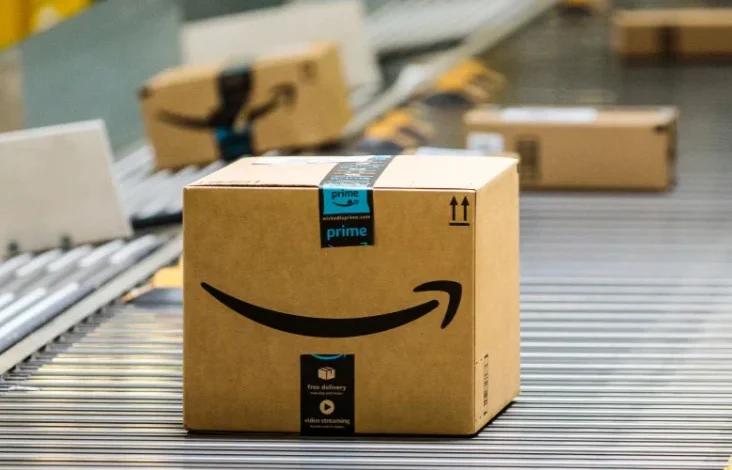
The e-commerce landscape is undergoing a significant logistical shift as Amazon announced its intent to bring its Global Warehousing and Distribution (GWD) service to Europe by the end of this calendar year. This expansion marks a pivotal moment for third-party sellers, who have long struggled with the complexities of international trade, fragmented inventory management, and the high costs associated with traditional cross-border fulfillment. By introducing the GWD model to the United Kingdom, Germany, France, Italy, and Spain, Amazon is positioning itself to further dominate the European supply chain by centralizing stock management for merchants.
The GWD service represents a departure from traditional fulfillment strategies, which often require merchants to proactively ship stock to various regional warehouses based on projected demand. Under the new model, sellers can maintain a single, consolidated pool of inventory in a location proximate to their manufacturing hubs. This eliminates the need for merchants to split their production runs into smaller, country-specific batches before the items have even been sold.
A Chronology of Amazon’s Logistical Evolution
Amazon’s journey toward total supply chain integration began long before the launch of GWD. In the early 2000s, the company primarily acted as a platform for third-party sellers to list goods, leaving the complexities of warehousing and shipping to the merchants themselves. The introduction of Fulfillment by Amazon (FBA) in 2006 fundamentally altered this dynamic, allowing merchants to leverage Amazon’s existing warehouse infrastructure.
However, as global trade grew increasingly complex, FBA became insufficient for large-scale international manufacturers. In 2022, Amazon launched Amazon Warehousing and Distribution (AWD), a precursor to the current service, designed to provide long-term storage and easier replenishment for FBA centers. GWD is the logical evolution of this strategy, specifically addressing the friction points of international logistics.
By the end of 2024, the GWD rollout will cover seven new regions, including Japan and Canada alongside the five key European markets. This represents a rapid scaling phase; until this announcement, the service was exclusively available to sellers and customers operating within the United States. The acceleration of this timeline indicates that Amazon is prioritizing international infrastructure to counteract the rising costs of global shipping and the volatility of international trade routes.
Analyzing the Mechanics of Global Warehousing
The core value proposition of GWD is the decoupling of inventory storage from regional demand forecasting. In a standard retail model, a seller manufacturing in Shenzhen, China, might be forced to guess how many units of a specific product will be needed in Germany versus France, often resulting in "dead stock" in one region and "stockouts" in another.
With GWD, products are held in bulk near the point of manufacture. Once a consumer places an order on an Amazon storefront in any of the supported European countries, the system triggers a replenishment request. The item is then moved from the centralized bulk facility to the local FBA fulfillment center nearest to the end customer.
According to internal Amazon data, this method reduces replenishment times to FBA centers by up to five days compared to traditional merchant-led shipping methods. Furthermore, because storage costs in manufacturing-adjacent hubs are significantly lower than those in premium European fulfillment centers, sellers can maintain larger quantities of stock for longer periods without incurring the punitive storage fees typically associated with high-density, urban-proximate Amazon warehouses.
Supporting Data and Economic Context
The necessity of this expansion is rooted in the current state of cross-border e-commerce. Data from recent market reports indicates that European e-commerce is increasingly fragmented, with varying tax regulations, customs procedures, and language requirements posing significant barriers to entry for Small and Medium-sized Enterprises (SMEs).
Current industry benchmarks suggest that logistics costs account for approximately 10% to 15% of the total retail price of a product sold across borders. By streamlining the supply chain through GWD, Amazon aims to reduce these overheads, potentially lowering prices for the consumer while simultaneously increasing the profit margins of their third-party seller partners.
The move is also a strategic response to the increasing competition from alternative global e-commerce platforms. Retailers are currently facing pressure from low-cost, direct-to-consumer platforms that utilize aggressive logistics strategies to ship products globally at record speeds. By optimizing the "middle mile" of the supply chain, Amazon is reinforcing its moat, ensuring that its third-party sellers remain competitive against these emerging market players.
Official Perspectives and Market Implications
While Amazon has not released a specific quote regarding the European expansion, company spokespeople have previously emphasized the "unified view" that GWD provides. By allowing sellers to manage their global inventory from one dashboard, Amazon is effectively acting as a global supply chain manager, rather than just a retail platform.
Industry analysts suggest that this development could have profound implications for the logistics industry. Traditional freight forwarders and third-party logistics (3PL) providers may find themselves in a precarious position as Amazon continues to internalize services that were previously outsourced. If a seller can manage their entire inventory lifecycle within the Amazon ecosystem—from the factory floor in China to the consumer’s doorstep in Milan—the incentive to work with external shipping and warehousing partners decreases significantly.
However, there are challenges to this model. Reliance on a single, centralized inventory pool means that if the main facility experiences a disruption—whether due to regional political instability, port strikes, or natural disasters—the impact on the seller’s entire global operation could be immediate and severe. Furthermore, sellers must balance the convenience of the Amazon-operated model against the loss of control and data transparency that comes with integrating their entire supply chain into a single proprietary platform.
Future Outlook and Strategic Consolidation
The expansion into the United Kingdom, Germany, France, Italy, and Spain serves as a test case for how Amazon intends to manage international trade in the coming decade. The United Kingdom and Germany, in particular, represent two of the largest e-commerce markets in the world. Success in these regions will likely determine the speed at which Amazon rolls out GWD to other emerging markets.
The long-term implication is a more homogenized European e-commerce experience. As logistics barriers dissolve, the "national" boundaries of e-commerce become less relevant to the end consumer. A customer in Spain can expect the same delivery speed and reliability as a customer in the United Kingdom, regardless of where the product was manufactured.
For Amazon, the goal is clear: to remove the friction of global trade until "cross-border" is no longer a technical term, but a seamless reality. By investing heavily in the infrastructure required to support this, the company is betting that the efficiency gains of centralized storage will outweigh the operational risks. As the end of the year approaches, both investors and market participants will be watching closely to see if the GWD integration meets the high performance standards promised by the e-commerce giant.
Ultimately, this move solidifies Amazon’s transition from a retail store to a comprehensive global logistics utility. As the company continues to refine its warehouse network, the gap between traditional retail and digital marketplaces will continue to narrow, likely leading to a new era of hyper-efficient, demand-driven global distribution. Whether this centralization benefits the broader economy or merely consolidates power within a single corporate entity remains a subject of ongoing debate among policymakers and economic analysts, but for the individual seller, the path forward appears increasingly paved by Amazon’s own infrastructure.
Related posts: