Bernie Sanders Introduces the Ban Flock Act as Public Backlash Against Automated License Plate Readers Intensifies

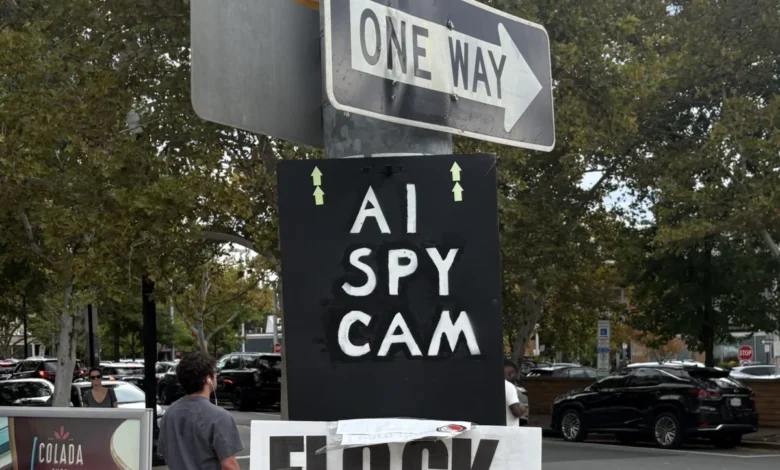
The debate over automated surveillance and the erosion of digital privacy in public spaces reached Capitol Hill this week, as Senator Bernie Sanders introduced legislation aimed at severely restricting the use of automatic license plate reader (ALPR) technology by federal agencies. The proposed measure, officially titled the Ban Flock Act, arrives amid a sweeping wave of public scrutiny, municipal contract terminations, and growing civil liberties concerns surrounding Flock Safety, the nation’s largest private vendor of highway and neighborhood surveillance cameras.
While the legislative text broadly addresses all ALPR systems rather than singling out a specific corporation, the political momentum behind the bill is inextricably linked to Flock’s explosive growth. Operating a network of over 120,000 cameras nationwide, Flock’s infrastructure processes an astonishing 20 billion vehicle reads every month. This massive data collection apparatus has increasingly drawn the ire of privacy advocates, local communities, and lawmakers who argue that continuous tracking of civilian movements violates fundamental expectations of privacy.
The introduction of the Ban Flock Act marks a significant escalation in the legislative pushback against corporate-run public surveillance networks. Co-sponsored by Senator Jeff Merkley of Oregon and Representative Alexandria Ocasio-Cortez of New York, the bill proposes sweeping restrictions that could fundamentally alter how law enforcement and federal agencies access and utilize automated tracking data.
Core Provisions of the Ban Flock Act
If enacted, the Ban Flock Act would institute a near-total ban on the use of ALPR technology by federal agencies. This restriction extends not only to systems directly operated by federal personnel, but also to external databases, preventing agencies from tapping into data collected by local police departments, state highway patrols, and private commercial networks.
The legislation carves out very narrow exceptions. Automated license plate readers would still be permitted for traditional toll collection operations. Furthermore, the bill allows for future exceptions authorized explicitly by Congress, though any such legislative approvals would come with a strict caveat: data retention periods would be capped at a maximum of 48 hours.
To compel compliance at the state and local levels, the Ban Flock Act employs significant financial leverage. Starting in the first fiscal year following its enactment, non-compliant state and local governments would face the revocation of federal grants distributed by five major federal departments, most notably the Department of Justice and the Department of Homeland Security. For many municipalities heavily reliant on federal law enforcement and infrastructure grants, the choice between keeping the federal funding or retaining the surveillance technology would heavily favor compliance.
Additionally, the bill empowers everyday citizens by establishing a private right of action, allowing individuals to sue the federal government over violations of the statute. State attorneys general would also be granted enforcement powers, creating a multi-layered mechanism to ensure adherence to the new privacy standards.
The Rise of Flock Safety and the Surveillance Boom
Founded with the stated mission of eliminating crime, Flock Safety rapidly expanded from a localized neighborhood watch tool into a ubiquitous corporate surveillance giant. By deploying solar-powered, high-definition cameras capable of capturing vehicle makes, models, colors, and license plates in real-time, the company created an interconnected web of surveillance data that law enforcement agencies across the United States could query at will.
For police departments, the appeal of Flock’s platform was undeniable. The technology allows authorities to set up "hot lists" that instantly alert law enforcement when a vehicle associated with a stolen car, an Amber Alert, or an outstanding warrant passes a camera. Proponents argue that the system acts as a force multiplier, helping police solve crimes ranging from grand theft auto to violent felonies with unprecedented speed.
However, the rapid deployment of these cameras occurred largely outside the view of the general public, leading to sharp criticism from civil liberties organizations such as the American Civil Liberties Union (ACLU) and the Electronic Frontier Foundation (EFF). Critics point out that the continuous logging of millions of ordinary citizens’ daily commutes creates a massive, searchable database of civilian movements. Unlike traditional police work, which generally requires reasonable suspicion or a warrant, ALPR networks track the innocent and the suspected alike, storing historical location data that can be cross-referenced to map an individual’s daily routines, associations, and lifestyle habits.
A Chronology of Mounting Public Backlash and Corporate Adjustments
The friction between corporate surveillance expansion and public demand for privacy has reached a boiling point over the last year, characterized by a rapid succession of protests, municipal policy suspensions, and contract cancellations.
The timeline of public pushback highlights a deteriorating relationship between communities and automated surveillance vendors:
- Early 2024: Flock Safety reports that its national network is processing upwards of 20 billion vehicle reads per month, underlining the sheer scale of its operations.
- February 2024: Amid mounting privacy questions, Flock publishes a blog post defending its infrastructure while attempting to distance itself from how local police departments handle the data, asserting that usage policies are strictly up to municipal agencies.
- Summer 2024: Community protests erupt in multiple states. Grassroots organizations challenge city councils over transparency, leading to temporary freezes on camera installations in several jurisdictions.
- July 2026: The Los Angeles Police Department (LAPD) formally suspends its use of Flock surveillance cameras amid intense scrutiny over privacy vulnerabilities and data governance issues.
- August 2026: Cities across the United States terminate their contracts with Flock Safety at a record-breaking pace. Facing existential threats to its municipal business model, Flock CEO Garrett Langley announces critical updates to the platform.
- Late August 2026: Flock alters its default data retention policy, reducing the storage window for captured vehicle data from 30 days down to seven days. Furthermore, the company introduces mandatory automated audit tools designed to lock out law enforcement officers when unusual search patterns are detected.
- October 2026: Senator Bernie Sanders introduces the Ban Flock Act in the United States Senate, bringing the fight over private-public surveillance frameworks to the federal legislative stage.
Incidents of Abuse and the Demand for Internal Controls
As public skepticism mounted, high-profile instances of law enforcement abuse fueled the argument that automated license plate readers lack adequate safeguards.
One of the most damaging incidents occurred in Wisconsin, where a former Milwaukee police officer pleaded guilty to misconduct in office. According to court documents, the officer misused Flock’s platform by running 179 unauthorized searches to track his former romantic partner and her ex-partner, routinely logging false explanations such as "investigation" to bypass internal oversight.
Such incidents exposed significant vulnerabilities in how local agencies monitor access to sensitive civilian data. In response to these pressures, Flock Safety has attempted to implement technical barriers to prevent insider threats. During recent industry discussions, including a podcast appearance by investor Jason Calacanis, concepts such as a "double-key" authorization system—requiring two independent approvals to execute certain searches—have been floated. CEO Garrett Langley acknowledged that the feature is currently under active internal review.
Broader Economic and Political Implications
While the Ban Flock Act faces significant hurdles in a divided Congress where bipartisan consensus on tech regulation is difficult to achieve, its introduction marks a watershed moment for the debate over data privacy and law enforcement technologies.
The legislation underscores a growing legislative appetite to address the commercialization of public safety. For years, cash-strapped local governments relied on private tech vendors to provide infrastructure that municipal budgets could not otherwise afford. However, this reliance created a complex entanglement between public policing and private data brokers, raising fundamental questions about constitutional protections against unreasonable searches and seizures.
Industry observers note that even if the Ban Flock Act does not pass in the immediate legislative cycle, the political pressure it generates will likely accelerate the trend of municipalities reconsidering their vendor contracts. Companies operating in the surveillance tech sector are being forced to adapt to a new regulatory reality where data retention limits, strict internal audits, and transparency are no longer optional features, but prerequisites for survival.
As the debate continues to unfold, industry leaders, privacy advocates, and policymakers are bracing for further showdowns regarding the limits of digital oversight. With upcoming tech forums—such as the scheduled appearance of Flock CEO Garrett Langley at the upcoming TechCrunch Disrupt event in San Francisco—the intersection of venture-backed surveillance innovation and public accountability remains one of the most contentious battlegrounds in modern technology policy.
Related posts: