Navigating the Digital Landscape: A Comprehensive Review of Leading VPN Services and Security Standards

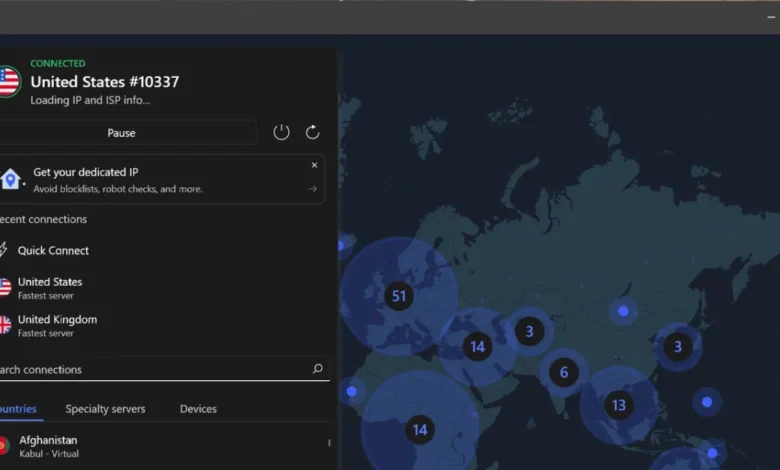
The virtual private network (VPN) market has evolved from a niche tool for tech enthusiasts into a mainstream necessity for millions of users concerned about online privacy, data sovereignty, and censorship circumvention. As remote work becomes the global standard and cyber threats grow increasingly sophisticated, the barrier between professional-grade security and consumer-accessible software has narrowed. Selecting the right VPN requires balancing connection speeds, rigorous privacy policies, and verified infrastructure. This analysis examines several prominent providers, evaluates their performance metrics, and highlights significant industry trends regarding security auditing and data transparency.
The Architecture of Trust: How VPNs Are Evaluated
The efficacy of a VPN is fundamentally defined by two metrics: connection latency and the integrity of the encryption tunnel. Modern speed testing requires rigorous methodology, as performance is highly dependent on geographic proximity, local ISP throughput, and the server-side architecture of the provider. Objective analysis involves establishing a baseline connection speed, followed by multiple, time-staggered tests across domestic and international server clusters.
Beyond performance, security integrity is verified through specialized diagnostic tools. Industry-standard testing involves probing for DNS leaks, WebRTC leaks, and IP address exposure using resources such as Browser Leaks. Furthermore, packet-sniffing tools like Wireshark are employed to ensure that data packets are fully encapsulated within the advertised encryption protocols. The most reliable providers in the current landscape distinguish themselves through third-party security audits and the publication of annual transparency reports, which outline how they handle government requests for user data.
Evaluating Market Contenders: Performance and Privacy
Surfshark remains a significant player in the commercial VPN space, particularly for users seeking a balance between high-end features and accessibility. Its infrastructure supports advanced configurations, including multi-hop connections and split tunneling. While it lacks open-source client applications—a feature that allows independent security researchers to inspect the code for vulnerabilities—it compensates with a commitment to transparency, including a well-documented warrant canary and consistent transparency reporting. The provider’s pricing structure, which heavily incentivizes long-term subscriptions, makes it a competitive option for households requiring broad device support.
In contrast, IVPN offers a distinct model aimed at users with higher privacy requirements. By eschewing traditional account structures—such as email-based signups—in favor of randomized identification keys, IVPN minimizes the data footprint left by its users. This design ensures that even in the event of a security breach at the provider level, there is no personally identifiable information (PII) to compromise. While its device limits on the standard plan are restrictive compared to industry peers, its focus on anonymity and support for cryptocurrency payments positions it as a preferred choice for privacy advocates.
The Challenges of Free VPN Models
The "free" VPN sector continues to present significant risks to user privacy, often serving as a cautionary tale in data management. EventVPN, for example, attempts to monetize its service through an ad-supported framework. While the company asserts that it utilizes Apple’s App Tracking Transparency (ATT) to serve ads without harvesting PII, the user experience is frequently marred by pervasive advertising. The technical necessity of watching 30-second advertisements during the connection process introduces significant friction, and the performance inconsistency often renders these services less effective than their premium counterparts.
PrivadoVPN also operates in the free-tier space, offering a limited data allowance. While functional for basic tasks, the proliferation of marketing redirects during the onboarding process detracts from the user experience. Crucially, the lack of third-party audits and the provider’s relative lack of industry tenure create uncertainty regarding its long-term data handling practices compared to established leaders like ProtonVPN or Windscribe.
Historical Precedents and Industry Blacklists
The history of the VPN industry is marked by high-profile failures that underscore the importance of due diligence. Hola, once a popular free service, faced intense scrutiny after it was revealed in 2015 that the company’s peer-to-peer network was leveraged to facilitate a distributed denial-of-service (DDoS) attack. The incident highlighted the inherent dangers of peer-to-peer VPNs, where idle user bandwidth is essentially sold as a commodity. Today, Hola’s operational model remains largely unchanged, with its privacy policy explicitly stating that it collects IP addresses and browsing history, making it a poor choice for those prioritizing security.
X-VPN represents another category of concern. Despite its popularity on mobile app stores, the provider has faced scrutiny regarding its technical transparency. Reports from organizations like the Tech Transparency Project have raised questions about its corporate ties and the lack of clarity regarding its data logging practices. The use of proprietary protocols, rather than industry-standard open-source ones, makes it difficult for external researchers to verify the efficacy of its encryption, leading to its frequent omission from recommended security lists.
The Case for Data Transparency: Private Internet Access
The case of Private Internet Access (PIA) provides a compelling look at the practical application of a "no-logging" policy. In 2016, the company was subpoenaed by federal authorities in the United States regarding a criminal investigation into online threats. Because PIA maintained a legitimate, strictly audited no-logs policy, they were unable to provide any specific user activity logs to investigators, as the data simply did not exist. This event served as a landmark case in the industry, proving that a provider’s commitment to privacy is not merely marketing copy, but a functional barrier against unauthorized surveillance. However, despite its strong privacy record, PIA has struggled with performance metrics in recent testing, often lagging behind competitors in speed and stability.
Decentralized VPNs and Emerging Risks
MysteriumVPN and other decentralized VPN (dVPN) services represent an emerging trend that aims to circumvent the centralized server blocklists that plague traditional VPNs. By routing traffic through residential IP addresses—effectively turning individual computers into nodes—these services offer a unique way to bypass regional censorship. However, this model introduces new risks. Routing traffic through residential connections can be unpredictable and potentially dangerous, as users have little control over the traffic being routed through their own devices. Furthermore, the lack of standardized privacy audits for many dVPN operators leaves a significant gap in accountability that enterprise-grade users should consider.
Broader Implications for Digital Sovereignty
The disparity between these services highlights a growing divide in the digital privacy space. As governments worldwide increase their regulatory oversight of internet infrastructure, the role of a VPN has shifted from a simple tool for masking one’s location to a critical component of personal cybersecurity. The industry is currently trending toward mandatory third-party audits, where independent firms like PwC or Deloitte evaluate the server infrastructure and codebase of VPN providers to verify that no-logging claims are technically accurate.
For the average user, the implications are clear: the cost of a "free" service is almost always paid in data. The most reputable providers are those that have moved toward an "open-source" model, where the client software can be audited by the public, and where legal transparency reports are published regularly to account for government interactions.
Conclusion
The selection of a VPN should be guided by a clear understanding of one’s specific needs. For high-speed streaming and general privacy, established, audited services remain the gold standard. For those seeking maximum anonymity, providers that offer accountless, crypto-friendly, and audit-proven models are the logical choice. Regardless of the brand, users should prioritize services that provide verifiable proof of their claims, avoid providers with opaque ownership structures, and remain skeptical of any service that offers extensive features without a clear, sustainable business model. As the digital landscape continues to tighten, the responsibility of maintaining data integrity rests on the user’s ability to discern between effective security tools and marketing-driven software. The future of the industry will likely be defined by greater regulation and the continued push for open-source verification, both of which serve to benefit the end-user by raising the baseline standard for what constitutes a secure connection.