PCrisk Trust Badge Review: Strengthening E-commerce Credibility Through Dynamic Security Validation

In the modern digital economy, consumer trust is the primary currency of e-commerce. As cyber threats such as phishing, malware injection, and malicious script execution become increasingly sophisticated, online retailers face a growing challenge: proving to potential customers that their data remains secure. While traditional security plugins work diligently in the background to harden server-side defenses, these efforts are often invisible to the end user. The PCrisk Trust Badge emerges as a solution to this transparency gap, offering a dynamic, real-time security validation tool that informs visitors of a site’s safety status.

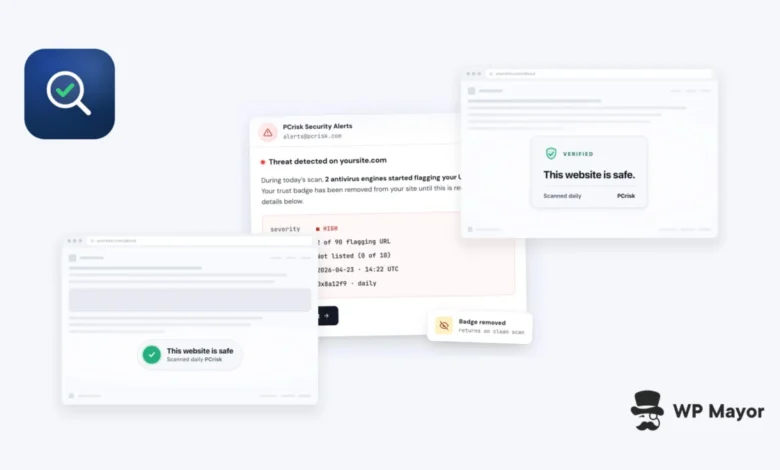
The mechanism operates on a straightforward but technically robust premise. By conducting automated, server-side scans of a website, the service assesses the integrity of the platform against a variety of threats, including malware, obfuscated scripts, and SSL certificate validity. If the site meets the established safety threshold, a trust badge is displayed to the visitor. If a vulnerability is detected, the badge automatically retracts, signaling to the administrator that immediate remediation is required.
Evolution of Digital Trust and Security Signals
The history of web security seals dates back to the early 2000s, when static badges from companies like VeriSign or McAfee became standard, particularly on high-volume e-commerce platforms. These static seals served as a promise of encryption, yet they lacked the capacity to alert users if a site had been compromised post-certification.

The current landscape, however, has shifted toward dynamic verification. According to data from various cybersecurity research firms, the average time to detect a website compromise can range from several days to several weeks. A static badge does nothing to mitigate this risk. The PCrisk model, which performs daily scans for premium subscribers, represents a transition toward "active verification." By linking the badge to a public report that includes the date of the last scan and the specific security engines employed, the platform provides a verifiable audit trail that static images cannot match.
Functional Architecture and Implementation
The PCrisk Trust Badge is engineered to integrate seamlessly with major content management systems, most notably WordPress. The installation process is facilitated through a dedicated plugin that bypasses the need for manual script injection. Upon activation, the system initiates a baseline security audit.

The scans are performed on external servers, ensuring that the performance overhead—a common concern for site administrators—is kept to a negligible level. For the end-user, the experience remains unchanged, as the badge does not utilize cookies to track visitor behavior, adhering to privacy-conscious design principles. When a site is scanned, the service records the IP address and the URL in question to generate the security report.
For administrators, the control dashboard provides a granular view of the security posture across their entire domain portfolio. Key features include:

- Customizable Placement: The badge can be positioned at various anchor points, including footers, headers, or as a persistent floating element in the corner of the browser window.
- WooCommerce Integration: Specialized support for e-commerce workflows allows for badge placement on critical conversion points, such as the cart and checkout pages, where consumer anxiety regarding payment security is highest.
- Developer Hooks: The availability of APIs and webhooks allows for integration with enterprise-level notification systems, such as Slack, enabling instant alerts when a scan identifies a security anomaly.
Comparative Analysis: Free Versus Premium Tiers
The service structure is segmented into a freemium model, reflecting the diverse needs of the web development community. The free tier provides a monthly scan, which acts as a baseline audit for smaller websites or personal blogs. While this provides a snapshot of security, it does not include the advanced alerting or the dynamic, high-frequency monitoring required for commercial operations.
For professional agencies and larger e-commerce entities, the premium tiers introduce significant scalability. The "Solo," "Pro," and "Business" plans provide daily scanning frequency, which is a critical differentiator. In a retail environment, a vulnerability can be exploited within hours; therefore, a monthly scan is often insufficient for protecting customer data. The investment in a premium plan is generally categorized by analysts as an operational cost comparable to insurance—a minor expense that potentially offsets the catastrophic reputational and financial damage of a data breach.

Technical Limitations and Security Context
It is essential to clarify the scope of the PCrisk Trust Badge. The tool is a diagnostic and communication layer, not a firewall or a comprehensive malware remediation suite. It does not replace the necessity of robust, enterprise-grade security plugins or Web Application Firewalls (WAFs).
If the PCrisk system identifies a threat, the site owner is notified via email, and the badge is hidden. The responsibility for the actual "clean-up" remains with the administrator or their security team. This distinction is vital: the badge is a signal of health, not the medicine itself. Furthermore, in instances where a site is placed in maintenance mode or behind password protection, the scanner may be unable to access the site. In such cases, the service does not trigger a false positive alert, but rather displays a status indicating that the site is currently inaccessible for verification.

Broader Market Implications for E-commerce
The implementation of such badges has measurable implications for conversion rates. Multiple industry studies have indicated that customers are more likely to complete a transaction when presented with visible security indicators, provided those indicators are perceived as legitimate. The "Trust Score," a proprietary metric used by PCrisk, helps quantify a site’s security standing. By maintaining a score above the 70-point threshold, businesses can leverage the psychology of trust to reduce cart abandonment.
For agencies managing portfolios of dozens or hundreds of sites, the centralized dashboard provides a bird’s-eye view of client security. This shifts the agency-client relationship from reactive (fixing hacks after they occur) to proactive (maintaining a status of "verified secure").

Future Outlook and Conclusion
The digital security sector is increasingly moving toward automated, real-time validation. As cyber-attacks evolve to bypass traditional defenses, tools that provide transparent, real-time reporting will become standard for any business accepting digital payments.
While the PCrisk Trust Badge is a relatively straightforward implementation, its value lies in its ability to bridge the gap between complex server-side security and the user-facing experience. By providing a clear, evidence-based signal of safety, it allows businesses to focus on their primary objective—sales and customer engagement—while maintaining a high standard of digital hygiene. For any organization relying on customer data, the transition from static security displays to dynamic, audit-ready badges is a logical and necessary evolution in the current threat landscape. As the platform continues to refine its documentation and support infrastructure, its utility for both individual store owners and large-scale web agencies is expected to remain a relevant component of the modern WordPress ecosystem.
Related posts: