Weglot 2.0 Launches to Redefine Multilingual WordPress Management and AI-Driven Global Content Localization

The landscape of web globalization underwent a significant transformation on September 29, 2026, with the official release of Weglot 2.0. This major update to the established translation platform signals a shift in how website owners, agencies, and e-commerce merchants approach the complexities of multilingual digital infrastructure. While the fundamental requirement for website translation has remained constant over the last decade, the technical overhead associated with maintaining consistent brand identity, search engine optimization (SEO) performance, and seamless user experiences across multiple languages has grown exponentially. Weglot 2.0 aims to consolidate these disparate operational requirements into a single, unified ecosystem, effectively moving beyond simple text conversion toward holistic, AI-integrated content lifecycle management.
A Decade of Evolution in Website Localization
To understand the significance of this release, one must examine the trajectory of web translation tools. Since its inception nearly ten years ago, Weglot has powered more than 110,000 websites, establishing itself as a primary player in the WordPress ecosystem. Historically, the value proposition of such plugins was centered on speed: the ability to install a plugin, select a target language, and generate a translated site in minutes. However, as the accessibility of large language models (LLMs) has democratized basic translation, the industry’s focus has shifted.
The primary challenge for businesses today is no longer the ability to translate content, but rather the ability to manage content at scale while maintaining a cohesive brand voice. In the past, achieving this required a "stitching" of multiple tools—one for translation, another for SEO, a third for image editing, and a fourth for content management. The introduction of Weglot 2.0 marks the end of this fragmented workflow, positioning the platform as a comprehensive operational hub.
Technical Architecture and Operational Efficiency

The underlying architecture of Weglot 2.0 differentiates it from traditional "database-heavy" translation plugins. Many conventional solutions store translated strings directly within the WordPress database, which can lead to significant performance degradation as the number of languages and pages increases. In contrast, Weglot continues to utilize a cloud-based infrastructure. By intercepting content at the source code level, the plugin functions independently of the page-builder environment. Whether a site is constructed using Gutenberg, Elementor, Divi, or Beaver Builder, Weglot identifies and translates elements without requiring the duplication of pages or the manual handling of complex Portable Object (.po) files.
This architecture is particularly critical for WooCommerce environments. In e-commerce, the "buyer’s journey" is intricate, involving product catalogs, attribute variations, checkout flows, and transactional emails. Weglot 2.0 ensures that these elements are not only translated but are also context-aware. The integration works alongside major SEO plugins, including Yoast SEO, Rank Math, and All in One SEO, ensuring that metadata, hreflang tags, and URL slugs are localized in a way that satisfies both search engine crawlers and emerging AI-driven answer engines.
The New AI Translation Model: Brand-Aware Localization
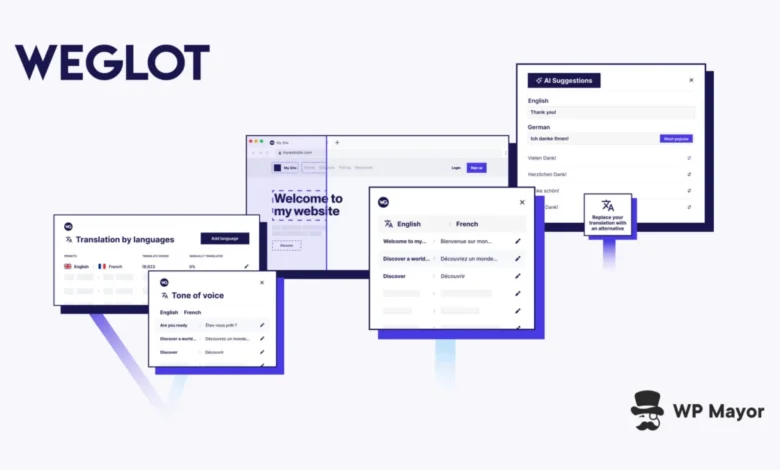
At the core of the 2.0 update is a proprietary AI Translation Model. Unlike general-purpose AI tools, this model is designed to be "brand-aware." Users define "Translation Guidelines" and "Brand Voice" parameters at the administrative level. Once these rules are set—such as maintaining specific product nomenclature, adhering to a defined tone of voice, or enforcing unique terminology—the AI applies these constraints across every automated translation. This eliminates the need for repeated manual prompts or constant corrections.
The visual component of the update, the "Visual Editor," provides a real-time preview of the site in the target language. This allows administrators to observe how specific languages, which may have different character lengths or grammatical structures, impact the site’s layout before publication. This feature is instrumental for maintaining design integrity, particularly for layouts that are sensitive to text overflow or dynamic content blocks.
Expansion of Capabilities: Image Translation and MCP

Weglot 2.0 also introduces sophisticated capabilities for image localization. Historically, text baked into graphical assets has been a blind spot for automated translation tools. The new system allows for the translation of these assets while preserving the original design and branding. Through the platform, users can either generate localized versions of images using AI or upload pre-designed alternatives, ensuring that visual storytelling remains consistent across all markets.
Furthermore, the introduction of the Weglot Multilingual Communication Protocol (MCP) bridges the gap between the platform and external AI assistants. This connectivity enables users to query, review, and update translations using natural language. For marketing teams and developers, this means the translation workflow is no longer tethered to a static dashboard, allowing for more fluid, conversational management of global content.
Implications for Agencies and E-commerce
For digital agencies, the "Agency Workflow" introduced in version 2.0 addresses a perennial pain point: the ability to manage multiple client sites from a single, centralized interface. The inclusion of a precise word-count utility allows agencies to generate more accurate project quotes, while the tiered access levels and administrative controls facilitate smoother client onboarding.
E-commerce merchants, meanwhile, benefit from the automation of the entire buyer lifecycle. Because the system continuously detects new content—such as updated product descriptions or seasonal sales banners—the localization process becomes an "always-on" feature of the store’s operations. This is vital for businesses attempting to enter high-growth markets where rapid iteration is the key to maintaining a competitive advantage.
Strategic Pricing and Market Access

Weglot 2.0 utilizes a consumption-based pricing model, primarily driven by the number of translated words. This structure is designed to be scalable, allowing organizations to start with a subset of key pages and expand their multilingual footprint as their international traffic grows. To support this, the company offers a 14-day free trial across all premium plans, with additional incentives for annual commitments, effectively providing two months of service at no cost.
The company has also introduced specific incentives to encourage adoption. Agencies, for instance, are granted three months of extended free usage for each new client workspace, coupled with a 15% lifetime discount for those clients. Furthermore, an exclusive promotional initiative, valid until February 28, 2027, offers new users three months of access to any plan using the code WPMAYORXWEGLOT2.
Industry Context and Future Outlook
The launch of Weglot 2.0 reflects a broader trend in the software-as-a-service (SaaS) sector, where the focus is shifting from "feature-parity" to "workflow-integration." In the early 2020s, the primary hurdle was the quality of machine translation; today, that hurdle has been cleared by advancements in neural machine translation and large language models. The new frontier is operational efficiency—the ability to deploy and manage high-quality, localized content at the speed of modern digital marketing.
By embedding AI directly into the content management lifecycle, Weglot is positioning itself not just as a translation provider, but as a critical piece of the global marketing stack. As AI-powered search engines continue to prioritize localized content, the role of tools like Weglot 2.0 will likely become more central to the SEO strategies of medium and large-scale enterprises. The introduction of the MCP (Multilingual Communication Protocol) suggests that the company is planning for a future where content management is increasingly delegated to AI agents, hinting that this version is merely the foundation for a more automated, hands-off approach to global web presence.
For current users, the update is seamless, as the "2.0" designation refers to the generation of the platform rather than a standalone plugin version. The system is compatible with version 6.4 or later of the core Weglot plugin. As businesses continue to face the pressures of globalization, the adoption of integrated, intelligent translation workflows will likely transition from a luxury to a requirement for any brand seeking to compete on an international scale. With the combination of brand-aware AI, visual editing, and a robust agency-focused architecture, Weglot 2.0 represents a significant milestone in the ongoing maturation of the WordPress ecosystem.
Related posts: