Building WordPress for Both People and AI Agents Requires a Complete Architectural Rethinking


For over two decades, the architecture of WordPress has been fundamentally tethered to the human browser. Web sites built on the world’s most popular Content Management System (CMS) have historically relied on a straightforward user experience paradigm: a human visitor arrives at a page, scans navigation menus, completes a form, clicks a button, or signs up for an account. Developers have long constructed websites around these visual cues and physical interactions, optimizing interfaces for the human eye and hand.
Today, that foundational assumption is facing a monumental shift. Artificial intelligence agents, automated systems, and Model Context Protocol (MCP) clients are increasingly bypassing the traditional browser interface altogether. Instead of viewing a web page, an AI agent can directly ingest information, call underlying functions, manipulate data, and execute complex, multi-step workflows without ever loading a single HTML page or navigating to wp-admin.
This evolution is forcing web developers, agencies, and hosting providers to rethink how WordPress sites are built. To accommodate these emerging automated workloads, tools such as the WordPress Abilities API and MCP adapters are being rapidly integrated into the ecosystem. These technologies provide software with a direct, secure means of discovering and utilizing site features. As these machine-to-machine interactions become mainstream, developers must plan for a dual-audience architecture: one designed simultaneously for human users and autonomous AI agents. This paradigm shift fundamentally alters how teams approach application programming interfaces (APIs), user permissions, authentication standards, server performance, and error recovery protocols.
Understanding the Divergent Interaction Models of Humans and Machines
To successfully build for both human visitors and automated software, developers must first understand the stark differences in how each entity interacts with a web environment. Human users possess a high degree of cognitive flexibility. When a human encounters a broken link, a confusing form field, or a slow-loading element, they can scan the menu, interpret visual cues, reread prompts, or intuitively try an alternative button until they achieve their goal.
AI agents, by contrast, lack this innate behavioral flexibility. They require clearly defined pathways, structured data inputs, programmatic authentication mechanisms, and response structures that they can reliably interpret without human intuition.
A comparative analysis of these two interaction models reveals significant architectural divergences:
- Human-first interaction relies on visual navigation menus and clickable buttons; agent-ready interaction requires discoverable, machine-readable capabilities.
- Human interfaces utilize visual forms; agent interactions demand structured inputs and standardized APIs.
- Human users authenticate via standard login screens; software agents require secure, programmatic authentication tokens.
- Human experiences depend on visual feedback and dynamic page styling; machine workflows require structured JSON or XML responses and precise error codes.
- Human browsing is measured in pageviews and active sessions; AI interactions are executed through high-frequency API calls and discrete tool executions.
Crucially, industry experts emphasize the importance of separating autonomous AI agents from traditional web crawlers or search engine indexers. While traditional crawlers primarily retrieve or index static information, modern AI agents possess the autonomy to take actionable steps on behalf of a user. An agent might verify inventory levels, retrieve confidential account histories, draft new content, submit structured data, or trigger complex backend workflows. Once software is granted the capability to execute tasks rather than merely read text, underlying site architectures must account for granular permissions, robust authentication, complex failure states, and the real-world consequences of every automated action.
Designing Capabilities Rather Than Traditional Web Pages
Traditional web design methodologies are built around the concept of a linear user journey. A visitor lands on a homepage, clicks through a product catalog, fills out a checkout form, and arrives at a confirmation screen. For an AI agent, this entire visual path is inefficient and unnecessary. An agent does not need to render a graphical user interface if it can communicate directly with the underlying application programming interface to execute a function.
That underlying function might involve searching technical documentation, checking real-time inventory in a WooCommerce database, submitting a formal quote request, or generating a draft blog post. Rather than forcing an AI agent to simulate human screen navigation, modern development practices involve exposing these specific actions in a structured format that external software can easily understand and utilize.
The introduction of the WordPress Abilities API offers developers a streamlined mechanism for exposing core functionality. Instead of compelling an external tool to scrape HTML or parse visual page layouts, developers can define a specific action directly within the code. This definition includes the precise data the action requires, the output it returns, and the specific user roles authorized to invoke it.
This does not imply that every button on a website must have a machine-accessible equivalent. Instead, development teams must evaluate which backend functions provide genuine utility when exposed to external systems, who should be authorized to invoke them, and what operational limits must be enforced. Consequently, modern web planning introduces a critical question for developers: What actions can a website safely permit humans and machines to execute simultaneously?
The Escalating Importance of Authentication and Granular Permissions

Once an AI agent is granted the ability to execute functional tasks within a WordPress environment, the security paradigm shifts fundamentally from "Can this system connect?" to "What is this system specifically authorized to do?"
This distinction carries profound implications as third-party software increasingly operates using autonomous credentials and elevated permissions. Comprehensive cybersecurity findings, such as those highlighted in the CyberArk 2025 Identity Security Landscape, underscore a growing vulnerability across the technology sector: approximately 68 percent of organizations currently lack adequate identity security controls specifically tailored for artificial intelligence integrations. While provisioning an AI agent with system access is technologically straightforward, restricting that access strictly to the parameters of its immediate task requires meticulous planning and rigorous architectural enforcement.
To maintain robust security hygiene across machine-facing capabilities, development teams must systematically address core access boundaries:
- Access privileges must remain strictly tethered to the specific job the agent is performing. For instance, a software tool designed exclusively to search documentation has no operational justification for editing published posts, just as a text-generation assistant does not require authorization to publish content live.
- When automation touches sensitive operations—such as modifying user account credentials, purging database content, or processing financial transactions via e-commerce gateways—the security threshold must be significantly elevated.
- API credentials, authentication tokens, and access keys must never be exposed within AI prompts, front-end JavaScript code, or unencrypted server logs.
- Workflows that trigger expensive, resource-intensive, or irreversible system changes must incorporate mandatory "human-in-the-loop" approval gates before execution.
The WordPress Abilities API assists developers in enforcing these boundaries by allowing individual capabilities to incorporate dedicated permission checks alongside clearly defined input and output schemas. This approach provides significantly tighter control than simply handing an external service administrator-level credentials and trusting it to limit its own behavior.
Adapting Infrastructure and Performance for High-Speed Machine Consumers
Human visitors naturally browse at a deliberate, organic pace—loading a page, reading text, clicking a link, and waiting for the browser to render the next screen. AI agents, conversely, operate at machine velocity. An automated workflow can issue dozens or hundreds of high-frequency requests within seconds as it gathers context, calls specialized tools, cross-references data arrays, and executes multi-step operational chains.
These machine-driven workflows exert a vastly different type of load on server infrastructure compared to human browsing patterns. Consequently, performance optimization must evolve to eliminate redundant server overhead. Developers can streamline machine interactions by combining multiple API endpoints into unified responses, implementing aggressive caching for read-only data queries, enforcing strict concurrency limits on incoming requests, and offloading heavy computational tasks to asynchronous background processing queues. Furthermore, implementing precise rate-limiting protocols and sensible server timeouts ensures that a single runaway automated workflow cannot monopolize server resources and degrade performance for human visitors.
From an engineering perspective, efficient endpoint design is paramount. If an agent requires multiple discrete pieces of information, a single well-structured API endpoint is vastly superior to a series of fragmented requests, each of which forces the database to initiate independent query cycles.
Timeout handling represents another critical challenge in machine-driven architecture. If an API request times out, the underlying task may have successfully completed on the server even though the agent never received the confirmation packet. If the agent automatically retries the request, it could result in duplicate transactions—a minor issue for a data lookup, but potentially catastrophic for financial checkouts or content deletion scripts. Therefore, robust architectures must provide agents with idempotent request handling or status-checking mechanisms to verify whether a job has already been processed before executing a retry.
Ensuring Predictable Responses and Comprehensive Observability
Because AI agents operate autonomously across complex, multi-step chains, they require absolute predictability from every server response. If an API returns an ambiguous error message or a vague status confirmation, the agent is left to guess whether a task is still processing, has failed completely, or has finished silently without returning data.
In extended workflows, unclear responses lead to compounding errors. If a single intermediate step produces an ambiguous result, an agent may incorrectly repeat the action, skip a critical sequence, or proceed prematurely before the underlying database operation is finalized. While pulling duplicate technical documentation is harmless, creating duplicate e-commerce orders or repeatedly deleting database tables is not.
Modern enterprise architectures increasingly incorporate tracking mechanisms—such as unique operation identifiers popularized by advanced platforms like the Kinsta API—to manage long-running tasks. Instead of holding an HTTP request open indefinitely, the server returns an operation ID that external software can query periodically to determine whether a background job is still running or has successfully concluded.
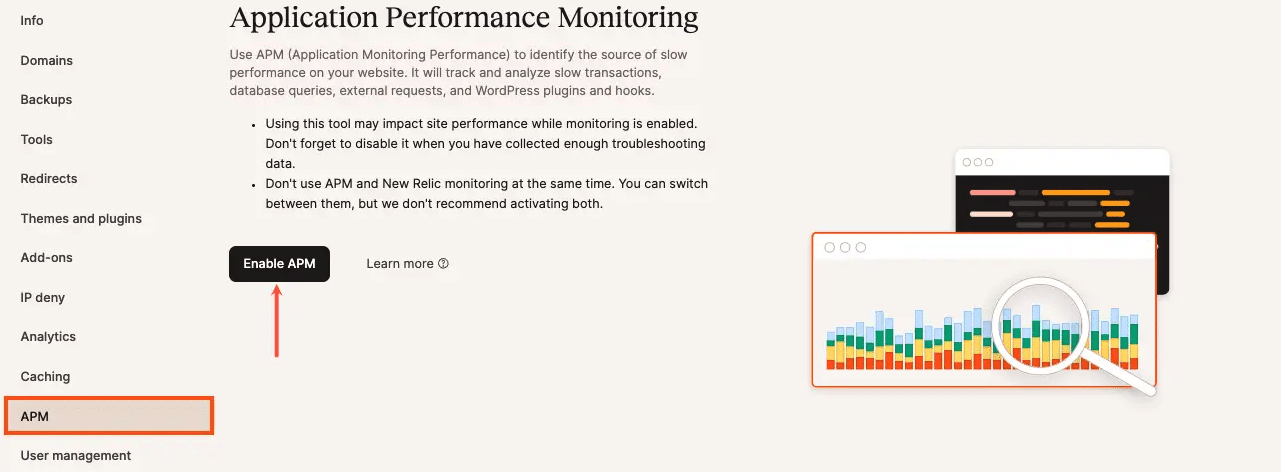
Moreover, comprehensive observability is vital when diagnosing system failures in automated environments. When a human visitor encounters a broken form or a server error, they typically notice the issue and alert site administrators. When an automated AI workflow fails, the breakdown can remain hidden deep within a multi-layered automated sequence. Tracing these failures requires sophisticated monitoring tools, such as Application Performance Monitoring (APM) systems and detailed server request logs, allowing development teams to pinpoint stalled API calls, failed database transactions, or improper agent request loops before they impact production data. Staging environments provide an essential sandbox for engineering teams to thoroughly test agent-driven workflows under simulated load conditions prior to deployment.
Extending Machine Interfaces to the Hosting and Infrastructure Layer
The transition toward agent-ready architecture extends far beyond the WordPress application layer down to the underlying hosting and server infrastructure. Modern cloud infrastructure increasingly provides programmatic interfaces designed for software consumption rather than human dashboard navigation.
At the application level, tools like the WordPress Abilities API and MCP adapters expose site content and plugin functionalities to external software. At the hosting level, advanced infrastructure providers utilize robust APIs to expose core operational tasks—such as environment provisioning, domain management, cache purging, and server diagnostics—that traditionally required manual intervention through a control panel.
For instance, platforms leveraging specialized APIs enable developers to programmatically inspect server environments, execute infrastructure tasks, and integrate hosting management into broader CI/CD pipelines or internal agency automation tools. Similarly, Model Context Protocol (MCP) servers built directly on top of hosting APIs allow authorized AI clients to interact with server environments as native tools. This integration permits an AI assistant to check staging environments, clear server-side object caches, clone site instances, or review plugin update logs without requiring a human administrator to manually click through a dashboard interface.
Crucially, the principle of least privilege applies equally to infrastructure. An AI agent granted access to hosting-level tools should be strictly restricted to the specific operations required for its task—such as purging cache or retrieving performance metrics—with zero access to broader account administration controls. Human-centric dashboards like MyKinsta remain essential for day-to-day management, troubleshooting, and high-level configuration, while APIs serve the critical function of connecting hosting operations to automated enterprise workflows, deployment pipelines, and AI systems.
Strategic Implications for Digital Agencies and Enterprise Planning
As artificial intelligence integration matures, digital agencies and web development firms are increasingly incorporating "agent-readiness" into their formal architecture reviews. While organizations are not required to force AI agents or MCP frameworks into every immediate WordPress deployment, forward-thinking teams are actively avoiding architectural decisions that make these workflows difficult to implement in the future.
When planning new builds or major site re-engineering projects, technical teams should evaluate several foundational criteria:
- Can core site functionalities be exposed programmatically via clean APIs without relying exclusively on graphical user interfaces?
- Are user permissions and authentication protocols robust enough to support autonomous software clients securely?
- Does the hosting infrastructure provide the performance headroom, caching mechanisms, and observability tools required to handle high-frequency machine traffic?
- Are error handling, rate limiting, and timeout protocols designed to prevent duplicate transactions during automated workflows?
Industry case studies—such as large-scale agency deployments managing hundreds of WordPress sites utilizing automated infrastructure APIs—demonstrate the immense operational value of systems that permit software to interact natively with hosting operations. Even outside of artificial intelligence use cases, automating repetitive maintenance tasks through standardized APIs drastically reduces manual overhead and human error.
As client expectations evolve, workflows that begin as internal automation scripts frequently expand to connect with advanced AI assistants, MCP clients, and enterprise resource planning (ERP) software. If the underlying functions already possess clean interfaces and granular permissions, scaling up to support new technological layers becomes a seamless extension rather than a disruptive, ground-up rebuild.
Conclusion: Building for People and the Software Acting on Their Behalf
WordPress remains, at its core, a platform designed for human engagement. Visual pages, compelling content layouts, intuitive navigation menus, and frictionless forms will always remain central to the web experience. What has fundamentally changed is that the human browser is no longer the exclusive gateway through which a website is accessed and manipulated.
Modern AI agents, automated software wrappers, and machine-driven workflows are increasingly executing tasks, retrieving data, and triggering workflows in fractions of a second. This reality places unprecedented importance on the underlying plumbing of the web. Developers can no longer afford to assume that every future interaction with a WordPress site will begin with a human opening a web browser.
By designing secure, observable, high-performance architectures that cater to both human visitors and autonomous software agents, developers ensure that their digital assets remain resilient, scalable, and future-proof. Your next customer may very well be human—but the software interacting with your site on their behalf is already here. Managed hosting environments equipped with advanced performance monitoring, robust API integrations, and developer-first tooling provide the essential foundation needed to support this dual-audience future.
Related posts: