Novamira Review: How AI Agents Are Transforming WordPress Development Through Direct System Integration

For years, developers and site administrators have relied on Artificial Intelligence (AI) to generate PHP snippets, CSS overrides, and troubleshooting advice for WordPress environments. However, these interactions have historically been hindered by a significant "last-mile" problem: while an AI can suggest a solution, the user is burdened with the manual labor of copying code, navigating file structures, uploading files via FTP, and testing changes in a live environment. The Novamira plugin seeks to eliminate this friction by bridging the gap between external AI agents and the WordPress backend, allowing for real-time execution and direct site management.
The Evolution of AI-Driven WordPress Maintenance
The integration of AI into web development workflows has undergone a rapid evolution over the past 24 months. Initially, AI was used strictly as a reference tool—a chatbot that could provide code blocks based on static documentation. As Large Language Models (LLMs) like Claude 3.5 Sonnet and GPT-4o have matured, they have gained the ability to interpret complex codebases. However, WordPress presents a unique architectural challenge. Because WordPress is a dynamic, database-driven content management system, static code generation often fails to account for the specific plugin ecosystem, theme architecture, or database state of a given site.

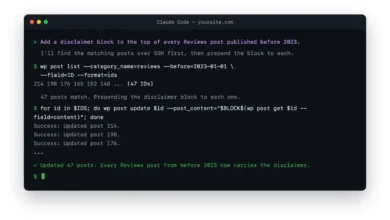
Novamira addresses this by utilizing the Model Context Protocol (MCP), an open standard that allows AI assistants to interact directly with local or remote systems. By installing the Novamira plugin, a site administrator can effectively grant an AI agent "hands-on" access to their WordPress installation. This enables the agent to query the database, read and modify files, and execute WP-CLI commands, effectively turning the AI into a virtual developer capable of diagnosing and repairing issues autonomously.
Technical Architecture and Connectivity
Novamira facilitates this connection through two distinct pathways. The primary method is via the Model Context Protocol, which acts as a standardized communication layer between the WordPress site and the user’s chosen AI interface. This is the default setup for web-based chat clients. For more advanced power users, Novamira offers a dedicated Command Line Interface (CLI). This allows terminal-based agents—such as Claude Code, Codex CLI, or Gemini CLI—to interact with the WordPress environment with higher speed and efficiency, bypassing the latency associated with web-based interfaces.
Once established, the connection allows the agent to execute PHP code directly within the WordPress process. This is a profound shift from the traditional "copy-paste" model. By querying the site’s database and reading current theme and plugin configurations, the AI gains a comprehensive understanding of the site’s unique environment before suggesting or implementing a fix. This reduces the likelihood of compatibility errors, which are common when applying generic AI-generated code to specialized WordPress configurations.

Addressing the "Builder" Gap with Novamira Pro
While the core functionality of Novamira is available for free, the company has implemented a tiered pricing structure that emphasizes specialization. The free version provides fundamental connectivity, but Novamira Pro aims to solve the "context blindness" that AI agents often face when dealing with complex page builders and proprietary plugin frameworks.
As of mid-2026, Novamira Pro includes support for 38 distinct builders, themes, block libraries, and SEO plugins. This list encompasses major industry standards such as Elementor, Bricks, Divi, WooCommerce, and Advanced Custom Fields (ACF). The value proposition here is structural efficiency: if a user asks a free-tier agent to modify a page built in a proprietary format like Etch, the agent must spend valuable processing tokens "learning" the storage format before it can act. The Pro version provides the agent with pre-loaded knowledge of these structures, allowing it to move directly to the implementation phase.
Furthermore, the Pro tier introduces a "Memory" feature. This allows the agent to retain information across sessions, preventing the user from needing to re-explain technical preferences or architectural decisions. Both versions of the plugin support "Skills," which are Markdown-based playbooks that the agent can trigger based on specific task requirements—such as a standardized publishing workflow or custom naming conventions—without manual intervention.

Security and Ethical Implications
Granting an AI agent direct access to a production environment is a practice that necessitates rigorous security controls. Novamira has addressed this by integrating with the native WordPress authentication layer. Access is managed through Application Passwords or OAuth via the wp-admin dashboard, ensuring that the AI agent’s permissions are scoped and identifiable.
The plugin does not, by default, require a "middleman" server to process data. In its most secure configuration, the AI client talks to the WordPress site directly, ensuring that sensitive site data remains within the user’s infrastructure rather than traversing third-party servers managed by Novamira. Additionally, the developers have implemented several fail-safes:
- Manual Activation: AI capabilities must be explicitly enabled in the configuration settings, preventing accidental or unauthorized access.
- Environment Isolation: The software is designed with the expectation that it will be used in development or staging environments, mirroring industry best practices for code deployment.
- Audit Trails: By utilizing the standard WordPress authentication system, all actions performed by the AI can be tracked and associated with specific user permissions, maintaining accountability.
Implementation and User Experience
Setting up Novamira requires a departure from the traditional WordPress repository, as the plugin is distributed directly through the company’s website. Following installation, the administrator must navigate to the configuration screen to enable AI abilities and authenticate the connection. This process generates instructions for integrating the site with an MCP-compatible client.

The operational workflow typically follows a consistent pattern: the user issues a prompt, the agent queries the site to assess the current status, the agent proposes a modification, and upon approval, the agent executes the change. This workflow is significantly faster than traditional methods, as the agent can verify the success of its own code by checking the site’s response or running subsequent database queries.
Broader Impact on the WordPress Ecosystem
The introduction of tools like Novamira signals a transition toward "autonomous maintenance" in the WordPress space. As AI agents become more integrated into the development lifecycle, the role of the developer may shift from "coder" to "orchestrator," focusing on high-level architecture and verification rather than granular syntax correction.
From a market perspective, this shift could have significant implications for agencies managing large fleets of WordPress sites. The ability to push updates, perform bug fixes, and manage database queries across multiple environments simultaneously through an AI agent could result in substantial labor cost reductions. However, it also raises questions regarding the future of site stability. While AI can act faster than a human, the potential for an automated error to propagate across an entire network of sites is higher. Consequently, the reliance on automated backups and rigorous staging environments will become more critical than ever.

Future Outlook and Conclusion
Novamira represents a sophisticated effort to integrate AI into the core of the WordPress experience. By leveraging the Model Context Protocol, the platform provides a bridge between the vast, unstructured nature of AI reasoning and the highly structured, environment-dependent nature of WordPress development.
While the free version provides a robust entry point for individual developers, the Pro tier’s focus on specialized builder support and persistent memory suggests a focus on professional, high-volume environments. As the list of supported plugins and themes continues to grow, and as AI models become more adept at navigating the complexities of PHP and MySQL, Novamira is positioned to become a foundational tool for those looking to automate the maintenance of their digital infrastructure.
Ultimately, the effectiveness of such a tool depends on the user’s ability to treat AI-driven changes with the same level of caution as manual updates. As the technology matures, the industry will likely see a shift toward more robust, agentic workflows, where the line between the developer and the tool becomes increasingly blurred, leading to a new era of agile, machine-assisted web administration.