Austrian E-commerce Growth Hits Record High as Digital Retail Penetration Surges in 2025

The Austrian retail landscape underwent a significant transformation in 2025, with digital sales channels capturing an unprecedented share of consumer expenditure. According to the latest comprehensive market analysis from RegioData Research, the online share of total Austrian consumer retail spending climbed to 16.1 percent, a notable acceleration from the 14.9 percent recorded in 2024. This shift represents a total market volume of approximately 12.4 billion euros, underscoring a deepening reliance on e-commerce platforms among the Austrian populace. On an individual level, the data reveals that the average Austrian consumer channeled roughly 1,400 euros into online purchases throughout the calendar year, reflecting a broader European trend toward digital-first shopping habits.
A Chronology of Digital Adoption in Austria
The steady rise of e-commerce in Austria did not occur in a vacuum; it is the culmination of a decade-long shift in consumer behavior, accelerated significantly by the global disruptions of the early 2020s. Before 2020, Austria maintained a more conservative approach to online retail compared to its neighbors in the United Kingdom or Scandinavia. The physical retail sector, characterized by strong high-street shopping traditions and a preference for personal interaction, remained the dominant force.
However, the 2020-2022 period served as a catalyst, forcing a rapid digitization of both supply chains and consumer habits. By 2023, the market began to stabilize, but the 2024-2025 period marked a new phase of maturity. While the initial "pandemic-driven" surge was fueled by necessity, the 2025 growth is driven by improved logistics, the proliferation of mobile commerce, and the entry of aggressive international market players. The jump from 14.9 percent to over 16 percent in a single year indicates that digital retail has moved beyond a supplementary channel to become a foundational pillar of the national economy.
Sector-Specific Digital Penetration
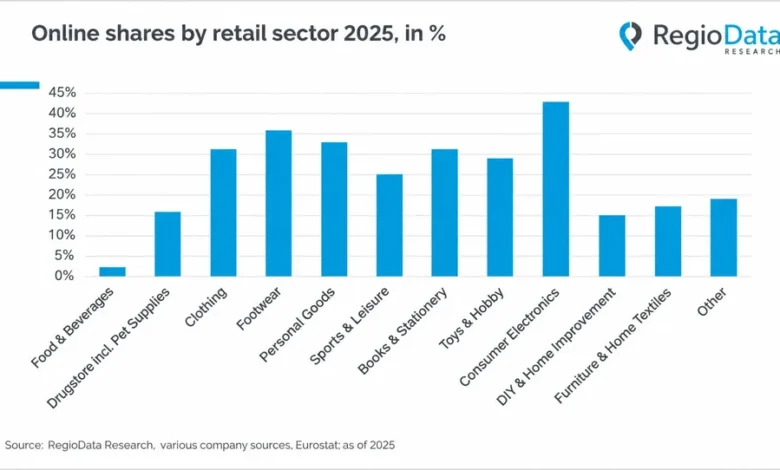
The shift toward digital commerce has not been uniform across all retail categories. Certain sectors have seen a profound migration toward online storefronts, while others remain anchored in the brick-and-mortar experience. The consumer electronics sector currently leads the charge, with 43 percent of all consumer spending occurring online. This high level of penetration is largely attributed to the ease of comparing technical specifications, prices, and user reviews, which are more readily available online than in traditional retail environments.

Following closely behind electronics is the footwear industry, where 36 percent of transactions now take place digitally. This trend is likely supported by the maturation of "try-before-you-buy" return policies and more sophisticated sizing technologies. Personal goods, including cosmetics and wellness items, hold a 33 percent online share, while both the clothing and book retail sectors hover at approximately 31 percent. These figures suggest that consumers are increasingly comfortable purchasing items that require visual or tactile assessment, provided that the digital retailer offers robust customer support and efficient return processes.
Comparative Analysis: Austria in the European Context
When viewed through a continental lens, Austria occupies a mid-tier position within the European e-commerce hierarchy. The United Kingdom remains the clear leader in digital retail adoption, with an online share of 29.3 percent. The UK’s dominance is historical, supported by early infrastructure investment and a highly consolidated logistics network.
In contrast, Austria’s 16.1 percent share places it in close alignment with Germany, which sits at 16.8 percent. This proximity is significant, given the cultural and economic integration of the two nations. Both countries share similar retail challenges, including a strong legacy of physical retail and a cautious consumer base regarding data privacy and payment security. On the lower end of the spectrum, countries like Serbia continue to show lower digital penetration—roughly 6.7 percent—indicating that the digital divide in Europe is still dictated by local infrastructure, internet connectivity, and the historical presence of international logistics hubs.
The Dominance of Cross-Border E-commerce
One of the most striking findings from the 2025 report is the limited market share held by domestic Austrian online retailers. Currently, local online stores capture just over 40 percent of total online consumer spending. The remaining majority is claimed by cross-border entities, pointing to a structural challenge for domestic SMEs (Small and Medium Enterprises) attempting to compete with global retail giants.
Amazon remains the undisputed leader of the Austrian online market, holding a 35.1 percent share. The platform’s ability to leverage economies of scale, offer next-day delivery, and integrate a vast marketplace of third-party sellers has created a formidable barrier to entry for smaller local players. Beyond Amazon, the landscape is increasingly populated by discount-focused international platforms. Temu, the Chinese e-commerce giant, has captured 5.1 percent of the market, while eBay maintains a 4.1 percent share. Collectively, Chinese-origin platforms such as Temu, Shein, and AliExpress now command a 7.9 percent share of the Austrian online market, a figure that has seen rapid growth over the last 24 months.

Economic Implications and Official Outlook
The rapid expansion of cross-border e-commerce has triggered significant discourse among local business associations and policymakers. While the convenience for consumers is indisputable, the outflow of capital to international entities poses a long-term challenge to the domestic retail ecosystem. Economists note that when a majority of spending shifts to international platforms, the domestic economy loses out on tax revenue, local employment opportunities, and the multiplier effect that occurs when money is spent within local business networks.
Industry observers suggest that the current trajectory necessitates a two-fold response from domestic retailers. First, there is an urgent need for digital transformation among local shops. Many smaller Austrian businesses are still relying on rudimentary websites that lack the transactional capabilities of global giants. Second, there is a growing call for a "digital level playing field," involving regulatory adjustments that ensure international platforms adhere to the same environmental, labor, and consumer protection standards as local retailers.
From the consumer perspective, the trend is unlikely to reverse. The 2025 data confirms that once a consumer adopts digital purchasing habits, they rarely revert to exclusive brick-and-mortar shopping. The focus for the remainder of the decade will likely shift toward the integration of "omnichannel" retail, where physical shops utilize their locations as logistics hubs for click-and-collect services, thereby merging the convenience of digital ordering with the immediacy of physical retail.
Future Projections
Looking ahead, analysts at RegioData suggest that the online share in Austria is expected to continue its upward trend, albeit at a more sustainable pace as the market reaches a level of maturity. The growth will likely be driven by advancements in artificial intelligence, which will further personalize the shopping experience, and improvements in the circular economy, such as the growth of online platforms for second-hand goods.
As the retail sector approaches the end of the 2020s, the primary question for the Austrian economy will not be whether it can stop the shift to online, but rather how it can adapt its local retail infrastructure to coexist with global digital giants. The data from 2025 serves as a definitive roadmap of where the consumer’s wallet is going, highlighting a permanent shift in the Austrian commercial identity. Whether through local innovation or regional policy shifts, the nation must now navigate a landscape where the storefront is no longer a physical location, but an algorithm-driven digital interface.