Meta Q3 2026 Earnings Reveal Record Engagement Across Instagram and Facebook While Threads Surpasses X

Meta Platforms has released its comprehensive financial and operational report for the third quarter of 2026, showcasing significant milestones across its family of applications. Alongside strong financial metrics that underscored climbing artificial intelligence infrastructure costs, executive leadership detailed substantial user growth and engagement highs on Instagram, Facebook, and Threads. The disclosures offer critical insights into Meta’s technological evolution, particularly the implementation of advanced machine learning models and generative retrieval architectures designed to personalize content delivery at an unprecedented scale. For digital marketers, content creators, and industry analysts, these metrics illuminate how algorithmic adjustments are successfully combating user retention challenges and reshaping the modern social media landscape.
Chronology and Strategic Context of Meta’s AI Transformation
The story of Meta’s Q3 2026 performance cannot be told without examining the multi-year technological pivot the company initiated following heightened competitive pressures from short-form video competitors like TikTok. Over the past several years, Meta systematically re-architected its core recommendation engines. In early 2024 and 2025, the company began integrating generative artificial intelligence frameworks into its discovery feeds. By mid-2026, these efforts culminated in widespread algorithmic deployments that fundamentally changed how content is surfaced to billions of users globally.
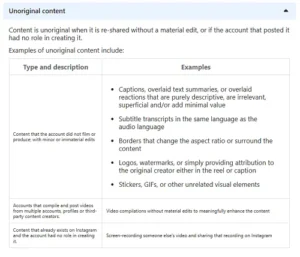
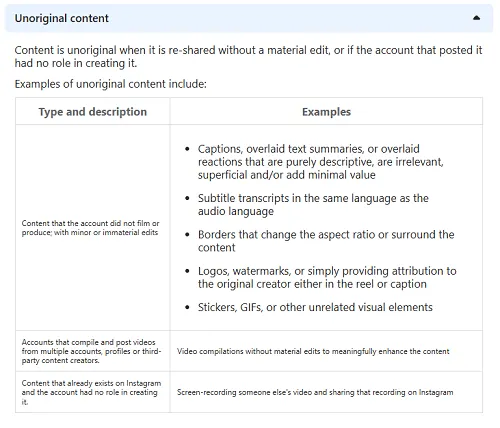
The trajectory accelerated in April 2026 when Instagram implemented sweeping updates to prioritize original content, aggressively penalizing aggregators and unoriginal reposts. This anti-copycat stance set the stage for the Q3 performance, where recommendation freshness became the primary metric of success. Concurrently, Facebook worked to reverse a multi-year stagnation in user time spent by leaning heavily into algorithmic Reels distribution. By the third quarter of 2026, these cumulative engineering feats converged, allowing Meta to report historic highs in user engagement across its two legacy platforms while its text-based contender, Threads, continued its aggressive market expansion.
Instagram Reaches All-Time Engagement Highs Through Algorithmic Upgrades
During the Q3 2026 earnings call, Meta Chief Financial Officer Susan Li detailed the impressive performance of Instagram, noting that global time spent per user reached an all-time high during the quarter. This milestone was propelled by robust growth across both the main Feed and Instagram Reels.
The primary catalyst behind the Reels surge was a series of relevance launches deployed throughout Q3. According to Li, these updates increased Reels time spent by over 4%. This growth was driven by an upgraded model architecture capable of ranking sequences of Reels simultaneously, rather than evaluating individual clips independently. Furthermore, engineering teams implemented richer watch time signals, allowing the system to better understand subtle user behaviors and preferences.
Freshness has also emerged as a cornerstone of Instagram’s modern ecosystem. Meta revealed that nearly 45% of recommended Instagram Reels are now less than one day old—representing an increase of more than 11 percentage points compared to the second quarter of 2026. This shift directly aligns with Instagram’s broader crusade against unoriginal content. By ensuring that newly minted material rapidly reaches broad audiences, the platform has incentivized original creators while diminishing the viability of content scrapers. For creators and brands, this operational shift carries a vital tactical implication: the vast majority of audience engagement and algorithmic momentum for a Reel now occurs within the first 24 hours of publication.
Facebook Rejuvenates Engagement via Generative Retrieval Architectures
While Instagram capitalized on sequential ranking and fresh content, Facebook relied on cutting-edge generative retrieval systems to combat historical engagement plateaus. For years, analysts noted that while Facebook’s total active user count remained resilient due to its utility as a communications utility, daily active time spent faced persistent headwinds as younger demographics drifted toward short-form video alternatives.
The introduction and continuous refinement of Facebook Reels have successfully reversed this trend, with Reels time spent reaching an all-time high in Q3 and logging double-digit year-over-year growth. A major driver of this resurgence was the global launch of a new generative retrieval architecture. Inspired by the mechanics of Large Language Models (LLMs), this system labels individual pieces of content with complex semantic representations before generating potential recommendations. This innovative approach allows Meta’s systems to surface relevant new posts to users before those posts have even accumulated significant engagement history.
Li noted that this new generative retrieval architecture has been rolled out to approximately one-quarter of unconnected Feed views and half of all Reels views, yielding an immediate 1% increase in Reels watch time. Additionally, Meta doubled the historical data window that its ranking models can analyze for Facebook Reels, generating an additional 1% watch time increase specifically within the United States market. These combined infrastructural upgrades have successfully injected personalization and discovery back into the core Facebook experience, transforming it from a static directory of personal updates into an active discovery engine.
Threads Surpasses X and Accelerates Monetization Potential
Beyond its visual and video-centric platforms, Meta achieved a major psychological and market milestone with its text-based social network, Threads. CEO Mark Zuckerberg confirmed during the earnings briefing that Threads has officially overtaken X (formerly Twitter) in monthly active users, cementing its status as the dominant text-focused public square.
CFO Susan Li reported that time spent per user on Threads grew by more than 20% year-over-year during Q3. This expansion was fueled by continuous network effects and systematic improvements targeting the relevance, personalization, and timeliness of recommended posts. Having already crossed the milestone of 500 million monthly active users, Threads is rapidly transitioning from a nascent experiment into a mature digital ecosystem.
Financial analysts view this trajectory as a harbinger of significant upcoming revenue opportunities. As user density and time spent stabilize at high levels, the introduction of robust, native advertising infrastructure on Threads appears increasingly imminent, positioning Meta to capture substantial ad spend previously allocated to legacy text platforms.
Expansion of the Creator Marketing Hub and AI Integration
In tandem with platform-level engagement metrics, Meta highlighted strategic updates designed to bridge the gap between brands and the burgeoning creator economy. The company’s Creator Marketing Hub, which is now universally available to all advertisers, currently catalogues a network of more than 10 million verified creators available for partnership campaigns.
To streamline enterprise workflows, Meta is actively integrating its conversational Meta AI Business Assistant directly into the Hub. This integration allows advertisers to conduct conversational searches for creators, identify high-performing third-party content for use in partnership ads, and receive real-time strategic guidance across campaign lifecycles. By pairing massive organic engagement pools with frictionless creator discovery tools, Meta is solidifying an end-to-end ecosystem that retains both content producers and corporate ad dollars within its proprietary walls.
Analysis of Implications for Marketers and Competitors
The Q3 2026 financial and operational disclosures paint a picture of a technology giant successfully executing a high-stakes pivot toward artificial intelligence and short-form video dominance. By investing heavily in advanced machine learning models, semantic generative retrieval, and strict original content policies, Meta has managed to insulate its applications against competitive threats while driving record user retention.
For digital marketers, the implications are profound. The traditional playbook of long-tail content distribution is rapidly giving way to a high-velocity environment where 24-hour momentum dictates success on Instagram, and algorithmic semantic matching dictates visibility on Facebook. Brands can no longer rely on legacy posting schedules or recycled content without incurring severe algorithmic penalties. Instead, marketing strategies must pivot toward agility, high-frequency original asset creation, and deep utilization of Meta’s evolving AI-driven advertising suites. As Meta enters the final stretches of 2026, its technological investments are proving that aggressive infrastructure spending, when paired with precise algorithmic execution, can successfully revitalize mature digital properties and outpace emerging rivals across every major social category.