Bridging the Gap: How Holistic Education is Transforming the WordPress Onboarding Experience for Beginners

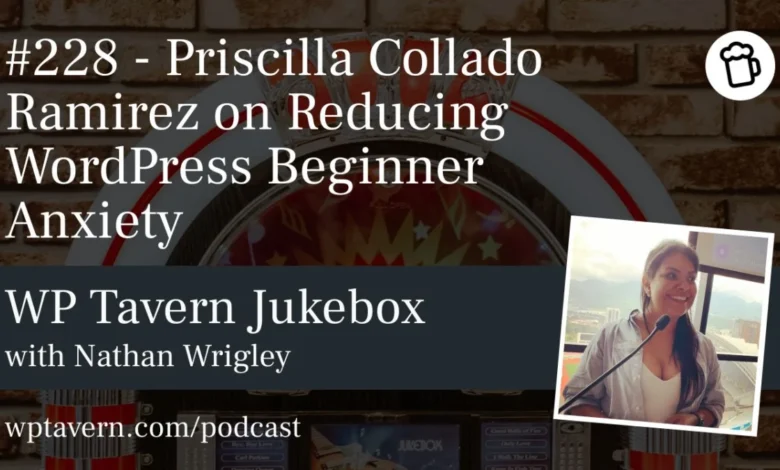
The WordPress ecosystem, while powering over 40% of the world’s websites, has long grappled with a significant barrier to entry: the "paradox of choice." For many newcomers, the platform’s infinite flexibility—manifesting in thousands of plugins, themes, and configuration options—often leads to information overload, resulting in user paralysis and high abandonment rates. At the recent WordCamp Europe, an international gathering of WordPress enthusiasts and professionals, educator and wellness coach Priscilla Collado Ramirez presented a compelling case for shifting the focus of WordPress training from purely technical instruction to a more holistic, student-centered approach. Her methodology, which emphasizes emotional regulation and personalized learning paths, suggests that the future of software adoption lies not just in better user interfaces, but in better support for the human mind.
The Challenges of Technical Adoption
The difficulty of navigating WordPress for the first time is a documented phenomenon in the web development community. With over 60,000 plugins available in the official repository and an equally vast number of themes, the "it depends" culture—where developers respond to specific questions with vague, context-dependent answers—can be alienating for non-technical users. Research into adult learning suggests that when faced with excessive options and a lack of clear, linear guidance, learners often experience "cognitive load," a state where the brain’s working memory is overwhelmed, hindering the acquisition of new skills.
Priscilla Collado Ramirez’s journey offers a poignant case study. Seventeen years ago, as a student of advertising and design, she attempted to use WordPress, only to abandon it due to the overwhelming nature of the interface and a lack of community support. Her return to the platform years later, now as an educator in Costa Rica, highlights a shift in the community. She identifies two primary types of learners: "linear" learners, who thrive on sequential, step-by-step instructions, and "spiral" learners, who require a more fluid, context-based approach to master new concepts. By recognizing these distinct cognitive styles, mentors can better tailor their delivery, ensuring that beginners do not feel inadequate when they struggle with initial configurations.
The Evolution of the WordPress Community
WordCamp Europe serves as a primary barometer for the health and diversity of the WordPress ecosystem. The event attracts thousands of participants annually, ranging from enterprise-level developers to solo bloggers. Historically, the tech industry has been criticized for a lack of demographic diversity, which can exacerbate feelings of isolation for newcomers who do not fit the traditional "engineer" archetype.
In recent years, however, there has been a concerted effort to broaden the base of the WordPress community. The rise of women-led initiatives and specialized support groups has created a more inclusive environment. For Collado Ramirez, the presence of these groups was a catalyst for her return to the platform. She notes that discovering a community that values diverse perspectives transformed her relationship with the software, shifting her perception of WordPress from a "men’s technical environment" to a collaborative space where diverse expertise—ranging from fashion design to wellness—is not only welcomed but essential.
Pedagogical Shifts and the Role of Wellness
The core of Collado Ramirez’s argument is that technical training cannot be separated from the learner’s physiological and emotional state. In her teaching practice, she integrates "pranayama," or intentional breathing techniques, to help students manage the stress of learning. This approach is rooted in the psychological principle that the brain’s ability to process information is severely diminished under stress. By incorporating emotional reset tools into the curriculum, educators can create a "safe container" for exploration, which is critical for those who harbor a fear of "breaking" their digital projects.
This pedagogical strategy—often referred to as constructivist learning—posits that individuals learn best when they are actively engaged in building knowledge through experience. By breaking down daunting tasks into smaller, manageable "baby steps," and explicitly celebrating small wins, mentors can foster a sense of self-efficacy. For a beginner, the successful installation of a single plugin is not merely a technical accomplishment; it is a vital reinforcement of their capability, which builds the confidence necessary to tackle more complex challenges.
Implications for the Broader Industry
The implications of this holistic approach extend beyond individual students; they impact the agency and hosting sectors as well. Many agencies struggle with high churn rates among clients who are overwhelmed by the backend management of their sites. By adopting a more patient, education-focused service model, agencies may find that their clients are more engaged and satisfied.
Furthermore, the "mentor of the mentors" concept—a proposal by Collado Ramirez—suggests that the industry needs to invest in pedagogical training for its developers. Being an expert in PHP or CSS does not automatically translate into being an effective teacher. If the WordPress community were to standardize elements of "how to teach," it could drastically lower the attrition rate of new users.
Fact-Based Analysis of Market Trends
Data from various web analytics platforms indicate that while the total number of WordPress websites continues to grow, the competitive landscape is shifting. Website builders like Squarespace and Wix have gained market share by prioritizing a "walled garden" approach that limits choices to prevent user overwhelm. While this simplifies the process, it often lacks the long-term scalability and ownership offered by WordPress.
The challenge for the WordPress community, therefore, is to retain the platform’s power and flexibility while providing a guided onboarding experience that mirrors the simplicity of these closed platforms. This is where Collado Ramirez’s philosophy becomes particularly relevant. By humanizing the onboarding process, the community can offer the best of both worlds: the freedom of open-source software and the supportive environment typically associated with paid, proprietary services.
The Path Forward: Normalizing Confusion
Perhaps the most significant takeaway from Collado Ramirez’s philosophy is the call to "normalize confusion." In a culture that demands instant proficiency, admitting that one is confused can feel like a professional liability. However, framing confusion as a necessary, temporary state of brain adaptation can change the trajectory of a learner’s journey. When confusion is expected and managed through breathing and incremental goal-setting, it ceases to be a signal to quit and becomes a signal to pause and regroup.
As the WordPress project continues to evolve—particularly with the ongoing development of the Gutenberg block editor and Full Site Editing—the complexity of the software is unlikely to decrease. Consequently, the burden on the community to provide accessible, human-centric education will only grow.
Final Reflections
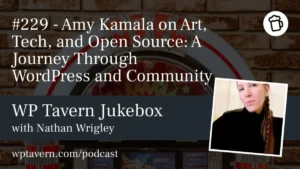
The conversation between Nathan Wrigley and Priscilla Collado Ramirez highlights a critical evolution in the tech sector. It signals a departure from the "sink or swim" mentality that has historically characterized open-source development. By integrating wellness, acknowledging diverse cognitive learning styles, and emphasizing the importance of community, educators like Collado Ramirez are laying the groundwork for a more inclusive and resilient WordPress ecosystem.
For the developer or agency lead, the lesson is clear: the most effective way to help a beginner is not necessarily to provide more documentation or more advanced tools, but to meet them where they are. Whether through a literal one-minute meditation before a training session or by limiting the initial choices presented to a new user, these small, intentional interventions can determine whether a potential contributor stays in the community or walks away. As the digital world becomes increasingly complex, the most valuable skill a mentor can possess may well be the ability to help a student breathe through the confusion and discover the potential within their own capacity to learn.