The Unconventional Path to Open Source Leadership and the Intersection of Art and Technology

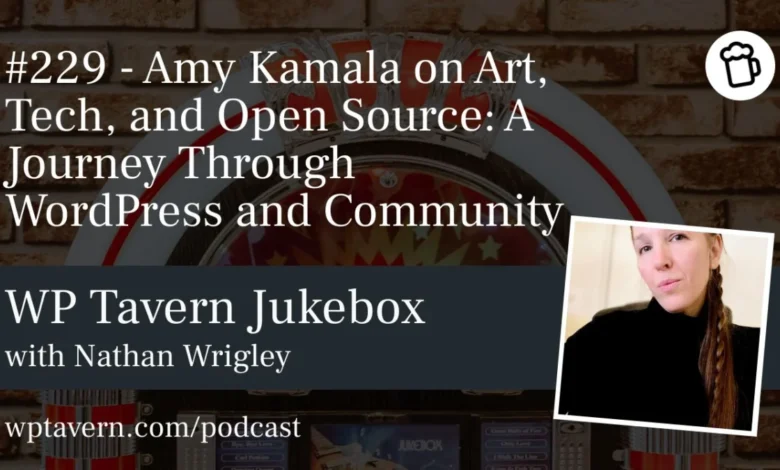
The evolution of modern software development is increasingly defined by the intersection of diverse disciplines, where the rigid logic of computer code meets the fluid, experiential nature of the arts. Amy Kamala, a veteran contributor to the WordPress ecosystem and current Core team representative, stands as a prime example of this synthesis. With a background rooted in Fine Arts from UCLA and a career spanning over a decade in technical support, DevOps, and project leadership, Kamala’s trajectory offers a compelling case study on how interdisciplinary skills—often dismissed in technical hiring—can become a catalyst for professional growth and community development within the global open source movement.
The Journey from Fine Arts to Web Infrastructure
Kamala’s entry into the tech industry was not a linear progression but a calculated adaptation. Her professional life began in 2015, following a Master of Fine Arts degree, when she transitioned from the artistic sector into social support for DreamHost. This period was pivotal, as it marked the start of a multi-year tenure where she ascended from entry-level technical support to managing complex WordPress infrastructure.
Her technical journey is characterized by a "learn-as-you-go" philosophy, moving from basic HTML programming in the early 2000s to managing corporate web assets and DevOps pipelines for companies like InMotion Hosting and Pantheon. By 2018, her involvement in the WordPress community had deepened, leading her to join the Hosting Team, where she eventually served as a team representative for six non-consecutive years. Today, she continues to influence the platform’s development as a sponsored contributor for Elementor, balancing her professional obligations with a commitment to the broader WordPress project.
The Role of Art in User Experience and Software Design
The debate regarding whether software development is purely logical or inherently creative remains a focal point in the industry. Kamala argues that the "code is poetry" ethos often cited in the WordPress community is grounded in the necessity of user experience (UX). Much like fine art, which focuses on the relationship between the viewer and the object, web development is fundamentally experiential.
Her experience in managing teams of designers and developers has revealed a distinct synergy between these roles. While traditional corporate structures often create a divide between the "visual" designers and the "logical" developers, Kamala notes that successful web projects require a bridge between these camps. Designers often possess a high proficiency in CSS and frontend aesthetics, while developers prioritize functional integrity. By applying principles of composition and color theory—the same fundamentals used in her fine arts background—Kamala has successfully led interdisciplinary teams, proving that technical proficiency is most effective when paired with a deep understanding of human-centered design.
Chronology of WordPress Contribution
The WordPress Hosting Team, which has been a primary focus of Kamala’s work, was established around 2017 to foster collaboration between the CMS project and web hosting providers. Kamala’s integration into this team highlights the importance of social networking in open source. Unlike the often-intimidating barriers to entry in major code repositories, the Hosting Team provided a supportive environment, facilitated by established professional networks.
Key milestones in her contribution timeline include:
- 2018: Initial involvement with the WordPress Hosting Team.
- 2019: First term as a Team Representative for the Hosting Team.
- 2020: Expansion into Core WordPress contributions and participation in the Release Model Working Group.
- 2023: Appointment as a sponsored contributor for Elementor, facilitating a more formal dedication to project maintenance and development.
Throughout this period, Kamala has been involved in several core release squads, participating in the complex logistics required to push updates to a global user base that powers over 40% of the internet.
The Economics and Psychology of Volunteerism
A significant aspect of the WordPress ecosystem is its reliance on volunteer labor, often supplemented by corporate sponsorship. Data suggests that companies participating in open source, such as Canopy Studios and Elementor, see direct benefits in brand visibility, talent acquisition, and the ability to influence the direction of the software they rely on. However, the motivation for individual contributors often transcends simple economic incentives.
Kamala emphasizes that the primary driver for sustained contribution is the sense of community and the "meaningful" nature of building something that outlives the individual. While she acknowledges the professional benefits—such as networking and skill development—the psychological reward of collaborative problem-solving is a major motivator. This aligns with broader trends in the tech industry, where "purpose-driven work" is increasingly cited as a primary factor for employee retention and satisfaction, particularly in open source environments.
The "Fail Publicly" Mindset in Open Source
One of the most distinct cultural elements of the WordPress community is the high tolerance for failure and the encouragement of transparency. In many corporate environments, the fear of professional stigma discourages employees from asking questions or attempting tasks outside their core competency. In contrast, the WordPress Core Slack channel, which hosts over 54,000 members, serves as a massive, decentralized classroom.
Kamala notes that the willingness to "fail in public"—to ask questions that may seem basic or to propose solutions that might be rejected—is perhaps the most valuable asset a contributor can have. This approach reduces the barrier to entry and encourages a culture of shared learning. For new contributors, this signifies that the community is not merely a collection of experts, but a collaborative space where guidance and support are accessible, provided one is willing to reach out.
Implications for the Future of WordPress
As WordPress continues to evolve, the challenge lies in maintaining this welcoming, community-driven culture while managing the complexities of a massive, global software project. The integration of sponsored contributors, like Kamala, is one method by which the community balances volunteer passion with professional rigor.
The broader implication of Kamala’s career is that the future of tech leadership is increasingly multidisciplinary. The ability to pivot between systems architecture, team management, and creative design—and to do so with a focus on human interaction—is becoming a requisite for those who wish to navigate the complexities of open-source governance.
Looking forward, the success of the WordPress project will likely depend on its ability to continue attracting individuals who bridge these gaps. As technology becomes more commoditized, the "human" element—the ability to organize, empathize, and communicate—remains the most difficult skill to automate. By fostering a culture where art and logic are treated as complementary rather than conflicting, the community ensures that it remains not just a platform for publishing, but a platform for human connection.
In conclusion, Amy Kamala’s career serves as a roadmap for those looking to enter the tech space from non-traditional backgrounds. By prioritizing curiosity, embracing the vulnerability of the learning process, and recognizing the profound value of community involvement, she has demonstrated that the most effective technical contributions are often those that are fundamentally, and perhaps stubbornly, human.