Seven Common Token-Waste Patterns in Production AI Agent Systems and Their Architectural Fixes

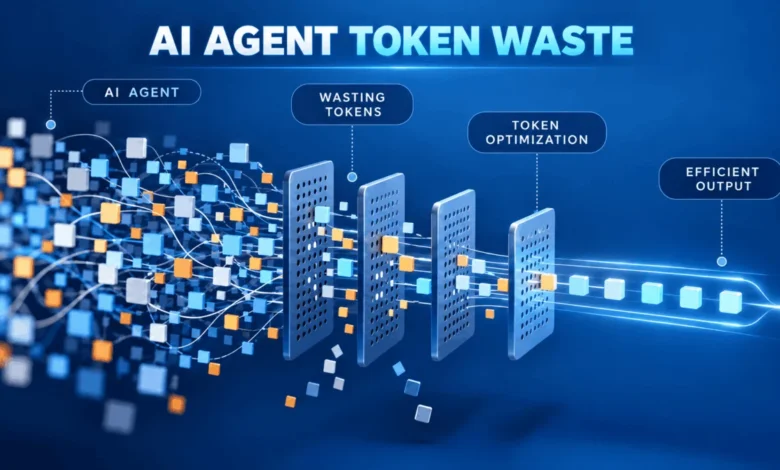
Prototyping an autonomous AI agent over a single weekend is a common endeavor for developers, but maintaining the economic viability of these systems by their third month of production is a challenge of an entirely different magnitude. As agentic workflows—systems that utilize LLMs to plan, reason, and execute tool calls—become the standard for enterprise automation, the cost of inference has shifted from a negligible overhead to a primary budget line item. The naive approach to agent architecture, which involves appending every user message, tool observation, and intermediate thought to an ever-expanding array, triggers a "context bloat" that causes inference latency to grow quadratically and token costs to inflate linearly with every interaction.
This failure stems from a fundamental misunderstanding of the relationship between context and state. In professional agent design, context must be viewed as an ephemeral, high-speed payload for immediate reasoning, while state is the durable, serialized representation of the agent’s progress. Engineers who conflate these two concepts often find themselves paying for redundant database reads on every single inference cycle. This report examines seven specific architectural inefficiencies that contribute to unsustainable token consumption in production environments, offering structural remediations for each.
1. The Append-Only Trap: Mitigating Context Window Accumulation
The most prevalent architectural error in agent development is treating the LLM’s prompt history as a permanent database. By appending every exchange, the agent is forced to re-process its entire operational history on every turn. By the 20th turn, the model is paying for the compute associated with the entire conversation, even when 90% of that data is irrelevant to the immediate task.
The industry-standard fix is the implementation of a sliding context window paired with semantic rolling summarization. By retaining only the most recent N turns in verbatim format and compressing older segments into a dense background summary, developers can maintain the "narrative thread" of the session without the computational overhead. Crucially, structural agent state should be offloaded to a deterministic key-value store, such as Redis or SQLite. The risk here is "compression hallucination," where exact details like UUIDs or specific error codes are lost. To mitigate this, developers should pair summarization with a deterministic retrieval tool that fetches exact strings when precision is required.
2. Optimizing Data Ingestion: The Problem with Raw Tool Results
When agents interface with third-party APIs—such as Stripe, Jira, or AWS—they often ingest raw, machine-readable JSON payloads. These payloads are frequently bloated with thousands of tokens representing metadata, headers, and null fields that are entirely unnecessary for the model’s reasoning process.
A robust solution involves inserting a middleware transformation layer between the tool execution and the LLM context. This layer acts as a filter, stripping non-essential keys and converting complex, nested JSON into a more token-efficient format like YAML or structured Markdown. While aggressive filtering can save thousands of tokens, developers must be wary of stripping essential metadata, such as pagination cursors. If a critical field like a next_token is pruned, the agent’s retrieval loop will inevitably break, leading to wasted retry attempts.
3. Beyond Grep-and-Dump: AST-Aware Retrieval
In RAG-heavy systems and coding agents, developers often use naive text-matching—the "grep-and-dump" approach—to find relevant information. This results in the agent being fed entire files when it only requires a single function definition. In a 4,000-line codebase, this is the equivalent of reading an entire encyclopedia to answer a single question.
The transition to AST-aware (Abstract Syntax Tree) retrieval is essential for modern coding agents. By parsing code into a structural call graph during the indexing phase, the orchestrator can retrieve only the specific function signature, docstring, and immediate dependencies. This approach can reduce the token count for a code-based query by up to 90%. However, this requires a continuous, asynchronous indexing pipeline. If the index falls behind the repository’s state, the agent will attempt to reason using stale data, leading to a cascade of runtime errors and wasted output tokens.
4. Finite State Machines and Tool Schema Bloat
Most agent frameworks default to injecting the entire tool registry into the prompt on every turn. For a system with 50+ tools, this schema definition alone can consume 1,500 to 2,000 tokens before the user message is even processed.
Implementing a finite state machine (FSM) allows the agent to only "see" tools relevant to its current operational phase. For example, an agent in a "Discovery" phase should only have access to search and read tools, while the "Execution" phase unlocks mutation and write tools. While this is highly effective, it introduces a conflict with prompt caching, as the changing tool array forces the LLM provider to recompute the KV cache. Engineers must balance this trade-off based on whether their priority is raw token savings or the latency benefits of a static cache.
5. Circuit Breakers for Autonomous Loops
Autonomous agents are prone to infinite reasoning loops, particularly when a tool call fails repeatedly. Without a hard, orchestrator-level circuit breaker, a single stuck task can consume tens of thousands of tokens as the model attempts to "reason" its way out of a dead-end loop.
Production systems must implement hard caps on retry counts and output token budgets per action. When a threshold is breached, the orchestrator should trigger a deterministic fallback or escalate the task to human intervention. While there is a risk of "false-positive" terminations on complex tasks, the financial cost of a terminated process is statistically lower than the cost of a runaway billing event.
6. Strategic KV Cache Management
LLM providers offer key-value (KV) caching to avoid recomputing attention over static prompt prefixes. Most agents inadvertently break this by injecting dynamic variables—such as current timestamps or user IDs—at the very top of the prompt.
To maximize the benefits of cache hits, developers should adopt a strict "static-to-dynamic gradient." All persistent information, such as system prompts and organizational style guides, must reside at the top of the request, with dynamic content injected only at the end. This structure allows the cache boundary to be placed at the end of the longest static segment. While this offers significant latency and cost benefits, engineers must monitor the provider’s TTL (Time-to-Live) settings, which typically range from five to fifteen minutes.
7. Cascaded Routing for Cost Efficiency
A common, yet expensive, mistake is using frontier models (e.g., GPT-4o or Claude 3.5 Sonnet) for simple tasks like log summarization or intent classification. This is essentially "over-provisioning" intelligence.
Implementing a cascaded router—where a fast, smaller model handles simple tasks and only triggers the frontier model for complex reasoning—can reduce total costs by 50-70%. Libraries like LiteLLM have made this provider-agnostic implementation much simpler. The primary risk here is "brittleness"; if the classification layer is not robust, it may send garbage parameters to the frontier model, leading to failure and a doubling of the total token spend for the request.
Broader Implications and Industry Outlook
By the 100th day of an AI agent’s production lifecycle, token optimization transitions from a financial concern to a fundamental data quality issue. Stale facts in vector stores and outdated API documentation can lead to agents attempting to reconcile hallucinated state with real-world production data.
Architectural decisions made during the initial development phase compound over time. The tension between dynamic tool pruning and static prompt caching represents the central trade-off of modern AI engineering. As the industry matures, the focus will likely shift toward more deterministic, state-managed agents that treat the context window as a transient resource rather than a long-term memory store. For enterprise systems, the path forward is clear: success requires a rigorous, data-driven approach to tracing agent behavior and a willingness to enforce strict architectural constraints on the reasoning process.
Related posts: