Beyond the Hype: Examining the Role of Artificial Intelligence in Modern Design Systems and Development Workflows

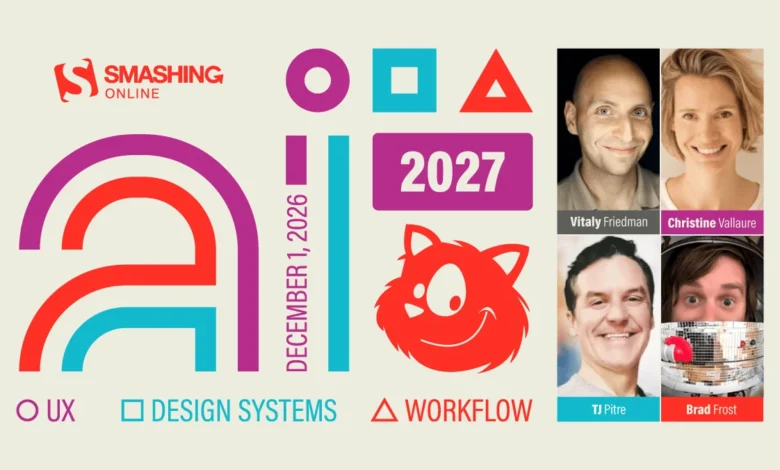
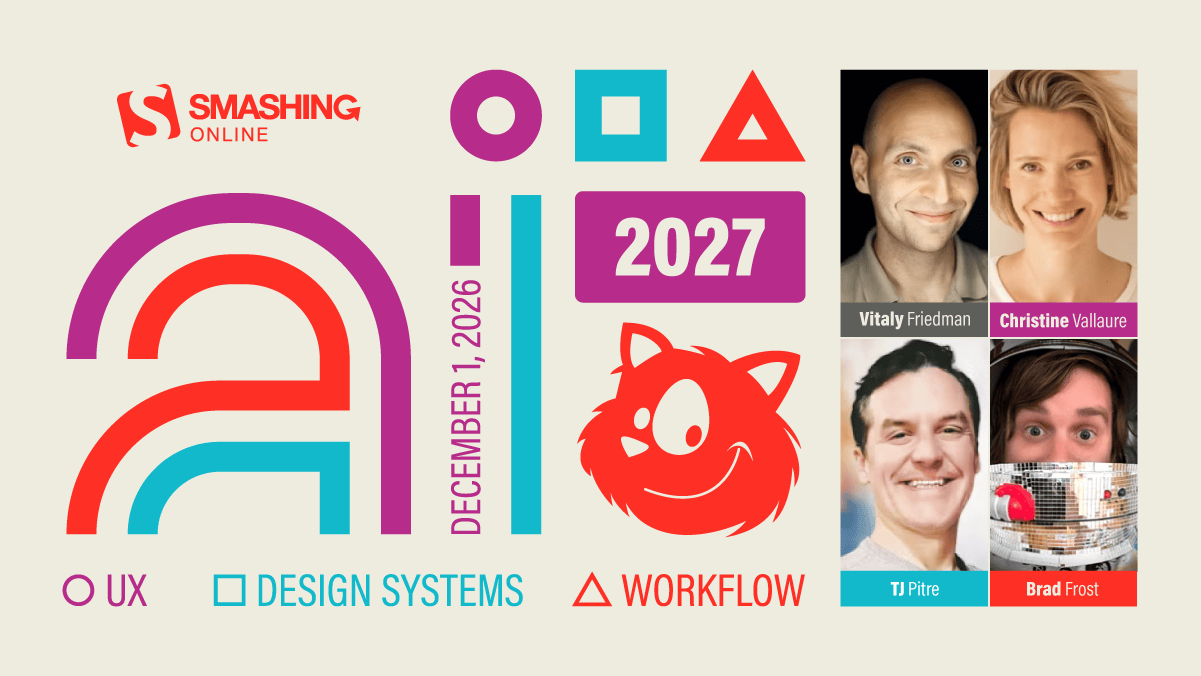
The rapid emergence of generative artificial intelligence has fundamentally altered the discourse surrounding software development and design. While industry sentiment has shifted from initial curiosity to widespread "AI fatigue"—often fueled by hyperbolic marketing and unrealistic expectations—a growing segment of the developer community is pivoting toward pragmatic implementation. On December 1, Smashing Magazine will host a dedicated online conference, "AI in Design Systems," designed to move past the speculative noise and provide a technical, evidence-based exploration of how these tools can be integrated into professional workflows without compromising the integrity of design systems.
The Evolution of Design Systems and AI Integration
Design systems—the collections of reusable components, standards, and documentation that govern product design—have long been the bedrock of scalable software development. Historically, these systems were static, human-curated resources. The integration of AI represents a potential paradigm shift in how these libraries are maintained, queried, and deployed.
Industry experts observe that the current wave of AI tools, particularly Large Language Models (LLMs) and code-generation assistants, offers three primary benefits to design systems: automation of documentation, enhancement of component discovery, and the generation of boilerplate code that adheres to established brand guidelines. By automating the more repetitive aspects of maintaining a design system, developers and designers can reallocate their focus toward complex architectural decisions and user experience research.
Conference Overview and Key Themes
The upcoming Smashing Conference aims to bridge the gap between abstract AI capabilities and concrete application. By convening practitioners who have spent years refining design system methodologies, the event seeks to demystify the technology. The conference agenda is structured around four critical pillars:
- Scalability: How AI can assist in managing component variations across massive, cross-platform product ecosystems.
- Standardization: Using machine learning to ensure code and design tokens remain consistent across disparate teams.
- Workflow Efficiency: Practical demonstrations of AI-augmented coding environments that suggest components directly from a project’s design system documentation.
- Governance: Addressing the risks of "AI-drift," where automated tools might inadvertently introduce non-compliant patterns into a codebase.
The lineup features prominent voices in the field, including Brad Frost, known for his seminal work on Atomic Design; Christine Vallaure, a specialist in design system architecture; Vitaly Friedman, co-founder of Smashing Magazine; and TJ Pitre, an expert in design systems and developer tooling. Their collective participation signals a focus on technical depth rather than industry trends.
Chronology of AI Adoption in Design Operations
The transition of AI from a theoretical curiosity to a functional utility has followed a distinct timeline:
- 2020–2022: Initial experimentation with AI focused on visual generation tools, which were largely ignored by the enterprise design systems community due to a lack of reproducibility and strict design adherence.
- 2023: The emergence of specialized coding assistants (e.g., GitHub Copilot, Cursor) forced a rethink, as these tools began to understand context within repositories, allowing for better alignment with design tokens.
- 2024: The current focus has moved toward "context-aware" AI. This involves feeding proprietary design system documentation into AI models via RAG (Retrieval-Augmented Generation), enabling developers to query their design systems in natural language.
- December 2024 (Conference): This event marks a milestone in standardizing how these tools are integrated into professional, large-scale engineering environments.
Data-Driven Analysis of Productivity Gains
Recent internal surveys within major technology firms suggest that developers utilizing AI-integrated design systems report a measurable decrease in "time-to-first-component." According to recent data from industry benchmarks, organizations that have successfully integrated AI into their design workflows report a 15% to 25% reduction in time spent on manual documentation updates.
Furthermore, empirical analysis suggests that when AI is used to enforce design system constraints, the frequency of "component drift"—where developers create one-off versions of existing components—decreases significantly. This standardization is critical for long-term technical debt reduction. However, analysts warn that these gains are only realized when the AI is constrained by a robust, well-maintained foundational design system. Without a strong system in place, AI tends to accelerate the creation of "spaghetti code" rather than streamlining development.
Official Perspectives and Industry Reaction
The discourse surrounding this conference reflects a broader industry consensus: AI is not a replacement for human judgment in the design process, but rather a force multiplier for those who already understand the fundamentals.
"The goal is not to automate the designer out of the loop," notes one design systems lead at a Fortune 500 company. "The goal is to automate the friction out of the design-to-development pipeline."
This sentiment is echoed by the speakers at the Smashing event. By focusing on "how it translates to work," the conference organizers are intentionally distancing the event from the "AI-will-replace-you" rhetoric that has characterized much of the media coverage surrounding generative models. Instead, the focus remains firmly on human-in-the-loop systems, where the designer remains the final arbiter of quality and intent.
Broader Implications for the Design Industry
The implications of this shift are profound. As design systems evolve into "AI-ready" repositories, the role of the designer is shifting toward "design system architecture." A designer’s value is increasingly determined by their ability to structure information in a way that is machine-readable and actionable for AI models.
For developers, the implication is a move toward more abstract thinking. If an AI can handle the semantic mapping of a button component from a design file to a React or Vue implementation, the developer is free to focus on the performance, accessibility, and state management of the application. This could lead to a more collaborative, efficient environment, provided that teams invest the necessary time in training and governance.
Participation and Registration Details
The Smashing AI conference is structured to be accessible to a wide range of professionals, from individual contributors to design system managers. The event is priced at €50, a cost intended to keep the barrier to entry low for freelancers and independent developers.
In an effort to encourage broad participation, organizers have partnered with industry platforms to provide a discount code, AITRICKSCSS, for those registering through the official Smashing portal. Additionally, the event organizers have committed to providing two complimentary registrations to the first two individuals who engage with the official announcement via the CSS-Tricks platform, provided they use valid contact information for verification purposes.
Conclusion
The "AI in Design Systems" event represents a significant step in the professionalization of AI tools within the design and development sector. By shifting the conversation away from existential debates toward practical, workflow-integrated solutions, the organizers hope to provide a blueprint for how teams can navigate the current technological climate. Whether or not AI will fulfill its long-term promise remains a subject of ongoing debate, but for those tasked with managing complex design systems, the conference offers a pragmatic path forward.
As the industry moves into 2025, the ability to discern which AI tools provide genuine value—and which are merely distractions—will become a core professional competency. Events like this are essential for providing the context necessary to make those distinctions. For professionals looking to optimize their workflows, the focus on technical evidence and peer-led learning serves as a vital resource in an increasingly noisy landscape.