The Paradigm Shift: Why Agencies Must Prioritize Incident Prevention Over Rapid Response for Sustainable Growth


For web development and digital marketing agencies managing an expanding portfolio of client websites, the conventional wisdom of measuring success by Mean Time to Recovery (MTTR) is increasingly proving to be a costly misdirection. While the ability to swiftly resolve an incident remains a critical skill, particularly for smaller operations handling one or two client sites, a deeper analysis reveals that true operational health and sustainable growth hinge on a far more proactive metric: Mean Time Between Failures (MTBF). This shift from a reactive "fix-it-fast" culture to a preventative "stop-it-from-happening" philosophy is not merely a matter of efficiency; it underpins an agency’s profitability, client satisfaction, and long-term viability in a competitive digital landscape.
The Evolution of Agency Challenges: From Single Sites to Portfolio Management
In the early days of web development, agencies often managed a limited number of bespoke websites. Incidents were typically rare, isolated events. In such environments, an agency’s expertise in diagnosing and quickly rectifying issues—their MTTR—was a direct and meaningful indicator of performance. A swift resolution not only restored functionality but also reinforced client trust, turning a potential crisis into an opportunity to demonstrate competence. Knowledge of a single, familiar environment meant that solutions were often readily apparent, making response speed a point of pride and a key differentiator.

However, the digital ecosystem has evolved dramatically. Agencies today routinely manage dozens, if not hundreds, of client websites, often across diverse platforms and technologies. This exponential growth in portfolio size directly correlates with a proportional increase in the volume and complexity of potential incidents. The inherent flaw in a purely MTTR-focused strategy becomes evident here: an agency can become exceptionally fast at fixing problems without ever addressing the root causes that lead to their frequent recurrence. This fundamental distinction between the speed of recovery and the frequency of incidents is where the real, often hidden, costs of a reactive agency model accumulate.
Why Mean Time to Recovery (MTTR) Alone is an Inadequate Metric
MTTR, defined as the average time it takes to resolve a failure once it occurs, remains a vital metric for evaluating the efficiency of an agency’s incident response team. For a single-site setup, where incidents are infrequent and generally isolated, optimizing MTTR ensures minimal downtime and quick restoration of service. This approach is sustainable when the "repair shop" is rarely needed.
However, as an agency’s portfolio grows, Mean Time Between Failures (MTBF) emerges as a more accurate and critical indicator of overall operational health and system stability. MTBF measures the average time a system operates without failure, essentially quantifying its reliability. A high MTBF signifies that failures are rare, allowing an agency’s team to focus on strategic development and client growth. Conversely, a low MTBF indicates a system prone to frequent breakdowns, trapping the agency’s team in a near-constant state of recovery, regardless of how quickly individual incidents are resolved.
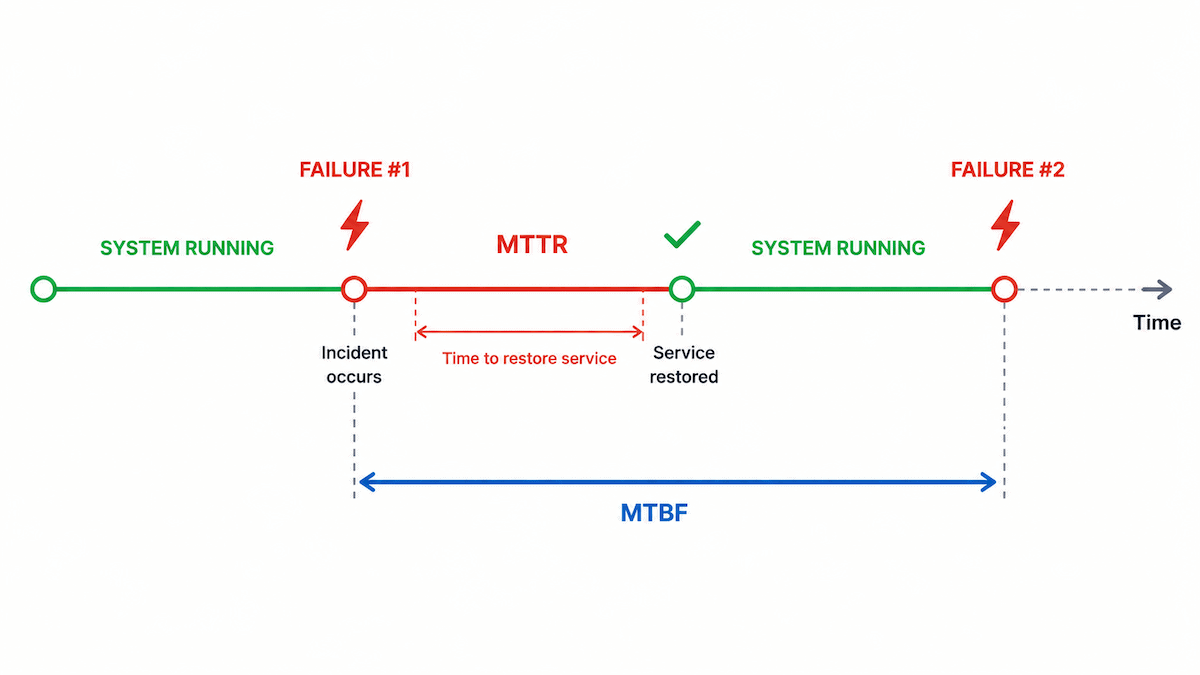
To illustrate, consider the analogy: optimizing solely for MTTR is akin to maintaining an exceptionally fast and efficient auto repair shop while the client’s fleet of vehicles continues to break down frequently. While the repairs are quick, the constant need for them consumes resources, frustrates the client, and ultimately undermines the business relationship. The ideal scenario is to have vehicles that rarely break down in the first place, minimizing the need for the repair shop altogether. This signifies a high MTBF.
The Hidden Costs of a Low MTBF in a Growing Portfolio
The financial and operational ramifications of a low MTBF are far-reaching and extend beyond the direct hours spent by developers on incident tickets. In a large portfolio, a high frequency of incidents per site creates a perpetual support queue that cannot be adequately addressed by response speed alone. Common incident types, such as plugin conflicts, theme errors, database issues, server resource exhaustion, security breaches, and traffic spikes, regularly overlap across multiple client sites. Many of these incidents are often external to the agency’s direct control or arise from the underlying infrastructure, meaning that simply getting faster at fixing them does not equate to having fewer of them.
The hidden costs associated with a reactive, low-MTBF model include:
- Client Dissatisfaction and Churn: Frequent downtime or performance issues directly impact a client’s business, leading to lost revenue, reputational damage, and ultimately, a loss of trust in the agency. Research by Akamai indicates that a 100-millisecond delay in website load time can decrease conversion rates by 7%. Repeated incidents, regardless of rapid resolution, erode client confidence and increase the likelihood of them seeking a more reliable partner.
- Team Burnout and Reduced Productivity: A team constantly engaged in firefighting is prone to stress, exhaustion, and reduced morale. This environment hinders their ability to focus on proactive development, strategic initiatives, and innovation, shifting their role from creators to perpetual troubleshooters. The opportunity cost is immense, as valuable developer hours are diverted from revenue-generating projects to maintenance.
- Reputational Damage: An agency known for frequent client site incidents, even if quickly resolved, risks its industry standing and ability to attract new business. Word-of-mouth and online reviews often highlight reliability as a key factor in agency selection.
- Increased Operational Overhead: Beyond direct labor costs, there are administrative burdens associated with incident management, client communication, and post-mortem analysis, all of which consume resources that could be better utilized elsewhere.
- Stagnated Innovation: When resources are perpetually tied up in reactive support, there’s less capacity for research, development, and the implementation of new technologies that could give the agency and its clients a competitive edge.
Industry leaders echo this sentiment. Hall, a Kinsta customer with decades of agency experience, noted the impact of recurring site downtime on a WooCommerce client’s revenue and the team capacity absorbed by these issues on their previous host. "Kinsta works like we work. We need great performance so there are no surprises, and great support in case something does happen. Kinsta allows us to reduce the distractions of support and increase productivity," they stated, highlighting the value of a platform that proactively minimizes incidents. Similarly, award-winning digital marketing agency Paramark described their prior experience as requiring "excessive system administration to prevent websites from failing. Some of the constant issues included managing server resources and cleaning log files. Failure to do that meant websites would become unstable." These testimonials underscore the pervasive nature of these challenges across the agency landscape.
The solution, therefore, lies in tracking incident frequency per site per month, rather than solely time-to-resolution. This provides a clear, objective measure of whether the underlying environment is genuinely improving or if the team is merely becoming more adept at managing a persistent problem.
Shifting to a Prevention-First Infrastructure and Operating Model
A sustainable agency operating model is built on an infrastructure that inherently reduces the likelihood of incidents, rather than just facilitating rapid recovery. This proactive approach integrates architectural design, automated processes, and intelligent monitoring to elevate MTBF.
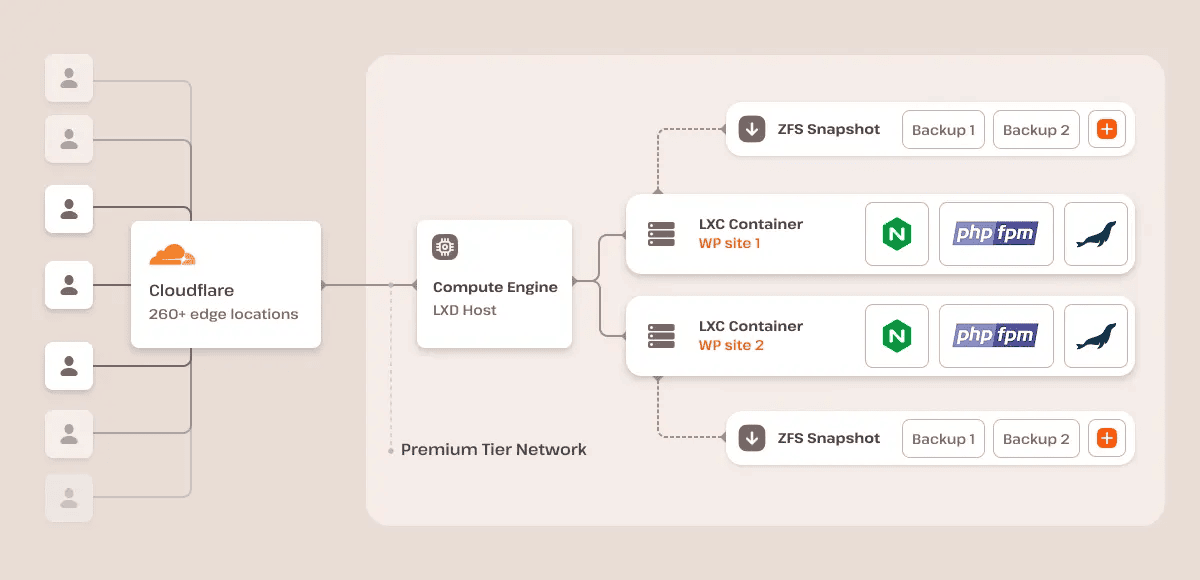
One exemplary model for such an infrastructure is Kinsta’s platform, which is engineered around this prevention-first philosophy. Its core architectural components are designed to mitigate common incident categories that typically consume significant agency resources:
- Isolated Linux Containers: A cornerstone of Kinsta’s reliability is its use of isolated Linux containers for each site. Every client site operates within its own dedicated software stack, ensuring that resources cannot cross container boundaries. This means that a resource spike, a security vulnerability, or any performance issue on one client’s site cannot impact the performance or availability of any other site managed by the same agency, or indeed, any other site on the platform. This contrasts sharply with traditional shared hosting platforms, where a single problematic site can degrade the performance of many others on the same server, creating widespread, unpredictable incidents.
- Automatic Backups and One-Click Restore: Despite robust preventative measures, incidents can still occur. Kinsta addresses this with comprehensive daily backups of every site, retained for at least 14 days. These backups are easily accessible from the MyKinsta dashboard, alongside system-generated backups (e.g., before major updates) and manual backups. The "Restore to" functionality allows agencies to roll back to a known stable state with minimal clicks, transforming a complex recovery process into a predictable, swift operation. For agencies utilizing Kinsta Automatic Updates across their portfolio, every scheduled update runs with a pre-existing system-generated restore point, ensuring a "restore plus investigate" workflow that minimizes live-site disruption.
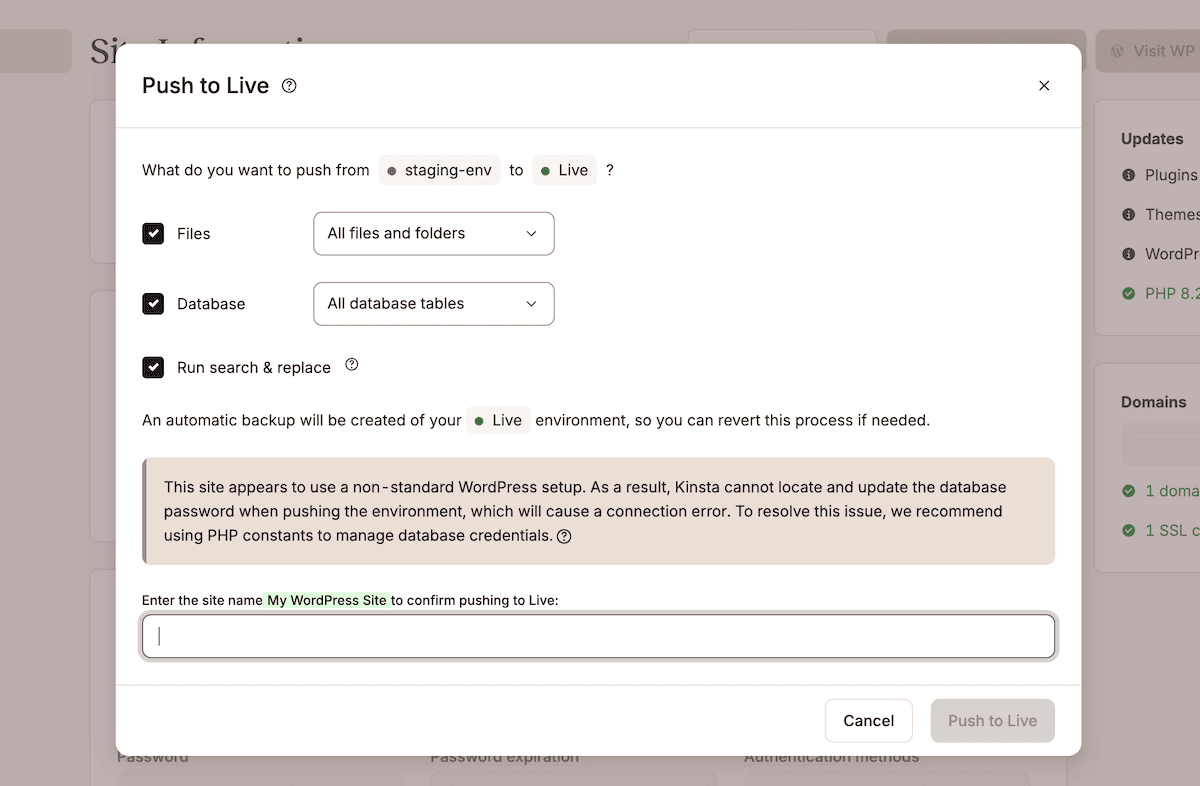
- Staging Environments and Selective Push: A significant source of incidents often stems from deploying untested changes directly to live production environments. Kinsta’s staging environments provide a separate, isolated copy of the live site where agencies can thoroughly test updates, new features, or design modifications without risking client-facing issues. Once changes are validated, the "selective push" feature offers granular control over what moves to production (e.g., only files, only the database, or specific elements within them). Crucially, Kinsta creates an automatic backup of the target environment before every push, providing an immediate safety net. This multi-environment setup, combined with selective push and pre-push backups, dramatically reduces deployment-related incidents, eliminating the need for urgent live-site interventions.
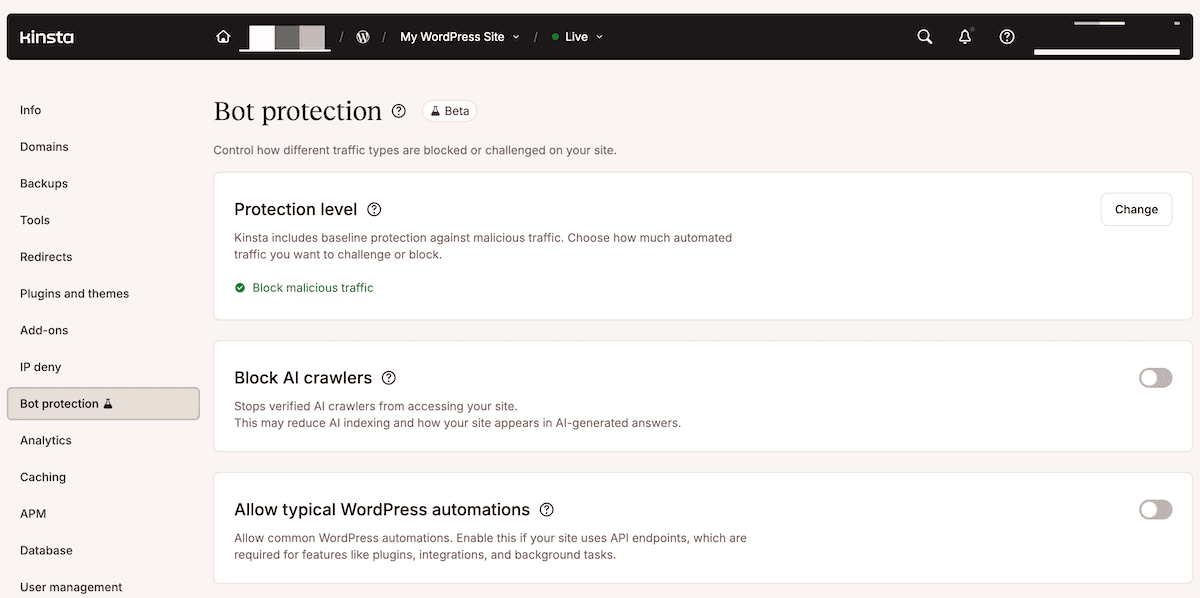
- Bot Protection as a Performance and Security Layer: Malicious or wasteful bot traffic can severely impact site performance, consume server resources, and even lead to denial-of-service (DDoS) attacks. Kinsta’s Bot Protection filters traffic at the infrastructure level before it reaches WordPress, significantly reducing automated load. By default, Kinsta blocks traffic classified as malicious across its entire platform. Agencies can configure protection levels for individual or multiple sites, from blocking known malicious IPs to challenging unclassified requests or even all non-verified traffic. This functionality is increasingly vital for managing resource-intensive sites like WooCommerce stores or membership platforms, where bot-driven load can bypass caching and exhaust PHP threads, leading to performance degradation and downtime.
- Advanced Analytics as an Early-Warning System: Proactive incident prevention relies heavily on visibility. MyKinsta’s analytics suite provides agencies with crucial insights into site performance before issues escalate into client-facing problems. The "Performance" tab, for instance, tracks PHP response times and PHP thread usage. A pattern of rising response times without a corresponding increase in human traffic can be an early indicator of bot load, inefficient database queries, or problematic code. By comparing "Visits" (billable human traffic) with "Top requests by views" (all traffic, including automated requests), agencies can pinpoint where bot activity is affecting server performance even when human visit counts appear normal. This allows for early intervention, shifting the agency from reactive firefighting to predictive maintenance.
Integrating Prevention into Agency Workflows
Beyond infrastructure, agencies must integrate prevention-first thinking into their daily operating models. This involves conscious choices and repeatable processes:
- Systematic Incident Logging and Analysis: Instead of merely fixing an issue, agencies should meticulously record contributing site factors and resolution steps for every incident. The logs within MyKinsta, for instance, provide invaluable data for this purpose. The goal is to identify recurring patterns. For example, if logs consistently show incidents caused by plugin update conflicts on the same site, it highlights a gap in the agency’s staging or testing workflow. Without such systematic record-keeping, these patterns remain invisible, and incidents continue unabated.
- Robust Pre-Deployment Checklists: Standardizing the deployment process with a comprehensive checklist can prevent a vast majority of avoidable incidents. This checklist should include items such as:
- Verifying all changes in a staging environment.
- Performing thorough cross-browser and device compatibility tests.
- Checking for broken links or missing assets.
- Running performance audits (e.g., Lighthouse scores).
- Reviewing error logs and analytics pre- and post-deployment.
- Ensuring proper backup procedures are in place before pushing to live.
- Communicating changes to clients where necessary.
- Proactive Client Reporting: Shifting from reactive problem explanations to proactive reliability reporting builds immense client trust. Quarterly summaries detailing declining incident frequency, consistent uptime metrics (leveraging MTBF data), and improvements in site performance demonstrate an agency’s commitment to long-term stability and value. This contrasts sharply with a client receiving urgent calls only after an event, fostering a perception of continuous problem-solving rather than problem prevention.
Conclusion: Prevention-First as the Foundation for Agency Scaling
In the dynamic and competitive world of digital agencies, fast incident response remains a fundamental capability. However, it is the underlying infrastructure and operational model that determines whether this capability is in constant demand or rarely needed. At agency scale, the chasm between these two scenarios directly impacts profitability, team stability, and ultimately, market leadership.
Investing in prevention-first infrastructure and adopting proactive workflows empowers agencies to transcend the limitations of a reactive model. Platforms like Kinsta, with their container isolation, automated backup systems, robust bot protection, and advanced analytics, address the most common and resource-intensive incident categories at their root. By combining these technological advantages with disciplined internal processes—such as meticulous incident logging and comprehensive pre-deployment checklists—agencies can achieve consistent incident reduction across their entire managed portfolio. This strategic shift not only minimizes downtime and enhances client satisfaction but also frees up valuable agency resources, allowing teams to focus on innovation, growth, and delivering exceptional value, making agency scaling truly sustainable. For agencies seeking to optimize their operations and scale effectively, programs like Kinsta’s Agency Partner Program offer dedicated support, co-selling resources, and specialized tooling designed specifically for managing WordPress at scale, further solidifying the prevention-first approach as the cornerstone of future success.