Navigating the New Frontier of WordPress Security in an Era of Artificial Intelligence

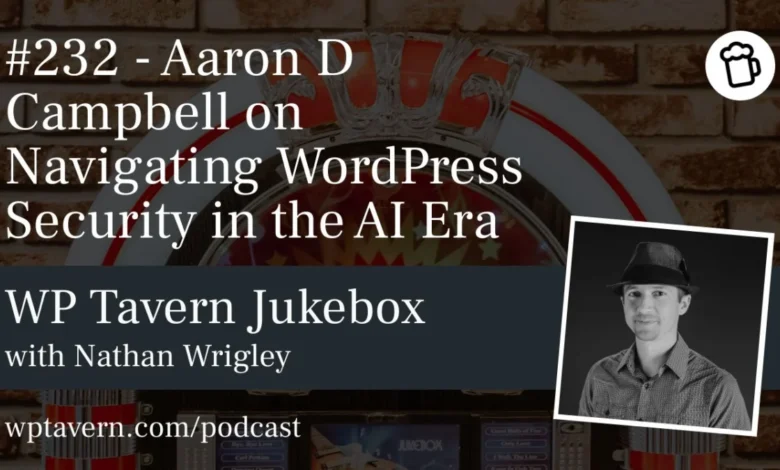
The cybersecurity landscape governing the world’s most popular content management system, WordPress, is undergoing a profound transformation as artificial intelligence (AI) fundamentally alters the nature of digital threats. Aaron D. Campbell, a veteran in the internet and security infrastructure space and current representative of Monarx, highlights that the current environment has evolved from a traditional battle of human ingenuity into a high-stakes, real-time arms race defined by compute power and automated execution. As WordPress powers over 40% of the internet, the scale and velocity of these AI-driven attacks have rendered previous defensive models, which relied heavily on human-led reaction times, increasingly obsolete.
The Evolution of the Threat Landscape
Historically, cybersecurity was defined by human adversaries working in finite, often isolated groups. Attackers would identify a vulnerability, manually craft an exploit, and launch a targeted campaign. This process allowed security teams a window of time—often days or even weeks—to develop and deploy patches before the vulnerability was widely leveraged.
The introduction of AI has effectively eliminated that latency. Modern threat actors now deploy AI agents capable of 24/7 operations, performing continuous reconnaissance across the entire web. These agents do not sleep; they scan, test, and exploit vulnerabilities at a speed that renders human intervention impossible if relying solely on traditional manual patching. Furthermore, these AI systems are capable of "chaining" multiple, minor vulnerabilities together. A security researcher or developer might view these individual flaws as low-risk or manageable, but an AI agent can intelligently synthesize these disparate weaknesses into a single, devastating attack vector that a human would struggle to conceptualize or anticipate.
Data-Driven Reality and the Speed of Exploitation
The urgency of this situation is underscored by recent data. According to analysis conducted by Monarx in collaboration with Patchstack, the window between the disclosure of a critical vulnerability and the onset of mass exploitation has shrunk to approximately five hours. In some instances, such as the recent wp2shell exploit, researchers observed significant attack spikes within 30 minutes of the patch being released.
This acceleration has forced security professionals to shift their posture from reactive to proactive. The traditional model, which relied on the "responsible disclosure" cycle, is being stressed by the reality that adversaries have access to the same public repositories and security advisories as the defenders. When a patch is pushed to a repository, AI systems immediately analyze the diff (the changes in code) to reverse-engineer the vulnerability and weaponize it before the majority of site owners have had the chance to update their software.
The Role of Infrastructure and Supply Chain Security
The vulnerability of WordPress is not merely a matter of core software, but a complex interaction between the CMS, plugins, themes, and hosting environments. Supply chain attacks—where malicious code is injected into widely used plugins or libraries—have emerged as a primary concern.
In response, the WordPress community has introduced initiatives such as the "Protect the Shire" program, which implements a strategic delay in plugin updates. While some critics argue that any delay in patching could be dangerous, proponents emphasize that this period serves as a critical buffer to ensure that updates are not compromised by supply chain interference. This initiative reflects a broader realization: security is no longer just about fixing bugs; it is about verifying the integrity of the entire software distribution pipeline.
Collaborative Defense and the "AI versus AI" Paradigm
To combat these automated threats, the defensive side of the industry has adopted an "AI versus AI" strategy. Security teams are increasingly utilizing machine learning models to analyze code, detect anomalies, and predict potential attack patterns. These testing rigs allow security researchers to process complex, multi-page vulnerability reports—which were once manually parsed—in seconds, allowing them to focus on the human-centric aspects of architectural security and strategic planning.
Collaboration has become the cornerstone of this new defensive era. The WordPress Security Team, in conjunction with major hosting providers and security firms like Cloudflare and Monarx, operates through secure communication channels to share threat intelligence. By identifying new malware or attack patterns at one hosting provider, the ecosystem can now push global protections to millions of sites simultaneously, often before the attack spreads to the wider network. This collective approach, rooted in the open-source philosophy of transparency, remains the most effective defense against the asymmetric nature of AI-driven cyber warfare.
Implications for the Everyday WordPress User
For the typical WordPress user, the complexity of these backend battles can be daunting, yet the recommended defensive strategy remains rooted in fundamental hygiene. As the barrier for entry for malicious actors drops—due to the commoditization of AI-driven attack tools—the burden of security for the end-user has shifted toward automation.
Security experts suggest three primary pillars for the average site owner:
- Automated Patching: Enabling auto-updates for WordPress core, plugins, and themes is no longer optional. Given the narrow window between disclosure and exploitation, manual updates are effectively a vulnerability in themselves.
- Infrastructure Selection: Choosing a hosting provider that prioritizes security-focused, layered infrastructure is essential. Site owners should inquire about whether their host employs server-side malware detection, Web Application Firewalls (WAF), and real-time threat monitoring.
- Credential Hygiene and Dark Web Monitoring: With AI now capable of collating data from decades of historical breaches to perform credential-stuffing attacks, using unique, complex passwords for every service is critical. Utilizing tools to monitor for data leaks associated with one’s email address or personal information provides a necessary early warning system.
The Future of the Security Industry
The psychological toll on security professionals, who must remain constantly vigilant against a persistent and automated threat, is significant. However, there is a prevailing sentiment of optimism within the security community. Just as previous shifts in technology, such as the transition to modern encryption standards, once seemed insurmountable, the current challenge is expected to drive the next generation of security innovation.
The goal for the industry is not to reach a state of absolute security—which is statistically improbable—but to increase the "cost" of the attack for the adversary. If the effort and compute power required to exploit a WordPress site become prohibitively expensive for the attacker, the return on investment for their malicious activities decreases.
As the industry moves forward, the reliance on human-AI collaboration will only intensify. The human element will continue to serve as the architect of defense, providing the strategic oversight and moral framework necessary to guide the automated systems. For professionals like Aaron D. Campbell, the objective remains clear: to build a digital ecosystem that is resilient enough to withstand the current wave of innovation, ultimately ensuring that the internet remains a reliable and safe utility for its billions of users. While the threat of an AI-driven attack is the new reality, the collaborative, open-source nature of the WordPress community continues to provide the most robust defense against the evolving digital frontier.