How WordPress Publishers Can Visually Track and Manage Affiliate Links Directly Inside the Gutenberg Editor

Managing affiliate disclosure and maintaining compliance with search engine guidelines has long been a labor-intensive administrative challenge for large-scale digital publishers. Recently, content platforms with extensive archives spanning thousands of posts have faced the necessity of updating legacy hyperlinks. Specifically, publishers are shifting traditional "nofollow" link attributes to the more specific "sponsored" attribute introduced by search engine optimization standards, while simultaneously implementing visible text disclosures to maintain absolute transparency with audiences.
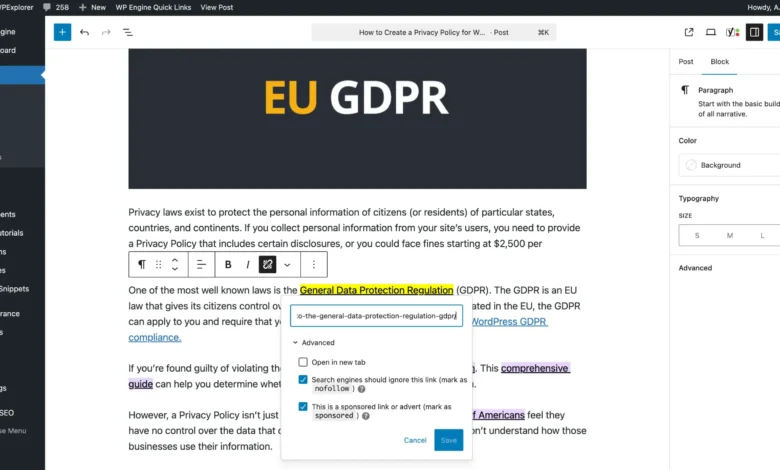
For sites housing thousands of individual articles, auditing and restructuring these links manually is prone to oversight. To address this operational bottleneck, developers and site administrators have begun deploying custom lightweight code solutions that automatically highlight links bearing specific relational attributes directly within the WordPress writing interface. This innovation allows content managers to evaluate link density, verify attribute accuracy, and enforce internal compliance policies at a glance before publishing or updating content.
The Technical Mechanics of In-Editor Link Highlighting
Implementing a visual identifier system within the modern WordPress ecosystem involves leveraging cascading style sheets alongside the platform’s core editing hooks. Historically, visualizing distinct link types required third-party extensions or tedious manual code inspections. However, modern WordPress architecture supports both block editor customization and classic editor modifications through dedicated stylesheet integration or inline script injection.
To achieve real-time link highlighting in the Gutenberg block editor, developers utilize CSS attribute selectors. By targeting anchor tags equipped with specific relational parameters—specifically rel="sponsored" and rel="nofollow"—publishers can apply distinct background and text color styling to these elements.
The implementation typically requires targeting the .editor-styles-wrapper class to ensure the visual modifications are confined strictly to the editing canvas without bleeding into the live front-end environment. Developers can inject this functionality utilizing the enqueue_block_editor_assets action hook, registering a dynamic style handle and appending inline CSS rules.
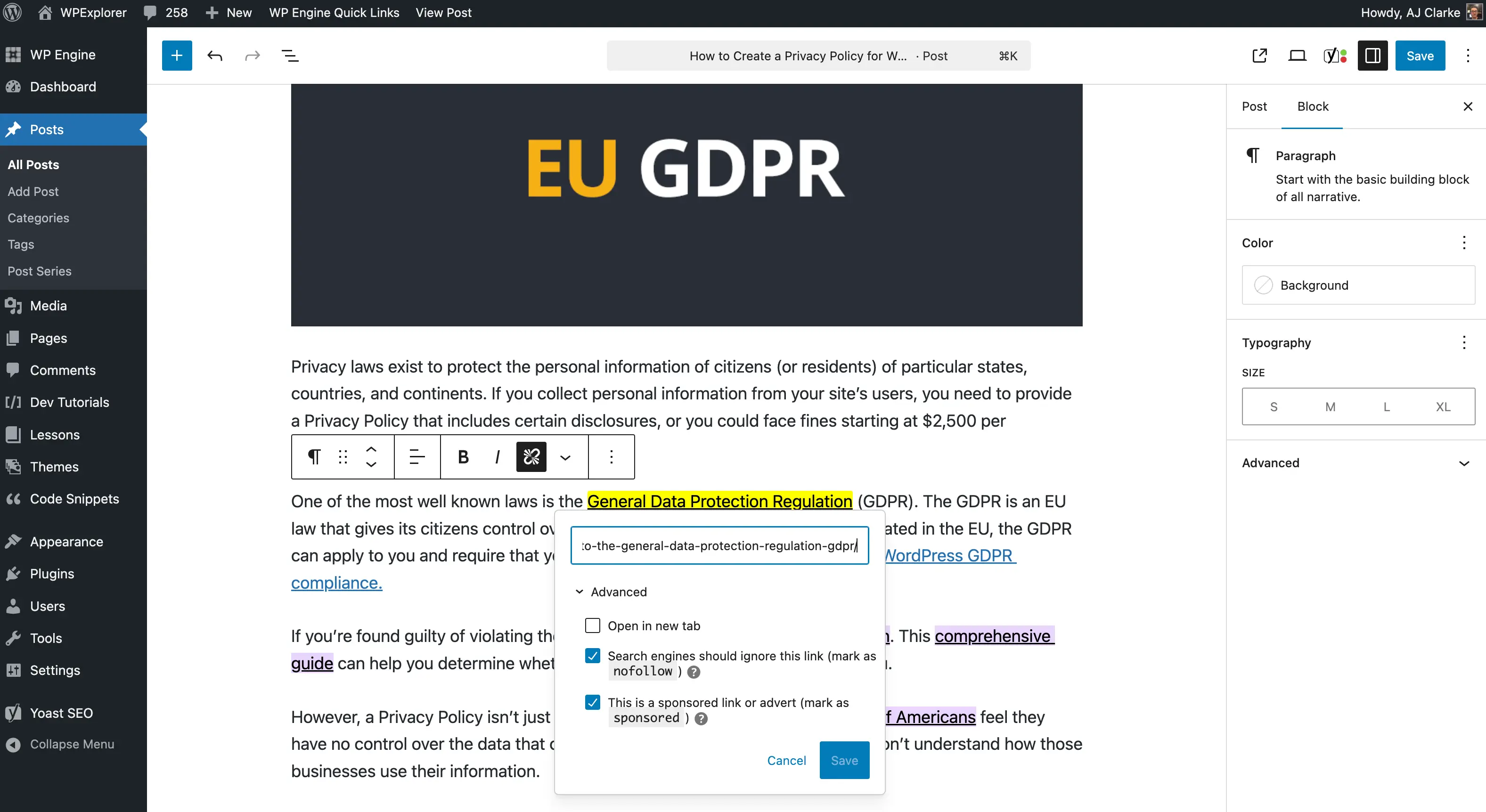
For publishers preferring a file-based approach, creating a dedicated style-editor.css file within a child theme directory and enabling editor support via add_theme_support( 'editor-styles' ) provides a clean, maintainable alternative. This ensures that content creators working within collaborative environments can immediately identify monetized links, helping them balance commercial monetization strategies with editorial integrity.
Background Context: The Evolution of Link Attributes in SEO
The necessity for advanced link auditing tools stems from years of shifting search engine optimization policies regarding paid links and affiliate marketing. For decades, search engine algorithms required publishers to apply the generic rel="nofollow" attribute to any hyperlink representing a paid placement, advertisement, or affiliate referral. This directive was designed to prevent paid link equity from manipulating organic search rankings.
In September 2019, search engine operators introduced two new relational attributes alongside nofollow: rel="sponsored" and rel="ugc" (User Generated Content). The sponsored attribute was specifically designated for links created as a result of compensation, sponsorships, or affiliate partnerships. While search engines indicated that both nofollow and sponsored would be treated as hints for crawling and indexing purposes, industry best practices quickly evolved to favor precision. Publishers were encouraged to adopt the sponsored tag to provide clearer contextual signals to automated web crawlers.
For established publications with decade-long archives, transitioning millions of legacy links from nofollow to sponsored—while simultaneously auditing affiliate text disclosures—presented a massive logistical hurdle. Content audit workflows traditionally relied on database queries or external crawling software, which failed to provide an intuitive, in-workflow editing experience for writers and content managers. The integration of visual cues inside the content editor bridges this gap, allowing editorial teams to catch compliance errors during the drafting phase.
Broader Industry Friction and the WordPress Plugin Repository Debate
The distribution of utility tools designed to solve micro-problems within content management systems has increasingly sparked discussions regarding the efficiency of official software repositories. While independent developers frequently create lightweight, single-purpose utilities to optimize editorial workflows, many choose to bypass official plugin directories in favor of decentralized platforms like GitHub.

Industry commentators and independent developers have frequently criticized the administrative review timelines associated with official repository submissions. Delays in manual code reviews often stretch across several weeks, frustrating creators who deploy rapid, patch-level solutions for daily operational needs. Critics argue that despite substantial revenue generation within the broader ecosystem, review infrastructure scaling has not kept pace with the exponential growth of third-party development. Consequently, niche productivity scripts and developer utility plugins are increasingly shared via open-source repositories, requiring users to manually install or deploy code snippets via custom functions files or site-specific plugins.
Implications for Digital Publishing and Editorial Compliance
The adoption of automated visual indicators for monetized links carries significant implications for digital publishing efficiency and regulatory compliance. As regulatory bodies worldwide tighten enforcement regarding clear and conspicuous disclosures of commercial relationships, publishers face heightened legal and algorithmic scrutiny.
By integrating visual highlights directly into the writing interface, editorial operations minimize the risk of accidental non-compliance. Writers can immediately identify whether an outbound commercial link lacks the requisite attribute or proper textual disclosure. Furthermore, content strategists can analyze link distribution across long-form articles, preventing over-monetization and preserving user experience quality.
As content management systems continue to evolve, the integration of workflow-specific developer tools highlights a broader industry trend: the democratization of custom code for everyday editorial tasks. Whether deployed via open-source repositories, child themes, or bespoke site plugins, visual link management tools represent a practical step forward in streamlining digital publishing compliance.
Related posts: