Architecting WordPress for the Age of Autonomous AI Agents and Machine Consumers


For more than two decades, the foundational architecture of WordPress has been anchored to a singular premise: a human being sitting in front of a web browser. Every theme, plugin, database query, and user interface has been meticulously designed around human behavior—navigating drop-down menus, scanning visual cues, filling out contact forms, and clicking confirmation buttons. This browser-centric paradigm defined the web development industry, establishing standard workflows for agencies, developers, and enterprises alike. However, the rapid proliferation of artificial intelligence is fundamentally disrupting this paradigm. Today, software developers are no longer building exclusively for human users; they must increasingly engineer content management systems to accommodate autonomous AI agents and machine consumers.
Unlike traditional web crawlers that merely index content or archive pages, modern AI agents operate with functional autonomy. They can execute business logic, retrieve real-time inventory data, draft content, authenticate sessions, and trigger complex multi-step workflows on behalf of a human user without ever rendering a single HTML page or loading the wp-admin dashboard. This paradigm shift requires a radical reevaluation of core WordPress architecture, pushing developers to rethink application programming interfaces (APIs), security protocols, authentication standards, rate limiting, and server performance metrics. As organizations race to integrate automation into their digital ecosystems, the technical community is adapting through new architectural primitives such as the WordPress Abilities API and Model Context Protocol (MCP) adapters, creating direct, programmatic channels for software to discover and execute site features.
The Evolution of Machine Interaction: From Crawlers to Autonomous Agents
To understand the scale of this architectural transformation, industry analysts point to the distinct evolutionary path of automated web consumption. In the early eras of the internet, automated scripts and web scrapers performed read-only operations, systematically parsing HyperText Markup Language to extract text, links, and media. These crawlers interacted with the outermost layer of a website, leaving the underlying databases and server-side functions untouched.
AI agents, by contrast, represent an active, transactional class of user. Powered by Large Language Models (LLMs) and advanced orchestration frameworks, these software systems can reason, make decisions, and invoke remote tools. When an AI assistant interacts with an e-commerce platform, for instance, it does not browse product categories visually. Instead, it queries structured endpoints, evaluates stock availability, calculates shipping timelines, and initiates checkout sequences programmatically.
This functional divergence exposes the limitations of human-first web design. Humans possess cognitive flexibility; if a button fails to load or a form field is confusing, a human user can re-read a prompt, switch browsers, or click an alternative link. AI agents lack this intuitive resilience. They require rigid, predictable pathways: strictly defined actions, structured input schemas, robust programmatic authentication, and error responses that can be parsed and resolved automatically. Consequently, developers are moving beyond simple page design to architect discoverable capabilities—exposing backend functions directly to external software in a secure, controlled manner.
The Shift Toward Capability-Driven Design and the Abilities API
Traditional web development methodologies begin by mapping out user journeys—visualizing how a customer lands on a homepage, clicks a category link, fills out a lead generation form, and reaches a thank-you page. For an AI agent, this entire visual journey is redundant overhead. An agent does not need to render CSS stylesheets or execute client-side JavaScript to submit a quote request or search internal documentation.
To bridge this gap, the WordPress ecosystem is embracing capability-driven design. Rather than forcing an AI tool to scrape HTML or simulate human mouse clicks, modern development practices leverage tools like the WordPress Abilities API. This interface allows developers to expose specific application functions directly, detailing precisely what data an action requires, what output it generates, and which credentials or user roles are authorized to invoke it.
This approach shifts the developer’s mindset from building static screens to defining modular, machine-readable operations. For example, a plugin developer can expose a function that searches a knowledge base or drafts a blog post without tying that functionality to an administrative menu item. By decoupling backend features from the visual presentation layer, websites become modular API-driven platforms capable of serving both human visitors and automated software seamlessly.

Security Paradigms: Authentication, Authorization, and Least-Privilege Access
Granting software applications the ability to execute tasks inside a production content management system introduces complex security challenges. The primary architectural concern quickly shifts from connectivity to authorization: determining precisely what an AI agent should be permitted to do within the environment.
According to identity security research from organizations such as CyberArk, a significant percentage of modern enterprises lack robust identity security controls specifically tailored for non-human identities and AI applications. When developers integrate third-party AI tools into a WordPress site, providing broad administrator-level credentials introduces severe operational risks. If an agent is compromised or hallucinates a command, unchecked access can lead to catastrophic data loss, unauthorized content publication, or database corruption.
To maintain system integrity, developers are enforcing strict least-privilege principles. An AI agent tasked solely with searching product documentation has no operational justification for editing user profiles or publishing posts. Similarly, a workflow designed to generate draft content should be prohibited from executing financial transactions or deleting database tables.
The WordPress Abilities API addresses these security requirements by embedding granular permission checks directly into each exposed capability. Furthermore, standard security hygiene dictates that all data transmitted by an AI agent must undergo rigorous sanitization and validation before the CMS executes any underlying logic. API keys, authentication tokens, and sensitive credentials must never be exposed within prompt strings, client-side scripts, or server access logs. For operations involving high-risk or irreversible actions—such as processing payments, modifying core settings, or purging user databases—architects are implementing mandatory "human-in-the-loop" approval gates, halting the automated workflow until a verified human administrator grants explicit sign-off.
Performance Engineering and Infrastructure Demands Under Machine Workloads
The integration of automated consumers also redefines performance benchmarks and infrastructure requirements. Human visitors interact with websites at a relatively slow, erratic pace—loading a page, reading content for several minutes, and executing occasional clicks. AI agents, conversely, can generate high-velocity bursts of programmatic activity, issuing dozens of complex API queries within seconds as they gather context, compare data sets, and execute multi-step workflows.
Unchecked machine traffic can overwhelm server resources, exhaust database connections, and degrade user experience for human visitors if infrastructure is not properly optimized. To mitigate these risks, hosting environments and application layers must implement aggressive caching strategies, optimized database indexing, and comprehensive rate-limiting controls.
Engineers are also focusing on payload efficiency. Rather than forcing an agent to make multiple sequential API calls—each triggering independent database overhead—developers are designing consolidated endpoints that retrieve all necessary data in a single request. Moreover, asynchronous job processing is becoming standard practice for resource-intensive tasks, pushing slower background operations out of the primary request-response cycle.
Error handling and request timeouts represent another critical performance vector. When an AI agent issues a request and experiences a gateway timeout, it often lacks the contextual awareness to know whether the server successfully processed the command before dropping the connection. If the agent automatically retries the request, benign lookup queries may simply duplicate compute effort, but transactional operations—such as creating a user account or submitting an order—can result in duplicate records. To prevent this, robust APIs incorporate unique operation identifiers and idempotency keys, allowing agents to verify the status of prior tasks before executing secondary commands.
Observability, Logging, and the Rise of Hosting-Level APIs
Because AI agents execute workflows autonomously behind the scenes, system failures are frequently buried within layers of automated logic rather than immediately flagged by a frustrated human user staring at a broken web page. Consequently, enhanced observability and comprehensive logging are now essential components of modern web architecture.
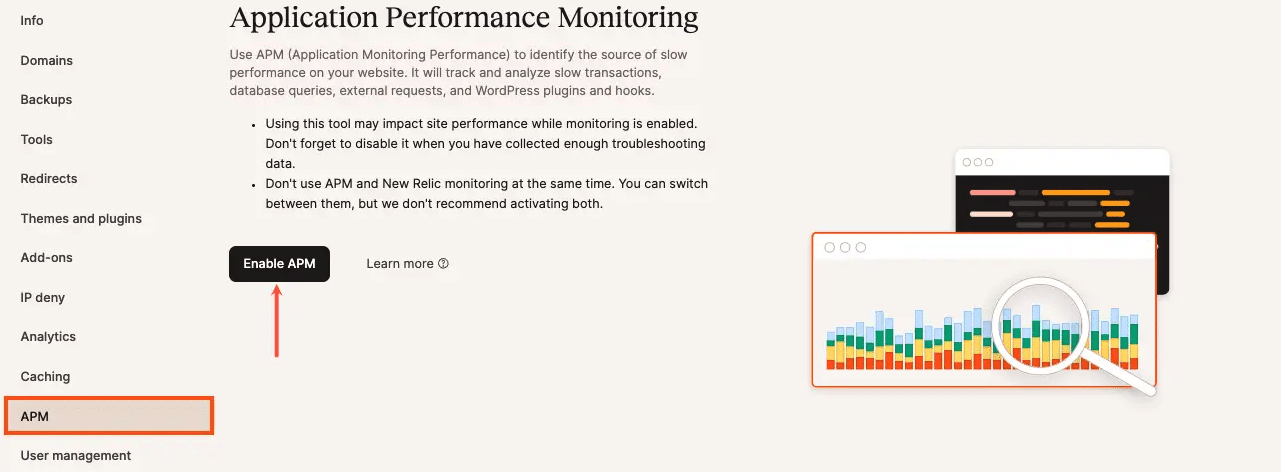
Developers require deep visibility into application performance metrics to diagnose where automated workflows stall or fail. Tools such as application performance monitoring (APM) systems and structured server error logs allow engineering teams to trace database queries, monitor external API handshakes, and identify latency bottlenecks. Staging environments have also taken on heightened importance, providing a secure, isolated sandbox where teams can test and audit agent-driven workflows against production-mirroring data before deploying them live.
Beyond the WordPress application layer, the infrastructure supporting these sites is evolving to feature machine-readable interfaces. Managed WordPress hosting providers are increasingly exposing operational tasks through robust APIs. For instance, hosting platforms now provide programmatic access to domain management, cache purging, environment cloning, and automated backups.
Advanced orchestration frameworks can leverage Model Context Protocol (MCP) servers built on top of hosting APIs, empowering AI assistants to perform routine administrative tasks—such as inspecting staging environments or clearing object caches—directly through secure command interfaces. This capability reduces reliance on manual dashboard navigation while strictly preserving permission boundaries, ensuring that external software only touches the specific operational domains required for its assigned task.
Strategic Implications for Digital Agencies and Enterprise Teams
As these technologies mature, web development agencies and enterprise architecture teams are revising their internal review processes to incorporate agent-readiness. While immediate integration of AI agents or MCP servers may not be mandatory for every standard brochure website, modern strategic planning strongly advises against architectural choices that permanently lock out machine interoperability.
During initial project scoping and architecture reviews, technical leads are asking forward-looking questions: Can core site functions be exposed programmatically if requested later? Are plugin dependencies modular, or are critical business logic workflows buried inside monolithic, one-off admin interfaces? Are APIs documented and secured using industry-standard authentication frameworks?
Case studies from high-volume agency ecosystems—such as large-scale enterprise deployments managing hundreds of individual client sites via infrastructure APIs—demonstrate the immense operational efficiencies unlocked by programmatic management. While many of these current automation pipelines handle internal agency workflows rather than direct AI agent interactions, they validate the foundational shift away from manual, dashboard-bound operations toward API-first web infrastructure.
Future Outlook: Bridging Human Experience and Automated Efficiency
Ultimately, the rise of autonomous AI agents does not spell the end of human-centric web design. The visual and interactive layers of WordPress—pages, forms, typography, and brand storytelling—will remain vitally important as long as human users browse the internet. However, the underlying assumption that every web interaction begins and ends with a human opening a browser window is permanently obsolete.
As software increasingly acts on behalf of human users, the architectural plumbing of the web must evolve. By embracing capability-driven design, enforcing strict least-privilege security controls, optimizing infrastructure for high-velocity machine traffic, and implementing rigorous observability tools, developers can future-proof their digital assets. The next customer interacting with a WordPress site may still be a human being, but the mechanism delivering that experience will increasingly be powered by autonomous machine intelligence working silently in the background.
Related posts: