The Urgent Security and Performance Imperative of Transitioning WordPress Environments to Modern PHP Versions

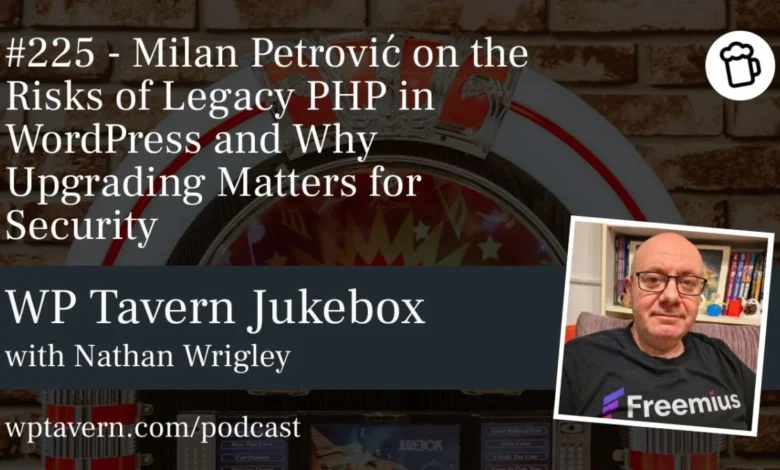
The WordPress ecosystem, which powers over 43% of the internet, currently faces a significant technical debt challenge regarding its reliance on legacy PHP versions. Despite the end-of-life (EOL) status of PHP 7.4—which reached its official security support expiration in November 2022—a substantial portion of the WordPress landscape continues to operate on outdated infrastructure. This reliance not only exposes millions of websites to known, unpatched vulnerabilities but also prevents the adoption of performance optimizations and security features inherent in modern PHP 8.x releases.
The Landscape of Technical Debt
During a technical session at WordCamp Europe 2024, developer and long-time WordPress contributor Milan Petrović addressed the critical security gaps created by maintaining legacy codebases. Petrović, who has spent nearly two decades within the WordPress ecosystem, highlighted that running websites on EOL versions of PHP is no longer merely a matter of convenience or compatibility; it is an active invitation for automated exploitation.
Data suggests that thousands of publicly documented, unpatched vulnerabilities exist within older versions of PHP. Because these versions no longer receive official security patches from the PHP Group, these bugs remain permanently open, providing a roadmap for malicious actors to execute automated attacks against vulnerable server environments. The risk is compounded by the fact that many WordPress users and site administrators remain unaware of the correlation between their server’s PHP version and their site’s overall security posture.
Chronology of PHP Support and Adoption
The history of PHP versioning in the context of content management systems (CMS) is marked by a tension between backward compatibility and the necessity for technological advancement. WordPress has historically prioritized broad accessibility, allowing it to run on a wide array of hosting environments, some of which are significantly outdated.
- Pre-2015: Many WordPress sites operated on PHP 5.x, a standard that is now considered dangerously obsolete.
- 2019-2022: The industry saw a gradual shift toward PHP 7.x, which offered substantial performance improvements over its predecessors. However, PHP 7.4 reached its end-of-life in November 2022, meaning it no longer receives security updates.
- 2023-Present: The focus has shifted to PHP 8.0, 8.1, 8.2, and beyond. These versions introduced features such as Just-In-Time (JIT) compilation, union types, and named arguments, which not only enhance code quality but also provide native security hardening.
Despite these advancements, statistics provided by various WordPress tracking surveys indicate that a significant percentage of the active WordPress user base remains on PHP 7.4 or earlier. This creates a fragmented ecosystem where security patches are often unavailable for the underlying infrastructure, leaving the burden of security on individual plugin developers and site owners.
The Performance and Security Case for Upgrading
Modernizing to PHP 8.x provides more than just security benefits; it offers quantifiable performance gains. Industry benchmarks demonstrate that each iteration of PHP since the 7.4 release has brought significant improvements in memory management and execution speed. Petrović noted that transitioning a standard codebase from PHP 7.4 to current versions like 8.3 or 8.4 can result in memory usage reductions of 50% or more, alongside a marked increase in page load speeds.
For hosting providers, this represents a major opportunity for infrastructure optimization. By reducing the resource footprint of individual websites, hosts can achieve higher density and improved efficiency across their server farms. For the end-user, this translates to faster websites and reduced server-side processing errors.
The Role of Developer Tooling
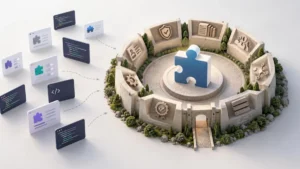
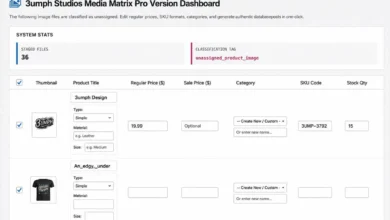
To assist developers in visualizing the risks of legacy code, Petrović introduced the Vulnerability Lab plugin. This tool is designed to demonstrate how specific exploits—such as server-side request forgery (SSRF) or authentication bypass—succeed when executed against legacy PHP environments but are effectively neutralized by the security features of PHP 8.x.
The plugin serves as an educational bridge, allowing developers to see, in a controlled environment, how modern PHP attributes and stricter typing can prevent common security pitfalls. By providing a clear, visual comparison, developers can better articulate the necessity of infrastructure upgrades to clients who may be resistant to change.
Implications for the WordPress Ecosystem
The broader implication of this technological inertia is a persistent attack surface that affects the entire ecosystem. Because WordPress is modular, a single vulnerable plugin or theme running on an outdated server can compromise an entire installation. While the WordPress core team continues to implement security enhancements, these efforts are limited by the requirement to maintain backward compatibility with older hosting configurations.
Industry experts argue that a more aggressive deprecation policy for older PHP versions might be necessary. While this would inevitably disrupt sites that have not been maintained, it would also catalyze a shift toward more resilient, performant, and secure infrastructure.
Strategic Recommendations for Stakeholders
The path toward modernization involves a multi-stakeholder approach:
- For Hosting Companies: Providers play the most critical role. Moving clients to newer PHP versions should be treated as a standard operational requirement rather than an optional service. Managed hosting solutions that force updates to at least the latest stable minor version are setting the industry standard for security.
- For Plugin and Theme Developers: Adopting modern PHP patterns is essential. By setting higher minimum PHP requirements for their products, developers can leverage new language features that make their code more resilient to exploits. As third-party libraries increasingly drop support for older PHP versions, developers will find it technically impossible to remain on legacy standards without sacrificing security.
- For Site Owners and Agencies: The "set it and forget it" mentality regarding website maintenance is a significant risk factor. Agencies have a responsibility to audit their clients’ hosting environments. Utilizing tools to monitor PHP versions and proactively managing the upgrade path can prevent catastrophic security incidents.
Future Outlook
As the PHP development cycle continues to move forward—with new versions released annually—the gap between legacy environments and modern standards will only widen. PHP 8.6, expected in late 2025, will continue to build upon the performance and safety improvements introduced in previous iterations.
The WordPress community is at a juncture where it must decide between the comfort of near-infinite backward compatibility and the necessity of structural modernization. While the transition process is undeniably complex—involving millions of distinct configurations, custom plugins, and varying levels of technical expertise—the evidence suggests that the cost of inaction is too high.
Transitioning away from legacy PHP is not merely an IT task; it is a fundamental requirement for maintaining the integrity and reputation of the WordPress platform in an increasingly hostile cybersecurity landscape. By prioritizing a gradual, informed transition, the community can ensure that WordPress remains a viable, secure, and high-performance solution for the next decade of web development. As Petrović emphasized, the process does not have to be an all-or-nothing endeavor; it can be achieved through incremental updates, consistent monitoring, and a collective commitment to building products that are secure by design.