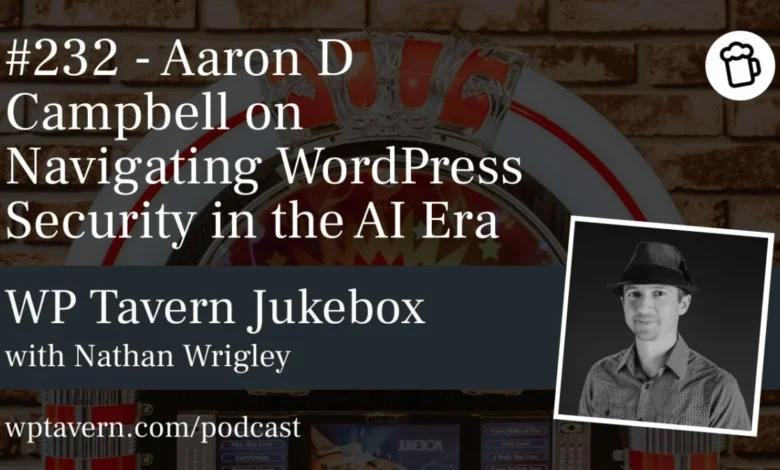
The rapid integration of artificial intelligence into the cybersecurity landscape has fundamentally altered the defensive posture required to protect the WordPress ecosystem. As the most widely utilized content management system (CMS) on the internet, powering over 40% of all websites, WordPress has become a primary target for sophisticated, automated threat actors. Recent discussions with industry veterans, including former WordPress Security Team lead Aaron D. Campbell, highlight a pivotal shift: the transition from human-led, manual exploitation to high-speed, AI-orchestrated attacks that leverage immense computational power to identify and weaponize vulnerabilities.
The Escalation of Digital Hostility
Historically, cybersecurity was defined as a battle of wits between human developers and individual hackers or small, localized groups. Security researchers could rely on the "breathing space" provided by the physical and temporal limitations of human adversaries. However, the contemporary threat landscape is defined by AI agents that operate 24/7, capable of scanning, testing, and chaining multiple vulnerabilities simultaneously.
According to security analysts, modern attacks have moved beyond simple, isolated exploits. Today’s threat actors deploy automated systems that can navigate complex codebases to identify overlapping security gaps—flaws that would take human researchers days or weeks to map out. Once a vulnerability chain is identified, these AI agents can instantly craft and deploy automated scripts, reducing the window of time between vulnerability discovery and full-scale exploitation from days to mere minutes. This shift represents a transition from a tactical struggle to an arms race defined by compute capacity.
Chronology of a Changing Landscape
The last four years have seen a drastic contraction in the lifecycle of software vulnerabilities. In the early 2020s, the industry generally operated under a timeframe where researchers had sufficient time to disclose, analyze, and patch flaws before widespread automated exploitation could occur.
Recent data from the 2023 security review by Monarx and Patchstack indicates that for critical vulnerabilities, this window has shrunk to approximately five hours. In extreme cases, such as the recent wp2shell exploit, automated attacks were detected within 30 minutes of a patch being released. This aggressive timeline has forced a paradigm shift in how hosting providers, security firms, and the WordPress core team manage the disclosure and mitigation process. The industry is no longer operating on a schedule defined by business hours, but on a real-time cycle dictated by machine-learning-driven bots.
The Role of Supply Chain Vulnerabilities
A significant portion of the current threat surface involves supply chain attacks. As websites rely increasingly on third-party plugins and interconnected software packages, attackers have turned their attention toward compromising the software supply chain itself. By injecting malicious code into popular plugins—or acquiring legitimate plugins with the intent of pushing malicious updates—adversaries can bypass traditional security perimeters.
In response, the WordPress community has implemented the "Protect the Shire" initiative, a strategic measure designed to mitigate the risk of malicious updates. By enforcing a six-hour delay on updates for certain plugins, the community aims to create a buffer zone that allows for the detection of anomalous activity before a patch is propagated to millions of sites. While this introduces a temporary latency in the patch cycle, industry experts view it as a necessary trade-off to ensure the integrity of the ecosystem. This measure is not a permanent, inflexible rule; rather, it is a dynamic process where security teams can coordinate rapid, emergency releases when a verified, high-impact vulnerability is identified.
Defensive Strategies in the AI Age
To counter these automated threats, defenders are increasingly deploying their own AI-driven countermeasures. This "AI versus AI" landscape involves utilizing machine learning models to analyze codebases for potential flaws faster than human reviewers, as well as deploying real-time behavioral monitoring to identify malicious traffic patterns.
The professional consensus emphasizes that while AI provides the tools for both offense and defense, human oversight remains critical. AI serves as an assistive tool—a "force multiplier"—for developers and security researchers, helping them summarize complex exploit reports and identify the precise location of flaws within millions of lines of code. However, the final decision-making process, including the architectural adjustments required to prevent recurring vulnerabilities, requires human intuition and long-term strategic planning.
Recommendations for WordPress Administrators
For the average WordPress user, the complexity of these high-level security battles can be daunting. Industry experts suggest a three-pronged approach to maintaining a secure site without requiring expert-level knowledge:
- Leverage Automated Updates: Ensure that WordPress core, themes, and plugins are set to update automatically. Relying on the official security team’s efforts is the most effective way to ensure that known patches are applied as soon as they become available.
- Vet Hosting Providers: Choose a hosting provider that treats security as a managed service. A quality host will employ layered security—including Web Application Firewalls (WAF), file monitoring, and automated malware remediation—to protect the site from the backend, effectively shielding the end user from the complexities of the underlying threats.
- Monitor Credential Security: Use services that track dark web data breaches. AI is highly effective at cross-referencing decades of leaked credentials to perform credential-stuffing attacks. By knowing if an email address or password has been exposed in a historical breach, users can proactively reset credentials and implement multi-factor authentication (MFA) to prevent unauthorized access.
Broader Implications and Future Outlook
The current "state of overwhelm" is viewed by experts not as a terminal failure of the web, but as a period of significant technical adjustment. As with previous technological shifts—such as the transition from outdated hashing algorithms to modern, robust encryption—the industry is learning to adapt. The ultimate goal is to move from a reactive security model, where defenders wait for a breach to occur, to a proactive, predictive model that identifies behavior patterns rather than just individual flaws.
Collaboration remains the cornerstone of this effort. The WordPress ecosystem’s commitment to open source is considered its greatest defensive asset. By allowing thousands of independent developers and security researchers to inspect the code, the community identifies and addresses vulnerabilities at a scale that proprietary, closed-source systems cannot match. The exchange of information between hosts, security firms, and the WordPress core team—often facilitated through secure, private channels—is the primary mechanism by which the community keeps pace with a global, distributed network of adversaries.
While the threat of AI-driven cyber attacks is substantial, the professional community remains committed to building a more resilient digital environment. The goal is to reach a stage where the defensive infrastructure is sufficiently sophisticated to anticipate and neutralize threats before they materialize. Until that point, the ongoing cycle of detection, patching, and adaptation will continue to define the standard of internet security, ensuring that the web remains a viable and safe platform for global communication and commerce.