Fourthwall vs Gelato: A Comprehensive Analysis of Modern Print-on-Demand and E-commerce Infrastructure


The landscape of direct-to-consumer (DTC) retail has undergone a significant transformation over the past decade, shifting from traditional inventory-heavy business models to flexible, lean operations powered by Print-on-Demand (POD) and integrated storefront technologies. At the center of this evolution are two distinct platforms: Gelato and Fourthwall. While both cater to creators, artists, and entrepreneurs, they represent fundamentally different approaches to digital commerce. Gelato functions primarily as a robust, globally distributed fulfillment network that integrates into existing digital ecosystems, whereas Fourthwall operates as an all-in-one brand-building platform that provides the storefront, payment infrastructure, and fulfillment services under a single roof.
Chronology and Market Evolution
The rise of the creator economy necessitated tools that could bridge the gap between creative design and logistical execution. Gelato emerged as a global leader in print-on-demand by focusing on local production. Founded with the mission to eliminate cross-border shipping delays and carbon-intensive logistics, Gelato scaled its operations to include over 140 production hubs across 32 countries. By producing items as close to the end customer as possible, Gelato redefined the supply chain for POD.
Conversely, Fourthwall entered the market to solve a different problem: the fragmentation of creator tools. Many creators previously had to stitch together disparate services—a website builder, a POD provider, a payment processor, and a membership management tool. Fourthwall consolidated these functions, positioning itself as a "Merchant of Record" (MoR). By acting as the MoR, Fourthwall assumes the legal and financial complexities of global sales tax and compliance, allowing creators to focus exclusively on brand growth.
The Functional Divide: Fulfillment vs. Ecosystem

To understand the operational differences, one must analyze the distinction between an integration-first provider and a platform-first provider.
Gelato operates on a "plug-and-play" architecture. It is designed to function as the backend for established stores on Shopify, Etsy, WooCommerce, or Wix. The platform does not attempt to be a website builder; instead, it provides a high-performance API and plugin suite that allows merchants to tap into a massive catalog of apparel, paper products, and wall art. Its primary value proposition is its network density. With 90% of orders produced locally, the company has established a logistical standard that significantly reduces the carbon footprint associated with long-haul shipping.
Fourthwall, by contrast, is an ecosystem. When a user registers with Fourthwall, they are provided with a custom domain, a drag-and-drop website editor, and a suite of business tools. It is designed for creators who may not have an existing web presence. Beyond POD products, Fourthwall enables the sale of digital downloads, memberships, and even sourced inventory (products the creator manufactures themselves and sends to Fourthwall for storage and fulfillment).
Comparative Data and Operational Efficiency
When analyzing the economic viability of both platforms, the distinction between "platform fees" and "fulfillment costs" becomes critical.
Gelato’s cost structure is built around product base prices. The free tier offers access to the catalog and standard tools. However, power users typically gravitate toward the Gelato+ subscription, priced at $29.99 per month. The return on investment for this subscription is realized through volume; members receive discounts of up to 33% on base product costs. Because Gelato integrates with external platforms, users must also account for the costs of those external platforms (e.g., Shopify subscription fees, email marketing software, and hosting).

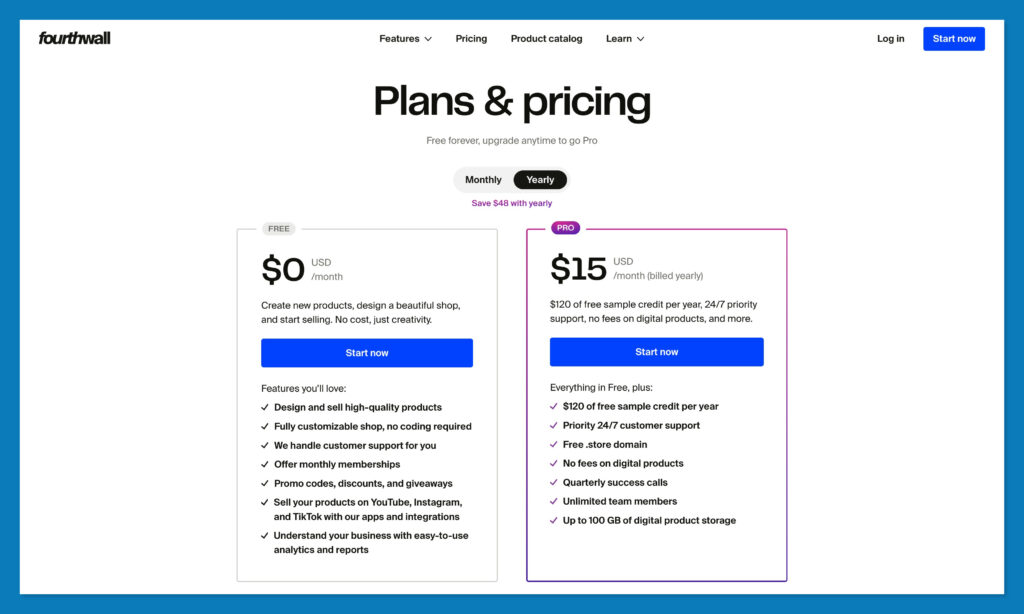
Fourthwall offers a lower barrier to entry for those starting from scratch. Because the storefront, hosting, and checkout process are included, the "hidden costs" associated with building a tech stack are minimized. The platform operates on a model that charges a 5% fee on digital products and memberships for its free tier. For creators scaling their operations, the $19 per month Pro plan eliminates certain transaction fees and unlocks advanced features like priority support and sample credits.
Strategic Implications for Business Growth
The decision to utilize one platform over the other often hinges on the creator’s current stage of development.
For established brands, the primary concern is operational continuity. Migrating an existing, high-traffic Shopify store to a new platform is a high-risk, high-effort endeavor. For these merchants, Gelato is the superior choice. Its ability to sync product availability every two hours and its advanced "Personalization Studio"—which allows customers to add custom text or images to products—provides a competitive edge without forcing a change in the underlying e-commerce architecture.
Conversely, for emerging creators or influencers looking to launch a brand, the administrative burden of managing tax compliance, site security, and integration maintenance can be debilitating. Fourthwall’s status as a Merchant of Record is a significant structural advantage here. By managing the tax collection and remittance process across various jurisdictions, Fourthwall mitigates the risk of legal and financial non-compliance for the creator.
Technological Innovations and Future-Proofing
Both companies have invested heavily in artificial intelligence to drive efficiency. Gelato has introduced AI-powered mockup tools and "Creator Insights" widgets, which provide data-driven recommendations for product design and pricing. These tools are aimed at optimizing the "conversion funnel"—the path a customer takes from viewing a product to completing a purchase.
Fourthwall has taken a more holistic approach to automation. Its "Eli" AI assistant serves as a virtual business manager. Beyond just design, Eli can analyze sales trends, adjust pricing dynamically, and handle customer service queries related to orders. Furthermore, Fourthwall’s integration with platforms like RSS.com for podcasts and its built-in digital product security features reflect a broader strategy of serving the "Creator Economy" rather than just the "POD Industry."
Sustainability and Ethical Considerations
In the current market, consumer sentiment is increasingly tied to the ethical footprint of the products they purchase. Gelato has made sustainability a pillar of its brand identity. By utilizing non-toxic inks and emphasizing local production, it appeals to a demographic that is sensitive to the environmental impact of e-commerce.
Fourthwall, while not explicitly branded as a sustainability-first company, offers eco-conscious product lines and maintains high manufacturing standards. However, because it acts as a platform for various types of goods—including third-party sourced products—the responsibility for sustainability metrics is often distributed differently than it is with a dedicated POD partner like Gelato.
Conclusion

The choice between Gelato and Fourthwall is not a question of which platform is objectively superior, but rather which aligns with the user’s long-term business strategy. Gelato remains the gold standard for fulfillment, offering unmatched logistical reach and deep, reliable integrations for those who have already established their digital storefronts. It is a specialized, powerful tool for those who prioritize product quality, rapid delivery, and seamless integration with existing software.
Fourthwall serves as an all-encompassing foundation for brand development. By bundling the storefront, the backend logistics, and the administrative tax and support functions, it allows a creator to operate as a full-scale retail business with minimal technical overhead. Ultimately, the decision should be dictated by whether the user requires a specialized fulfillment partner to augment an existing business, or an all-in-one infrastructure to build a brand from the ground up.