WordPress Alternatives in 2026: A Comprehensive Analysis of the Evolving Web Development Landscape

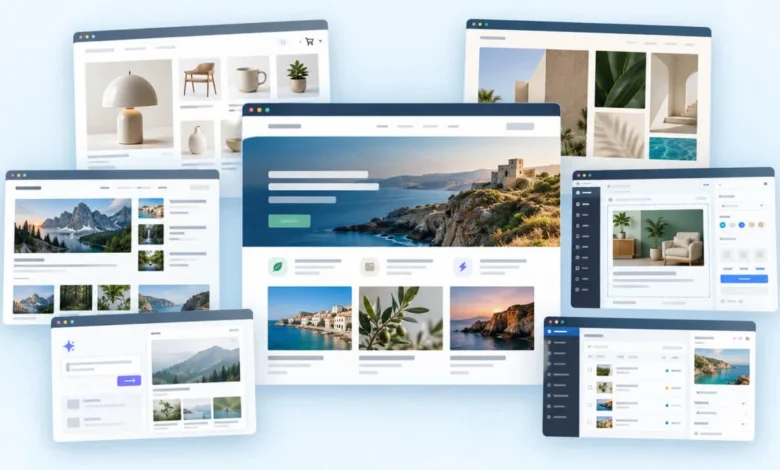
The web development landscape has undergone a seismic shift since 2017, when the initial inquiry into WordPress alternatives first gained mainstream traction. Nine years later, the ecosystem has moved beyond simple website builders, transitioning into an era defined by artificial intelligence, headless architecture, and decentralized infrastructure. As of October 2026, WordPress remains the dominant force, powering nearly 40% of all websites globally, yet the rationale for choosing an alternative has matured from basic usability concerns to specialized functional requirements.
The Changing Architecture of the Web
The current market for web creation is bifurcated between high-abstraction, proprietary platforms and high-control, developer-centric frameworks. In 2026, the industry has seen a convergence of technologies: Cloudflare’s acquisition of the Astro team in January marked a strategic pivot toward faster, static-first web delivery, while the introduction of EmDash 1.0 in September offered a modern, TypeScript-native alternative to traditional database-driven content management. Simultaneously, the integration of AI-driven "vibe coding"—a process where natural language prompts generate functional site architecture—has lowered the barrier to entry for static site creation.
Chronology of Key Industry Developments in 2026
The year 2026 has been particularly volatile for major industry players, necessitating a re-evaluation of long-term platform stability for businesses:
- January 2026: Cloudflare announces the acquisition of the Astro team, signaling a major move into the static site generation and CMS market.
- May 2026: Webflow initiates a significant corporate restructuring, citing the rise of AI tools and lightweight builders as a catalyst for a strategic shift toward an "agentic web marketing platform."
- May 20, 2026: The official release of WordPress 7.0, codenamed "Armstrong," introduces an AI-integrated client and a redesigned dashboard.
- July 2026: Squarespace implements a tiered price increase across its subscription plans, reflecting broader industry trends toward higher recurring costs for managed services.
- September 9, 2026: Automattic’s board of directors places CEO Matt Mullenweg on a brief administrative leave amidst ongoing leadership concerns, which are resolved within 48 hours.
- September 28, 2026: The stable 1.0 version of EmDash is released, positioning itself as a secure, sandboxed alternative to traditional CMS plugins.
Comparative Analysis of Leading Platforms
For organizations deciding between staying with WordPress or migrating to a specialized platform, the decision-making matrix has expanded.
Ecommerce and Shopify’s Market Dominance
Shopify has effectively carved out a dominant share of the retail sector by solving the "fragmentation problem." Unlike WooCommerce, which requires the assembly of disparate plugins for payments, taxes, and shipping, Shopify offers an integrated, opinionated environment. In 2026, the company’s focus on the "Sidekick" AI assistant—which automates store app development and workflow configuration—has created a competitive moat that WordPress struggles to replicate without significant third-party overhead. However, for businesses where SEO-driven content and complex blogging architectures are primary revenue drivers, WordPress remains the superior choice.
The Rise of Managed "All-in-One" Builders
Wix and Squarespace continue to target the small-to-medium enterprise (SME) sector. Wix, through its January 2026 "Harmony" launch, has leaned heavily into the AI agent model, with "Aria" acting as an autonomous site builder. While these platforms offer unparalleled ease of use, they suffer from high "lock-in" risk. Because these platforms are proprietary, migrating a complex site away from Wix or Squarespace typically requires a total redesign, unlike a WordPress migration, which can be accomplished via database exports and file transfers.
Design-Centric Platforms: Framer and Webflow
Framer remains the preferred tool for high-fidelity design, bolstered by a $2 billion valuation. It excels in scenarios where the visual representation is the primary product. Conversely, Webflow has pivoted toward the enterprise marketing team. By focusing on personalization and integrated marketing stacks, Webflow has abandoned the freelancer brochure-site market, leaving a vacuum that is increasingly being filled by static site generators and AI-assisted frameworks.
The Emergence of Static Sites and EmDash
The most significant trend for technical teams in 2026 is the decoupling of the CMS from the frontend. Using frameworks like Astro to build static sites provides unmatched security and speed. The introduction of EmDash serves as a critical bridge between this developer-centric approach and traditional CMS needs. EmDash’s sandboxed plugin architecture—where plugins are restricted by default and require explicit permission to access data—addresses the persistent security vulnerabilities that have historically plagued the WordPress ecosystem.
WordPress: Governance and Market Position
Despite the emergence of high-performance alternatives, WordPress remains the most flexible option for the majority of the web. With a library of over 72,000 plugins and a market share that holds steady at roughly 58% of all CMS-managed sites, its ecosystem is unparalleled.
However, the events of September 2026, including the temporary leadership transition at Automattic and the ongoing legal dispute with WP Engine, have highlighted the risks of centralized governance. While the software itself is open-source and remains functional regardless of corporate squabbles, the concentration of influence over the project’s infrastructure remains a point of concern for enterprise-level stakeholders. The long-term trajectory of the platform is currently heavily dependent on how the project manages its transition into the AI-native era without alienating its core developer community.
Data-Driven Considerations for Migration
When considering a platform migration, organizations must weigh "Total Cost of Ownership" (TCO) against "Platform Lock-in."
- Low Lock-in: WordPress, Ghost, and Static-builds (Astro/EmDash). These platforms allow for data portability, enabling an organization to switch hosts or architectures without losing core content assets.
- High Lock-in: Shopify, Wix, Squarespace, Webflow, and Framer. These platforms prioritize convenience but mandate a proprietary hosting environment. Migration costs are high, and data export is often limited to basic CSV formats, necessitating a reconstruction of the visual and functional layers.
Conclusion and Strategic Outlook
The choice of a web platform in late 2026 is no longer about finding the "best" tool, but rather the "right" tool for a specific organizational maturity level. For the majority of users, WordPress continues to offer the best balance of flexibility and ecosystem support. For specialized ecommerce, Shopify provides the most efficient path to revenue. For design-forward startups, Framer and Webflow offer rapid iteration cycles that traditional systems cannot match.
The emergence of EmDash and the maturation of static site generators represent a future where developers can achieve the performance of a custom-coded site with the administrative capabilities of a CMS. As the industry matures, the divide between these categories will likely widen. Organizations should avoid the "cheap launch" trap—choosing a platform based on short-term pricing—and instead evaluate the platform’s ability to scale with their business requirements over the next three to five years. Ultimately, the resilience of a website is determined less by the specific software version and more by the portability of its data and the sustainability of the underlying ecosystem. As the web continues to integrate AI and automated workflows, the most successful platforms will be those that provide powerful tools without compromising user control and data sovereignty.