The Evolving Moat: Why AI is Redefining the WordPress Plugin Economy and How Businesses Must Adapt

The rapid proliferation of generative artificial intelligence is fundamentally altering the software-as-a-service landscape, with the WordPress ecosystem facing a unique period of structural transformation. Historically, premium plugin developers relied on feature-rich codebases, search engine optimization, and high switching costs to maintain market share. However, the ease with which users can now leverage AI assistants—such as Claude, ChatGPT, or Gemini—to generate bespoke, single-purpose code snippets has introduced a significant supply shock to the industry. As developers and business owners grapple with this shift, the sustainability of the traditional plugin subscription model is being called into question.
The current trend represents a shift from "feature-based" software to "utility-based" execution. When a site owner can prompt an AI to write a 150-line "must-use" (mu-plugin) to handle a specific task that previously required a $99-a-year subscription, the value proposition of that premium tool collapses. This development is not merely a transient annoyance; it is a systemic challenge that threatens to decouple the plugin developer from the end user.
Chronology of the AI Disruption
The erosion of the traditional plugin business model has accelerated significantly since late 2022. While WordPress developers have long contended with "feature creep" from core updates—such as the introduction of native XML sitemaps in WordPress 5.5—the velocity of change has shifted from a multi-year cycle to a matter of months.
Early 2023 saw the first wave of "AI-native" plugins, which were often simple wrappers around existing LLM APIs. By mid-2023, the emergence of more advanced coding assistants meant that non-technical site owners could bypass these wrappers entirely, opting instead for custom-generated code. By 2024, the integration of the Abilities API and Machine Control Protocol (MCP) in WordPress 6.9 and beyond allowed AI agents to not only generate code but to operate, manage, and troubleshoot entire WordPress environments autonomously. This transition marks the end of the era where code complexity served as a sufficient barrier to entry.
The Dynamics of Supply and Demand Shocks
Market analysts classify the current disruption into two primary categories: supply shocks and demand shocks. A supply shock occurs when the barriers to entry for a specific feature set vanish, leading to an oversaturation of tools and a subsequent collapse in pricing power. When a competitor can reach feature parity in months rather than years, the "first-mover advantage" is effectively neutralized.
Conversely, demand shocks affect the customer base’s capacity to purchase. For many WordPress plugins—particularly those serving the affiliate marketing and content publishing sectors—the rise of AI-generated search results has led to declining traffic for their clients. As these customers see their revenue shrink, their willingness to maintain non-essential SaaS subscriptions plummets. This creates a cycle of involuntary churn that is largely immune to traditional marketing or customer retention strategies.
The Decline of Traditional Moats
For over a decade, the primary defense for a plugin business was its "moat." These barriers were generally constructed around proprietary code, SEO dominance, and user interface familiarity. Today, these defenses are increasingly porous:
- Code Complexity: Previously, proprietary algorithms were a significant barrier. With AI-assisted reverse engineering, high-quality code can be audited and replicated with minimal human effort.
- Search Visibility: As search engines move toward answer-based results, the traditional "blue link" SEO strategy is losing its efficacy. Plugins that rely on ranking for specific keywords are seeing their influence wane.
- UX Familiarity: With the advent of AI agents that can interact with the WordPress database via REST APIs or MCP, the administrative dashboard—once the heart of a plugin’s value—may soon become invisible. If an agent performs the work, the "user experience" of the human interface becomes secondary.
The Eight Surviving Moats
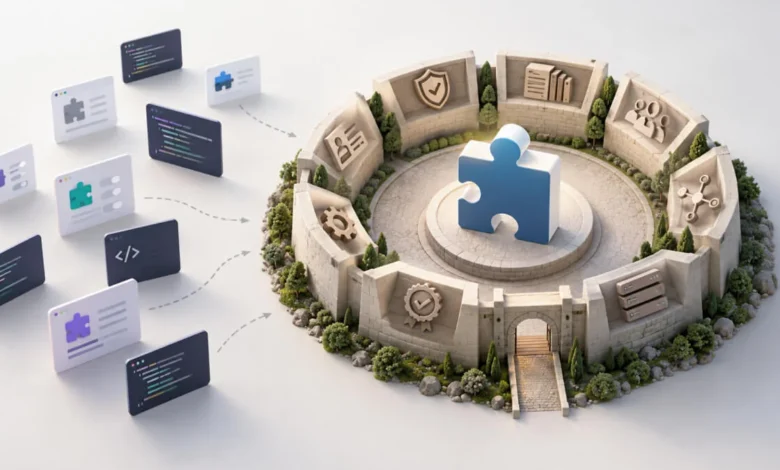
Despite these challenges, certain businesses are successfully pivoting toward more resilient competitive advantages. Experts suggest that to survive, businesses must move away from selling "features" and toward securing one of eight fundamental moats that AI cannot easily replicate:
- Trust and Ecosystem Integration: Brands that have established themselves as the industry standard—such as WooCommerce or Advanced Custom Fields—benefit from an ecosystem of agencies and developers who have built their entire professional reputations on these tools.
- System of Record: Plugins that hold critical business data (subscriptions, transaction history, donor databases) possess a high "cost of exit." Rebuilding these data structures and workflows is often too disruptive for a business to undertake.
- Permission to Act: Software that is authorized to perform high-stakes operations, such as processing payments, executing security firewalls, or performing automated backups, carries an inherent value that "advisory" AI cannot match.
- Implicit Trust (No Verification): Products that calculate complex data, such as automated sales tax or VAT, gain value through years of proven accuracy, where the user no longer feels the need to audit the output.
- Regulatory Approval: Certain plugins hold specific certifications (e.g., HIPAA-compliant forms or Google-certified Consent Management Platforms). These approvals require legal and bureaucratic navigation that AI cannot perform.
- Networked Communities: Platforms that facilitate complex human collaboration, such as membership sites or internal newsroom workflows, possess a "community gravity" that prevents individual users from migrating elsewhere.
- Learning Loops: Platforms like Akismet or Wordfence, which utilize collective data to improve their efficacy across millions of sites, benefit from a flywheel effect where each new user makes the service stronger for everyone else.
- Operational Complexity: Some services are "easy to build but hard to run." Products that require constant maintenance of infrastructure, such as email deliverability or CDN management, force a competitor to take on a level of operational burden that many are unwilling to manage.
Broader Implications for the WordPress Industry
The transition toward an AI-integrated ecosystem is forcing a "flight to quality." As commoditized plugins decline, the market is expected to favor tools that function as core infrastructure. Acquirers in the WordPress space are increasingly focusing on these "moated" assets, favoring businesses that demonstrate long-term viability through system integration rather than surface-level functionality.
Industry responses have been mixed. Some developers have begun integrating AI directly into their products, positioning their software as the interface through which an AI agent interacts with the site. By embracing the Abilities API and MCP, these developers are ensuring that their plugin remains a necessary "node" in the automated site management chain.
Ultimately, the future of the WordPress plugin economy lies in the distinction between "code" and "business." As the cost of generating functional code approaches zero, the value shifts entirely to the intangible assets: brand reputation, deep integration into existing business workflows, and the ability to maintain complex operational systems. Developers who attempt to compete solely on feature sets are likely to face increasing pressure, while those who leverage their position as the "system of record" or the "trusted partner" appear well-positioned to navigate the AI-driven landscape.
The task for business owners in the coming year is to perform a rigorous self-assessment. By scoring their products against these eight established moats, developers can determine which areas of their business require reinforcement. Those who fail to evolve risk being replaced by the very efficiency that AI promises, while those who adapt are likely to find that their role as essential infrastructure is more secure than ever.
Related posts: