Z.ai Secures $5 Billion in Landmark Capital Raise Amidst Growing Geopolitical Scrutiny of Chinese AI Development

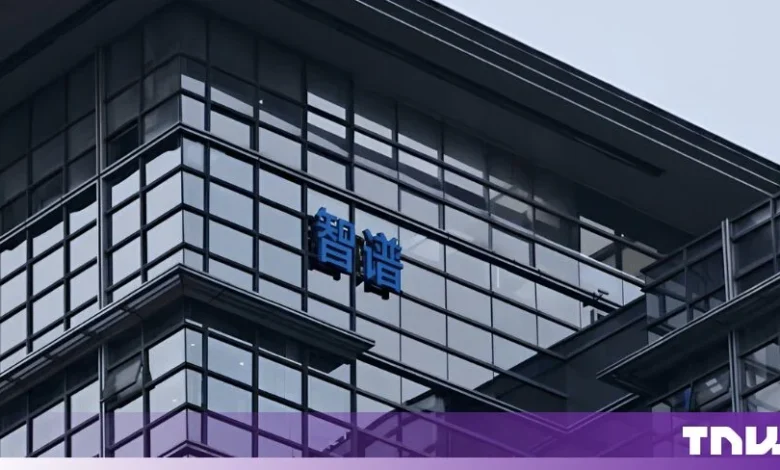
The landscape of global artificial intelligence development shifted significantly this week as Z.ai, the Hong Kong-listed entity of Chinese model developer Zhipu, successfully executed a massive $5 billion capital injection. The fundraising, structured as a dual-track effort involving both equity placement and convertible debt, underscores a profound appetite among investors for domestic AI champions, even as the company faces increasing pressure from Western regulatory bodies.
The financing package consists of two distinct components. First, the company raised approximately $2 billion through the placement of 21.97 million new shares at a price of HK$714 per share, representing a 10 percent discount to the company’s previous closing price. The second component involved the issuance of RMB 20.14 billion (approximately $3 billion) in convertible bonds maturing in September 2027. These bonds carry no coupon, and the pricing was set to yield between minus 0.5 percent and zero. This structure highlights a unique market dynamic: investors are effectively paying for the privilege of holding the debt, viewing the bonds not as traditional fixed-income instruments, but as strategic "tickets" to equity conversion. With a conversion price set at HK$892.5—a 25 percent premium over the placement price—the market has signaled strong confidence in Z.ai’s long-term valuation trajectory.
Chronology of a Meteoric Rise
The path to this $5 billion raise has been nothing short of extraordinary. Since its listing in January, Zhipu/Z.ai saw its share price surge by approximately 2,000 percent, a rally that culminated in a June announcement that the company was preparing for a multi-billion dollar capital raise.
Market analysts at the time of the June announcement were skeptical, noting that the firm remained deeply unprofitable and would likely require repeated infusions of capital over the next three years to sustain its aggressive R&D roadmap. The successful closure of this latest round suggests that the company is effectively navigating that three-year horizon.
Despite the skepticism surrounding its profitability, Z.ai’s revenue growth has been robust. The company is currently approaching the $1 billion sales milestone, a remarkable achievement given that its core product offering is largely available for free. The company’s GLM (General Language Model) line has become a standard-bearer for the industry, gaining international notoriety earlier this year when it outperformed competitor models from DeepSeek in several benchmark tests. The ability of the firm to maintain an open-weights development philosophy while simultaneously seeing its market valuation climb has challenged conventional Silicon Valley wisdom regarding the monetization of AI models.
The Compute Bottleneck and Infrastructure Strategy
A critical element of the $5 billion raise is the allocation of funds. According to company filings, the capital is earmarked for research, computing resources, infrastructure expansion, strategic investments, potential acquisitions, and general working capital. However, industry observers note that the "computing resources" line item is the most significant constraint facing the firm.
Z.ai has distinguished itself by building a large-scale data center that operates entirely without Nvidia hardware. Instead, the facility relies on domestic Chinese-made accelerators. While this approach insulates the company from the immediate effects of tightening U.S. export controls on high-end GPUs, it introduces a different set of challenges. Scaling an infrastructure based on non-standardized domestic chips is significantly more capital-intensive than utilizing the market-leading ecosystems provided by Western hardware manufacturers. The company has not provided a granular breakdown of how much of the $5 billion will be spent on hardware procurement, but analysts suggest that a substantial portion will be required to optimize the performance of these Chinese-made accelerators to reach parity with global standards.
Geopolitical Friction and Regulatory Hurdles
The timing of this financing round is as notable as its scale. The placement was priced against the market close on Friday, September 10, 2026. Just two days prior, a joint advisory issued by the U.S. National Security Agency (NSA), the Federal Bureau of Investigation (FBI), and the Cybersecurity and Infrastructure Security Agency (CISA) specifically identified Z.ai as one of six Chinese firms accused of engaging in "industrial-scale distillation."
The U.S. government report alleges that Z.ai systematically extracted intelligence and capabilities from advanced American models, specifically GPT-5.5 and Claude Opus, throughout the first half of 2026. The advisory posits that this distillation process allows Chinese developers to achieve performance levels that would otherwise take years of independent research and development.
The Chinese government, through spokesperson Mao Ning, quickly dismissed these allegations as unfounded, characterizing them as a politically motivated attempt to stifle China’s technological progress. Regardless of the veracity of these claims, the advisory represents a significant escalation in the ongoing "AI arms race." That investors proceeded with a $5 billion commitment only 48 hours after such a high-profile warning from U.S. intelligence agencies suggests a growing divergence between Western regulatory intent and the reality of Asian capital markets.
The Disconnect Between Washington and Hong Kong
The success of Z.ai’s fundraising efforts illustrates a fundamental gap in the global regulatory framework. U.S. export controls are designed to restrict the flow of hardware—specifically advanced semiconductors—to Chinese firms, aiming to degrade their capacity to train frontier models. However, these controls have proven largely ineffective at restricting the flow of capital.
While Washington writes the rules regarding the movement of silicon, Hong Kong continues to facilitate the movement of liquidity. This dynamic is not unique to Z.ai; industry reports indicate that Moonshot, another major Chinese AI developer, is reportedly in the process of raising its own $5 billion.
The implication is that the AI industry is bifurcating into two distinct financial and technological ecosystems. The first, centered in the United States, relies on the massive capital and hardware advantages provided by Nvidia and its partners. The second, led by firms like Z.ai, is leveraging massive domestic and regional liquidity to build parallel, self-reliant infrastructure.
Analysis: The Path Forward
The fundamental question remains whether Z.ai can achieve long-term sustainability while operating under these constraints. By raising $5 billion, the company has bought itself a significant buffer, but the structural challenges are immense.
- Profitability vs. Market Share: With $1 billion in revenue in sight, Z.ai is moving toward a more sustainable business model. However, the costs of scaling its data center and keeping its models free for mass adoption will continue to pressure margins.
- Hardware Efficacy: The success of the company’s infrastructure strategy depends entirely on the rate of improvement of Chinese-made chips. If the performance gap between these chips and Western-made GPUs continues to widen, the capital requirements for Z.ai will increase exponentially.
- The Regulatory Shadow: The U.S. government’s labeling of Z.ai as a firm involved in distillation may lead to further, more targeted sanctions. If the U.S. moves to restrict access to cloud services or secondary software components, the firm’s reliance on its current infrastructure could become a liability rather than a strength.
In conclusion, the $5 billion raise is a testament to the high-stakes environment of artificial intelligence in 2026. Z.ai has successfully positioned itself as a critical player in the Chinese tech sector, securing the resources necessary to continue its development trajectory. As the company moves to deploy these funds, the eyes of both the global financial community and the national security apparatus will be watching to see if this massive bet on independence can truly withstand the tightening pressure of global technological fragmentation. Whether this round of financing proves to be the foundation of a new global powerhouse or a desperate attempt to outrun systemic constraints, the scale of the transaction has irrevocably altered the landscape of the AI sector.