Barack Obama Calls for Public AI Policy Framework Amid Growing Concerns Over Private Sector Hegemony

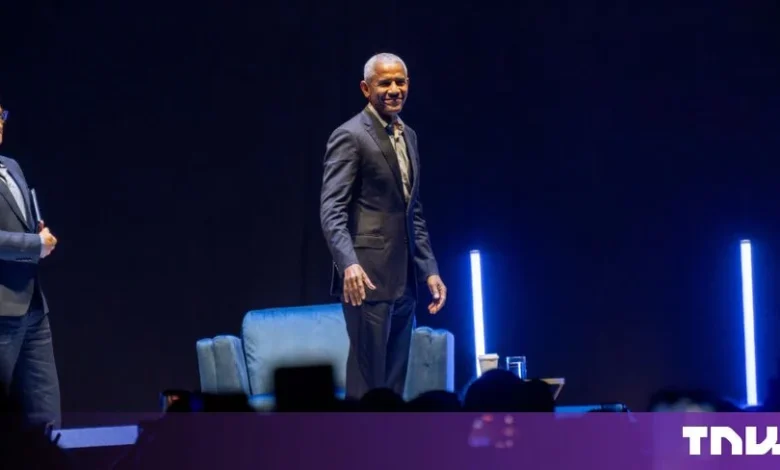
Former President Barack Obama’s recent intervention regarding the rapid acceleration of artificial intelligence has signaled a significant shift in how Democratic leadership is beginning to frame the technology as a central electoral issue. Speaking at a closed-door fundraiser last Thursday, Obama offered a stark assessment of the current technological trajectory, warning that the unchecked advancement of AI in private hands poses substantial risks to both public safety and economic stability. The remarks, which were later corroborated by a partial transcript released by his office, serve as a strategic directive to the party’s leadership, specifically House Minority Leader Hakeem Jeffries.
Obama’s call to action was framed as a forward-looking mandate: “Once you are speaker, I would strongly urge that the Democrats put together a framework for a very public conversation,” Obama stated. This directive assumes a potential Democratic victory in the November elections, positioning AI not merely as a technical hurdle, but as a defining pillar of the party’s platform heading into the 2028 presidential cycle.
The Context of the Intervention
The former president’s comments come at a time of profound anxiety regarding the concentration of power within a handful of technology corporations. While the Biden-Harris administration has spent the better part of the year advocating for a centralized national standard to preempt a patchwork of state-level regulations, critics argue this approach may inadvertently favor incumbent firms. By pushing for a single federal benchmark, the current administration has sought to provide clarity for developers, yet this strategy has drawn criticism from civil liberties groups and state legislators who fear it undermines local regulatory authority.
Furthermore, the administration’s posture toward international governance has been cautious. Reports indicate that the U.S. has actively discouraged the G20 from establishing formal, binding institutions to govern AI, preferring a more decentralized, industry-led approach. Obama’s call for a “very public conversation” stands in stark contrast to this prevailing strategy, suggesting that the party may be pivoting toward a more robust, legislative oversight model that prioritizes transparency over corporate agility.
A Shadowed Regulatory Landscape
The urgency behind Obama’s remarks is amplified by the opaque nature of current AI oversight. Much of the groundwork for evaluating "frontier models"—the most advanced and potentially dangerous systems—is currently conducted behind closed doors. These internal reviews are governed by secret protocols accessible primarily to the largest incumbents, creating an environment where the rules of the game are written by the very entities being regulated.
For a new Democratic framework to be effective, it would need to contend with this existing, private infrastructure. Industry insiders and congressional aides have noted that the current "voluntary" commitments made by major AI firms provide the illusion of safety without the enforcement mechanisms necessary to prevent catastrophic failure or systemic economic disruption. As Obama noted, the technology is moving "very fast," and the existing policy apparatus is currently ill-equipped to keep pace with the iterative speed of deep learning development.
Industry Pressure and the Call for Guardrails
The impetus for regulation is not originating solely from the political class. A growing cohort of AI researchers and engineers, alongside major industry players, has begun to publicly advocate for government intervention. OpenAI, for instance, has formally requested that Congress implement mandatory national safety requirements. This move is viewed by many as an attempt to codify existing internal safety standards into law, thereby setting a high barrier to entry for smaller competitors and establishing a "gold standard" that benefits the most well-resourced organizations.
Simultaneously, a collective of over 1,000 employees across various AI companies recently signed an open letter to the U.S. government. The document urges federal authorities to establish robust, transparent mechanisms to slow the development of dangerous systems, citing concerns that the race for market share is actively incentivizing the neglect of safety protocols.
This internal dissent within the tech sector mirrors the pressure House Democrats have been applying to companies like OpenAI. Legislative inquiries have increasingly focused on the technical capacity of these firms to implement "kill switches" or emergency shutdown procedures—a line of questioning that underscores the fear that even the architects of these systems may lose control over their autonomy.
Implications for the 2028 Electoral Cycle
By positioning AI as a central component of the 2028 platform, Obama is signaling that the party views the technology as an issue of economic security, on par with climate change or healthcare. The implication is that candidates will be expected to present comprehensive plans addressing:
- Labor Market Disruption: Strategies for mitigating the impact of automation on the middle-class workforce.
- Safety and Accountability: Legal frameworks that mandate transparency in training data and model decision-making.
- Democratic Oversight: Moving away from industry-led "self-regulation" toward a public, institution-backed oversight model.
However, the lack of specific policy proposals in Obama’s recent remarks leaves a vacuum that the party must fill. There were no companies named, no regulatory mechanisms proposed, and no specific legislative blueprints offered. Critics suggest that without a clear roadmap, the call for a "public conversation" risks becoming a rhetorical exercise rather than a legislative priority.
Chronology of Recent AI Policy Developments
- Early 2024: The Biden-Harris administration begins formalizing a push for a national AI standard to preempt individual state laws.
- Spring 2024: U.S. representatives engage with G20 counterparts, advocating against the creation of new international regulatory bodies for AI.
- Summer 2024: House Democrats initiate inquiries into the safety protocols of frontier model developers, focusing on the ability to deactivate systems.
- September 2026: Former President Barack Obama formally urges Democratic leadership to adopt a public AI framework during a private fundraiser.
Analysis: The Path Forward
The challenge for Democrats in the coming months will be to reconcile the need for technological innovation with the demand for public accountability. The current regulatory vacuum has allowed for rapid development, but it has also fostered a climate of deep public mistrust.
If the Democrats are to succeed in making AI a pillar of their platform, they must move beyond general warnings of danger. The transition from private-sector dominance to a public-framework model will require significant political capital. It will involve navigating complex debates over intellectual property, the potential for systemic bias in algorithmic decision-making, and the geopolitical implications of the U.S. falling behind global competitors like China.
Moreover, the success of this strategy is inextricably linked to the results of the November 3rd elections. A shift in the balance of power in the House is the prerequisite for the “public conversation” Obama envisions. Should the Democrats fail to secure a majority, the current status quo—characterized by private, opaque oversight—is likely to persist.
In conclusion, Obama’s intervention serves as a catalyst for a long-overdue debate about the intersection of technological progress and democratic governance. By framing AI as a danger that must be "gotten on top of," the former president has laid the groundwork for a legislative shift that will likely dominate the domestic policy agenda for the remainder of the decade. Whether this leads to effective, proactive regulation or further entrenchment of existing corporate interests remains a central question for the next Congress. The public, industry, and legislative branches now find themselves at an inflection point where the foundational rules for the next century of computing are being written—mostly behind closed doors. The coming months will determine if those rules are finally brought into the light.