TikTok has officially introduced a standalone application dedicated exclusively to its booming e-commerce platform, TikTok Shop. Initially rolled out quietly across four Southeast Asian markets—Singapore, Malaysia, Thailand, and the Philippines—the dedicated shopping platform is now accessible for both iOS and Android users. This strategic move marks a significant evolution for the social media giant, transitioning its highly lucrative in-feed commerce features into a standalone destination designed to compete directly with established e-commerce heavyweights like Amazon, Temu, and Shein.
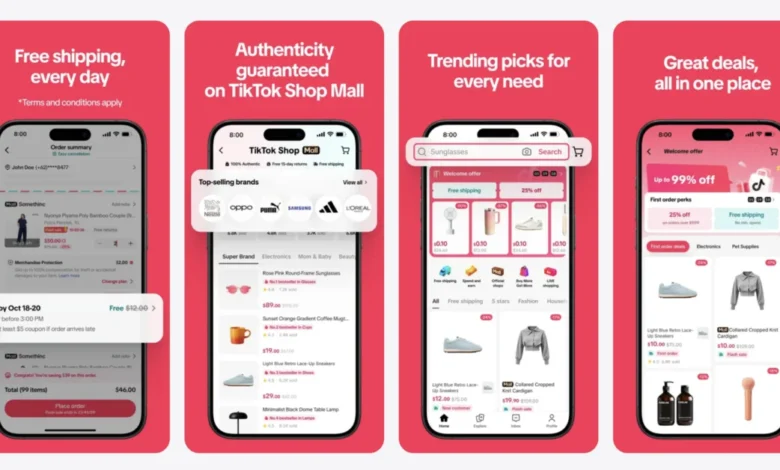
The release of the standalone application was first flagged by social media consultant Matt Navarra, who spotted the platform across regional app stores. According to official listings on the Apple App Store and Google Play, the dedicated TikTok Shop app features personalized product recommendations, integrated short-form product videos, interactive livestream shopping, streamlined checkout processes, real-time order tracking, and round-the-clock customer support. To incentivize early adoption, the platform is rolling out app-exclusive discounts, promotional free shipping, and specialized perks for first-time buyers.
Strategic Background and Regional Rollout
For years, TikTok has successfully blurred the lines between entertainment and retail, enabling users to seamlessly purchase everyday items—ranging from beauty products and apparel to kitchen appliances—directly from makeup tutorials, cooking demonstrations, and influencer recommendations. The rapid monetization of these in-feed shopping features generated staggering transaction volumes globally, paving the way for the company to test a more focused retail environment.

By isolating the shopping experience from the primary social media feed, TikTok aims to capture consumers during moments of high intent. Instead of stumbling upon a product while scrolling through entertainment content, users can now deliberately open the TikTok Shop app when they are actively looking to browse, compare, and purchase merchandise.
The initial rollout in Singapore, Malaysia, Thailand, and the Philippines serves as a critical testing ground. Southeast Asia has long been a fiercely contested battleground for social commerce, with regional and international players fiercely competing for market share. Data from regional app listings indicates modest initial traction, with Google Play logs showing over 50,000 downloads and the Singapore App Store positioning the app within its top 100 shopping applications shortly after launch.
Corporate Structure and Regulatory Distinctions
The application’s Singapore App Store listing identifies the provider as TikTok Pte. Ltd., differentiating it structurally from the U.S. operations managed by the TikTok USDS Joint Venture. While the U.S. joint venture oversees data security, recommendation algorithms, and content moderation within American borders under majority-American ownership, TikTok’s broader global commercial activities—including international e-commerce—continue to be managed separately.
As of publication, TikTok has not formally announced plans to expand the standalone shopping application to the United States or European markets. The company’s representatives have not yet responded to inquiries regarding a broader global timeline.

A Broader Push Into Dedicated Service Ecosystems
The introduction of a standalone shopping app aligns with a broader pattern of vertical expansion by TikTok. Over the past year, the company has systematically engineered dedicated products and services to capture user habits that originated within its central video feed, converting passive discovery into direct transactional utility.
In May, the company launched TikTok GO, a specialized travel-booking feature enabling adult users in the United States to secure hotel accommodations, guided tours, and local attractions directly through integrated partners such as Booking.com, Expedia, and Viator. By bridging viral travel recommendations with frictionless reservation capabilities, the platform empowered creators to earn affiliate commissions while offering local tourism businesses a direct funnel of potential customers. Adam Presser, CEO of the TikTok USDS Joint Venture, noted at the time that the integration successfully connected community engagement with tangible economic outcomes for local enterprises.
Expanding further into lifestyle verticals, TikTok recently introduced Must Eat, a localized restaurant guide covering major metropolitan areas including New York City, Los Angeles, and the San Francisco Bay Area. Synthesizing data from more than 40 million user posts, reviews, and comments, the guide organizes culinary recommendations into searchable directories, complete with direct table-booking integrations via OpenTable. This feature allows users to translate a compelling
video review of a local dining establishment into an immediate dinner reservation.

In the realm of digital entertainment, the company has similarly experimented with dedicated spin-off apps. Earlier this year, TikTok rolled out PineDrama, a separate platform tailored for short-form serialized dramas, featuring customized recommendation engines and specialized browsing tools for episodic content.
Market Implications and Competitive Landscape
The launch of the standalone TikTok Shop application introduces a new competitive dynamic to the global e-commerce sector. Traditional digital marketplaces have increasingly relied on short-form video and influencer marketing to drive consumer engagement. Conversely, TikTok’s strategy reverses this equation by taking an established entertainment-driven discovery engine and formalizing it into a traditional retail destination.
Industry analysts note that while in-feed shopping successfully capitalizes on impulse buying, a dedicated app is essential for capturing sustained, high-intent consumer traffic. By offering specialized perks, streamlined user interfaces, and centralized customer service infrastructure, TikTok Shop is positioning itself as a primary shopping destination rather than an incidental byproduct of social media consumption.
Whether this model will successfully scale beyond Southeast Asia remains a central question for digital commerce observers. If the pilot markets demonstrate high retention rates and strong transaction volumes, the standalone application could soon find its way to Western markets, fundamentally altering how consumers interact with social-commerce platforms on a global scale.