OpenAI Expands E-Commerce Capabilities with Global Launch of Virtual Try-On and Favorites Features in ChatGPT

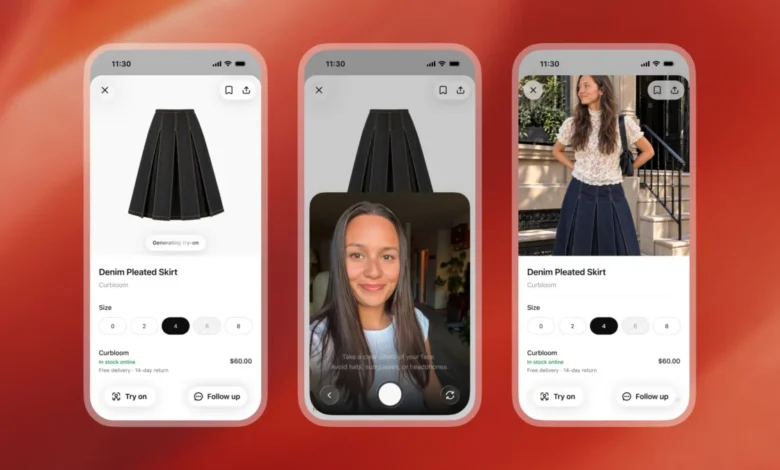
OpenAI has rolled out a suite of new e-commerce features for its flagship conversational AI assistant, ChatGPT, marking the company’s latest attempt to carve out a permanent role in the online shopping ecosystem. Announced globally on Thursday, the update introduces a virtual try-on tool for clothing and accessories alongside a dedicated favoriting mechanism that enables users to curate and save products for future reference.
These additions arrive at a complex juncture for the artificial intelligence industry, where major developers are increasingly testing the boundaries of consumer utility in retail. While AI-driven assistants have fundamentally altered how users search for information, write code, and generate media, monetizing the consumer shopping journey through conversational interfaces has proven to be a difficult hurdle. OpenAI’s latest pivot underscores both the immense potential and the persistent friction associated with integrating transactional tools into natural language platforms.
The Mechanics Behind the Update
At the core of OpenAI’s new shopping capabilities is the recently introduced ChatGPT Images 2.5 model. According to the company, this updated image generation framework delivers significant technical improvements over its predecessors, including more natural lighting reproduction, richer textural fidelity, enhanced responsiveness to precise editing instructions, and noticeably reduced generation latency.
These architectural improvements directly enable the new virtual try-on functionality. Users can now upload a selfie or a full-body photograph to ChatGPT, allowing the underlying model to generate a realistic visualization of how specific garments or accessories would look on their unique frame. This option materializes automatically as a dedicated "Try On" button embedded within ChatGPT’s shopping results. Alternatively, consumers can upload visual references, such as a screenshot captured while browsing an external web page, and instruct the assistant to render the item onto their uploaded photo.
Complementing the try-on tool is the newly integrated "Favorites" feature. Designed to mitigate the transient nature of chat-based interactions, the function allows users to bookmark discovered products, depositing them directly into a centralized Library within the application. These saved items are stored alongside the user’s generated try-on imagery, creating a persistent, organized repository for ongoing shopping research.
A Broader Horizon of Conversational Retail
Beyond virtual fittings and saved items, OpenAI is positioning ChatGPT as a comprehensive shopping concierge capable of handling complex, multi-step discovery workflows.
Users can articulate abstract stylistic preferences—such as requesting an outfit tailored for a specific type of social event or seasonal climate—and prompt the assistant to source and curate the individual components required to complete the look. Furthermore, the platform supports reverse-image searches, enabling users to upload photographs of celebrity outfits or street-style inspirations to identify and purchase matching items available across the web.
This capability places ChatGPT in direct competition with established discovery platforms like Pinterest and Google, both of which have spent years refining visual search tools designed to bridge the gap between inspiration and retail conversion. By streamlining the path from visual discovery to product identification, OpenAI is attempting to capture a lucrative segment of the consumer journey that has traditionally belonged to traditional search engines and social media networks.
The Evolving Landscape of AI Commerce

OpenAI’s push into retail does not occur in a vacuum; it is part of a broader, often turbulent industry-wide experiment to determine how generative AI can facilitate commerce without alienating users.
The trajectory of AI-assisted shopping has been marked by notable missteps and strategic recalibrations. OpenAI itself previously explored an instant checkout feature intended to streamline purchases directly within the chat interface. However, the tool failed to gain sufficient traction, forcing the company to scale back the initiative and rethink its approach to transactional integration.
Similar friction has been observed across the broader startup ecosystem. For instance, agentic AI startup Instinct recently introduced proactive product recommendations designed to anticipate user needs based on conversational context. The feature sparked immediate backlash from a segment of the user base who felt that unsolicited commercial suggestions constituted an overreach, likening the proactive prompts to intrusive digital advertising rather than helpful assistance.
These controversies highlight a delicate psychological boundary for consumers interacting with conversational agents. While users frequently welcome technical assistance, code generation, and creative brainstorming, the introduction of commercial incentives—particularly when perceived as aggressive or uninvited—frequently triggers consumer resistance. OpenAI’s decision to focus on utility-driven tools like virtual try-ons and product organization, rather than forced checkouts or unsolicited pitches, appears to be a calculated effort to build user trust before pushing deeper into commercial transactions.
Market Competition and Industry Precedents
As OpenAI ramps up its retail ambitions, it enters an arena already occupied by tech giants that have spent years deploying similar technologies. Google, for example, officially launched its own generative AI-powered virtual try-on features for apparel in mid-2025, gradually integrating the tool into its broader search and shopping ecosystems.
While OpenAI boasts advanced foundational models like ChatGPT Images 2.5, long-term success will ultimately depend on consumer habit formation. For ChatGPT to evolve into a primary shopping destination, it must convince users to bypass traditional e-commerce giants, dedicated marketplace apps, and established visual search engines in favor of a conversational interface.
Industry analysts note that while the technology is increasingly capable of rendering hyper-realistic visualizations and parsing complex stylistic requests, the ultimate test will lie in inventory depth, merchant partnerships, and frictionless fulfillment. Without robust backend integration with retailers, even the most sophisticated visual try-on tool risks remaining a novelty rather than a fundamental pillar of digital commerce.
Implications and Future Outlook
The global rollout of ChatGPT’s shopping features signals a maturing phase for generative AI applications. As companies move beyond general-purpose chat interfaces, vertical-specific integrations—such as retail, finance, and productivity—are becoming the primary battlegrounds for market share.
For online retailers and fashion brands, the implications are profound. Platforms that successfully index their product catalogs to be easily discoverable by conversational agents could unlock new acquisition channels, bypassing traditional search engine optimization (SEO) paradigms in favor of "AI optimization." Conversely, brands that fail to adapt risk invisibility in a landscape where consumers increasingly rely on intermediaries to curate their purchasing decisions.
As OpenAI continues to refine its models and expand its feature set, the success of these shopping tools will serve as a bellwether for the commercial viability of agentic and conversational retail. Whether consumers ultimately embrace ChatGPT as a daily shopping companion or continue to view it primarily as a general-purpose utility will depend on how seamlessly these new features perform in everyday consumer scenarios.