High Stakes in Washington as Donald Trump and Xi Jinping Prepare for Pivotal Summit Amid Global Uncertainty

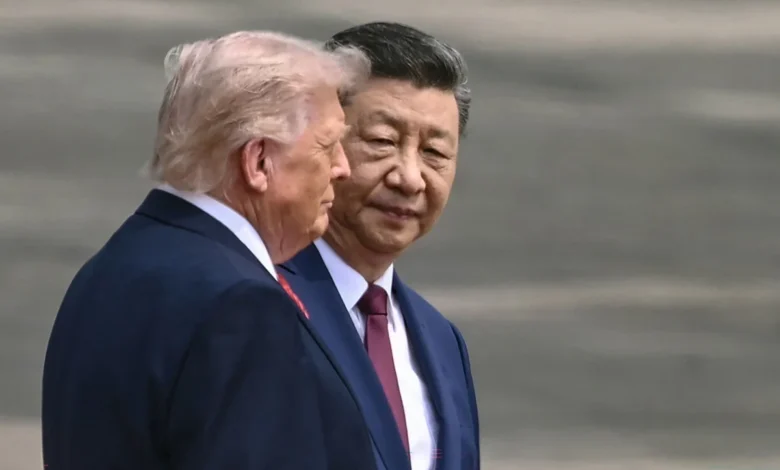
As the diplomatic focus of the United Nations General Assembly in New York draws the world’s attention, the true epicenter of geopolitical maneuvering is shifting to Washington, D.C. There, President Donald Trump and Chinese President Xi Jinping are set to convene for a high-stakes bilateral summit that carries significant implications for the global economy, technological hegemony, and regional security. The meeting, scheduled for this week, stands out not only for its agenda but for the unusual diplomatic choreography surrounding it. In a departure from standard protocol, President Trump has signaled his intent to personally welcome President Xi at Joint Base Andrews on Wednesday, September 23, a gesture that underscores the gravity with which the White House views this engagement.
The Road to the White House: A Chronology of Diplomatic Friction
The current summit follows a period of intense, often fraught, diplomatic exchanges between the two superpowers. To facilitate the upcoming talks, a high-level U.S. delegation—led by Treasury Secretary Scott Bessent and Trade Representative Jamieson Greer—has arrived in Washington to engage in preliminary negotiations with Chinese Vice Premier He Lifeng. Their objective is to finalize an agenda that addresses the cooling of relations and the potential expiration of existing agreements.
The historical context for this meeting is rooted in the "Busan Truce," established during the leaders’ summit in South Korea last year. That agreement, which effectively paused a cycle of aggressive tariff escalation and port fee disputes, is slated to expire on November 10. The failure to secure an extension or a successor framework would likely result in immediate market volatility and a return to the protectionist trade policies that characterized the earlier years of the current administration.
Economic Leverage and the Rare Earths Nexus
Central to the economic discussions is the status of China’s export restrictions on rare earth elements and critical minerals. These materials are the lifeblood of modern industrial and defense sectors, essential for the production of electric vehicle (EV) batteries, advanced telecommunications, and the semiconductors required for high-end artificial intelligence (AI) hardware.
Following the Busan agreement, Beijing briefly relaxed its export quotas, providing a temporary reprieve for U.S. manufacturers. However, with the U.S. seeking long-term supply chain security, the dependency on Chinese-controlled minerals remains a point of intense vulnerability. Washington is now under pressure to secure a more permanent arrangement, while Beijing has demonstrated a clear willingness to leverage its dominant market position as a tool of diplomatic coercion. Analysts suggest that any trade deal will likely include defined purchase targets for U.S. agricultural products, energy exports, and heavy machinery, such as Boeing aircraft, to help narrow the persistent trade deficit.
The AI Frontier: Security vs. Competitive Growth
The rapid evolution of artificial intelligence has introduced a new, complex variable into the U.S.-China relationship. Secretary Bessent has confirmed that AI safety and governance will feature prominently in the summit’s agenda. This inclusion is a direct response to concerns raised by industry leaders who are caught between the need for international standards and the fear of losing their competitive edge.
The current landscape is marked by a divergence in philosophy. Beijing has actively sought the removal of U.S.-imposed restrictions on Chinese technology firms, arguing that such barriers stifle innovation. Conversely, some factions in Silicon Valley have cautioned against premature regulation, fearing that a "slowdown" in AI development would allow Chinese state-backed entities to bridge the technological gap. President Trump, having previously voiced skepticism regarding heavy-handed domestic regulation of AI, faces the challenge of balancing these domestic industry concerns against the broader geopolitical imperative of preventing an unchecked technological arms race.
Geopolitical Flashpoints: Taiwan and the Middle East
Beyond the realm of trade and technology, the summit must navigate the volatile waters of international conflict. The issue of Taiwan remains the most sensitive "red line" in the bilateral relationship. Beijing has explicitly signaled that the authorization of new U.S. arms sales to Taipei could lead to an immediate withdrawal from the summit, illustrating how local military tensions can derail global economic cooperation.
Furthermore, the conversation is expected to touch upon China’s economic and diplomatic ties with Iran. As the United States remains heavily involved in the Middle East—a region where China has increasingly sought to play a mediatory role—the two powers find themselves competing for influence. The potential for the conflict in the Middle East to escalate, potentially disrupting energy markets or maritime trade routes, adds an layer of urgency to the discussions. Both nations are acutely aware that a misstep in either the Taiwan Strait or the Persian Gulf could trigger an uncontrollable chain reaction, yet both are equally protective of their respective spheres of influence.
Analytical Perspectives: The Expectation of Status Quo
Despite the high-profile nature of the summit, many analysts remain cautious regarding the likelihood of a major breakthrough. The summit in Beijing last May was characterized by substantial optics and symbolic displays of camaraderie, yet it produced limited concrete policy shifts. The prevailing sentiment among experts is that both administrations are operating within a framework of constrained diplomacy.
"I think there will be some show of deliverables because of the fact that it’s a presidential summit coming, but I don’t feel like we’re on the verge of some sort of breakthrough," noted Anna Ashton, founder of Ashton Intelligence. "I think status quo is probably both sides’ general best expectation."
This "status quo" approach suggests that while both leaders may agree to extend the trade truce to avoid immediate economic disruption, fundamental disagreements over export controls, human rights, and geopolitical sovereignty are likely to remain unresolved. The challenge for both the Trump and Xi administrations will be to manage these deep-seated antagonisms without allowing them to cascade into a total breakdown of communication.
Broader Implications for Global Markets
The ripple effects of this meeting will be felt well beyond the borders of Washington and Beijing. Emerging markets in Latin America and Africa, where both the U.S. and China are vying for investment and influence, are watching closely to see how the two powers manage their competition. If the summit results in a cooling of the trade war, global supply chains—still recovering from the shocks of recent years—may find a degree of stability. Conversely, if the talks fail, the resulting uncertainty in energy and technology markets could exacerbate global inflation.
As the delegations finalize their talking points, the message to the international community is one of cautious management. The summit represents a strategic attempt to "put a floor" under the relationship—preventing a full-scale collapse while acknowledging that the era of deep economic integration may be transitioning into a new, more guarded phase of managed competition. Whether the personal chemistry between Trump and Xi can overcome the structural pressures pulling their nations apart remains the central question of the week. The world will be watching as the two leaders meet on the tarmac, hoping that this high-stakes encounter leads to, at the very least, a period of renewed predictability in an increasingly unpredictable world.