Websites Aren’t Dead: Consumers Still Rely on Them Over AI, New Kinsta Report Finds

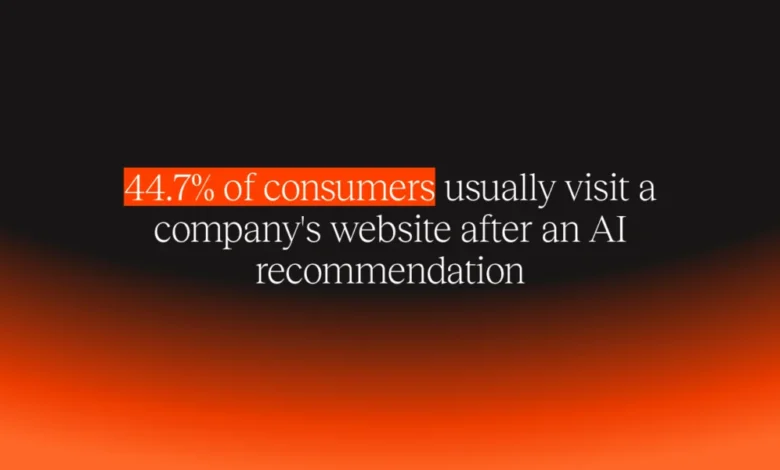
LOS ANGELES — The rapid ascendance of artificial intelligence across the consumer landscape has fundamentally altered how people discover products, services, and brands online, yet it has not rendered the traditional corporate website obsolete. According to a comprehensive new report released by managed WordPress hosting provider Kinsta, modern consumers increasingly utilize AI tools for initial research, but they consistently bypass AI platforms when it comes to high-stakes decision-making and final verification. Instead, the modern digital consumer treats AI as a navigational compass rather than a definitive source of truth, returning heavily to company-owned websites to validate claims, assess credibility, and complete purchases.
The findings illuminate a complex psychological shift in consumer behavior. While AI-driven search engines and conversational assistants have streamlined how users scout for products, a pervasive undercurrent of skepticism regarding AI-generated content has elevated the importance of stellar web infrastructure. In an era plagued by algorithmic hallucinations, deepfakes, and questionable product reviews, a company’s website is no longer merely a digital storefront; it is the ultimate line of defense against misinformation and the primary validator of brand legitimacy.
The Evolution of Consumer Discovery and the Rise of AI Integration
To understand the current digital ecosystem, one must examine the shifting timeline of consumer research habits over the past several years. Following the widespread commercial deployment of large language models and generative AI tools in the early 2020s, digital discovery underwent a seismic transformation. Traditional search engine optimization (SEO) strategies faced immediate disruption as users began substituting keyword queries with conversational prompts.
By late 2026, this shift had solidified into standard consumer behavior. Kinsta’s data reveals that an overwhelming 59.2% of consumers now utilize AI tools often or occasionally to conduct preliminary product and service research. Furthermore, 53.8% of respondents openly admit to sometimes or often skipping traditional company websites entirely during the initial awareness phase of their buyer’s journey. This trend shows no signs of reversing; an impressive 61.2% of consumers surveyed believe that artificial intelligence will eventually replace traditional websites as the primary vehicle for product discovery.
Yet, this reliance on AI for top-of-funnel discovery exists in sharp contrast to how consumers evaluate risk and finalize transactions. While AI excels at synthesizing vast amounts of data and narrowing down options, it struggles with the nuanced trust required to exchange hard-earned money for goods and services. Consequently, the consumer journey has evolved into a hybrid model: AI serves as the initial filter, while the corporate website acts as the final arbiter of truth.
The Trust Deficit: Why Consumers Remain Skeptical of Artificial Intelligence
Despite the widespread adoption of AI for convenience and speed, a profound trust deficit plagues the technology. The Kinsta report underscores a deep-seated consumer warworthiness regarding algorithmic outputs, driven largely by concerns over authenticity, bias, and automated fabrication.
When asked about content provenance, 58% of consumers stated explicitly that they trust digital content significantly less when they believe it was generated by artificial intelligence. This skepticism is not unfounded; the proliferation of automated content farms and synthetic reviews has degraded the overall quality of the open web, leaving users constantly on guard against digital deception.
Traditional search engines retain a distinct trust advantage over newer AI interfaces. According to the data, 52.1% of consumers place more trust in traditional search results than they do in artificial intelligence outputs. More tellingly, only 18.8% of consumers are willing to accept AI-generated product recommendations at face value without conducting independent, supplemental research.
This environment of heightened scrutiny creates a unique dilemma for modern brands. Consumers enter the market with their guards up, filtering their initial options through AI, but bringing a critical eye when they finally land on a brand’s digital doorstep.
Industry Perspectives: Navigating the AI-to-Website Transition
Digital marketing and enterprise infrastructure experts have observed this behavioural shift firsthand, noting that the nature of web traffic has fundamentally changed. Visitors arriving via AI referrals are rarely passive browsers; they are often active evaluators seeking to substantiate the claims made by an algorithm.
"Our clients tell us that people don’t take AI-generated content or reviews at face value anymore," explains Cody Landefeld, co-founder and partner at Mode Effect. "When someone lands on a website after getting a recommendation from AI, they’re already asking themselves whether they can trust what they’re looking at."
This psychological predisposition places immense pressure on a company’s underlying digital infrastructure. When a skeptical user arrives from an AI referral, every millisecond of page load time, every visual glitch, and every security warning can either reinforce their doubts or alleviate their concerns. A slow, poorly maintained website instantly damages brand credibility, confirming worst-case assumptions about the company’s operational competence.
Jeremy Fremont, director of business development at Multidots, echoes this sentiment, emphasizing that while the discovery phase has been revolutionized, the psychology of the transaction remains remarkably consistent. "AI has changed how people discover a brand, but buying still remains largely the same," Fremont notes. "Consumers still make that call once they are on the website, after they’ve had a chance to check things out for themselves."
The Crucial Last Line of Defense
As consumers increasingly use AI to synthesize options and narrow down choices, the corporate website has transitioned from a standard marketing asset into a critical trust-building mechanism. Rather than diminishing in value, the website has assumed a heavier burden of proof.
"People are using AI to narrow their options, then coming to websites to make sure the recommendation checks out," says Matt Reid, chief marketing officer at Kinsta. "Websites aren’t becoming less important because of AI. If anything, they’ve become the crucial last line of defense against bad information."
This structural reality forces enterprises to rethink their digital strategies. Content marketing can no longer rely on volume alone; it must focus on demonstrable authenticity, transparent sourcing, and authoritative expertise. Furthermore, technical performance—spanning site speed, robust cybersecurity protocols, and mobile responsiveness—is inextricably linked to brand trust. In a landscape where AI can generate plausible falsehoods in seconds, a fast, secure, and transparent website provides the tangible proof points that algorithms cannot supply.
Broader Economic and Technical Implications
The findings of the Kinsta report carry significant implications for digital strategists, web developers, and corporate executives alike. As artificial intelligence continues to reshape the contours of the internet, several key trends and strategic imperatives are emerging:
- The Revaluation of Infrastructure: Businesses can no longer treat web hosting and site performance as background IT concerns. Because AI-referred traffic consists of highly skeptical users looking for validation, infrastructure failures translate directly into lost revenue and diminished brand equity.
- The Premium on Human Authenticity: With synthetic media saturating digital channels, brands that successfully highlight human-centric expertise, genuine customer testimonials, and transparent business practices will capture disproportionate market share.
- Adaptation of SEO to AI-Driven Discovery: Marketing teams must adapt to a dual-funnel reality, optimizing their content for AI ingestion and recommendation models while simultaneously building rich, authoritative web environments that satisfy deep-dive inquiries.
- The Death of the Passive Web Page: Static brochures and outdated corporate portals will struggle to survive in an ecosystem where users arrive armed with synthesized comparative data from AI tools. Websites must be dynamic, instantly responsive, and rich with verifiable verification tools.
About Kinsta and Managed WordPress Solutions
As businesses grapple with the demands of this new digital paradigm, the need for reliable, high-performance web infrastructure has never been more acute. Kinsta operates as a premier managed WordPress hosting provider designed to meet the rigorous demands of businesses, agencies, and high-traffic e-commerce operations across the globe.
Maintaining top-tier scores on customer satisfaction and market presence platforms like G2, Kinsta supports more than 230,000 customers spread across 128 countries, ranging from small-scale enterprises to Fortune 500 organizations. The company’s continued growth—highlighted by the addition of over 65,000 new sites within a single recent operating year—underscores the critical role that enterprise-grade hosting plays in maintaining digital credibility. Supported by a 24/7 expert engineering team offering assistance in ten languages, Kinsta continues to provide the structural foundation necessary for brands navigating the intersection of artificial intelligence and traditional web engagement.