PCrisk Trust Badge Review: A Comprehensive Analysis of Website Security Verification and User Trust Architecture

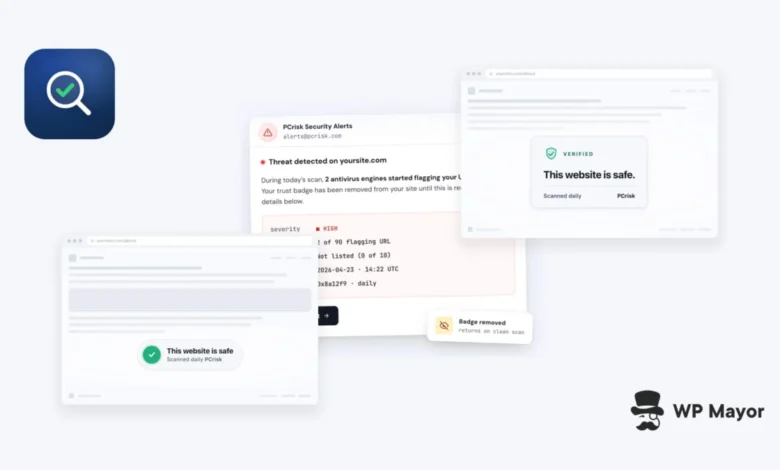
In the digital economy, the intersection of cybersecurity and consumer psychology has become a primary focal point for e-commerce operators. As cyber threats evolve in sophistication—ranging from cross-site scripting to advanced phishing campaigns—businesses are increasingly seeking methods to translate technical security protocols into tangible trust signals for their customers. The PCrisk Trust Badge, a security-monitoring tool integrated into the WordPress ecosystem, has emerged as a solution designed to bridge this gap by providing a dynamic, scan-based validation of a website’s security posture. By linking a visible site seal to real-time, server-side security diagnostics, the service attempts to offer a transparent alternative to the static security badges that have long populated the web.

The Mechanism of Dynamic Trust Verification
Unlike traditional security badges, which are often static images that provide no verification beyond the initial implementation, the PCrisk Trust Badge functions as a reporting mechanism. The plugin operates by conducting periodic scans on the host server, evaluating the target domain against a database of known security threats. These scans encompass a multi-vector assessment, including checks for malware presence, active phishing feeds, the integrity of SSL/TLS certificates, and the detection of obfuscated scripts that may indicate malicious code injection.
The technical architecture relies on server-side processing, ensuring that the scanning process does not impose a load on the end-user’s hosting environment or negatively impact page latency. When a scan is initiated, the PCrisk infrastructure evaluates the site and generates a "trust score." Should this score fall below a pre-defined threshold of 70, the badge is automatically removed from the public-facing side of the website. This automated "kill-switch" feature ensures that a compromised or vulnerable site does not falsely broadcast an aura of security, thereby protecting the site owner from potential liability and the user from exposure to compromised assets.

Chronology of Implementation and Operational Workflow
The integration process for the PCrisk Trust Badge follows a structured sequence designed to minimize technical friction for site administrators. Upon installation via the WordPress Plugin Directory, the system immediately triggers a baseline security audit. This initial scan establishes the "trust baseline," providing a snapshot of the domain’s security health.
Following the initial audit, administrators are presented with a detailed report screen. This report serves as a diagnostic tool, detailing the specific security engines utilized during the scan and highlighting areas of concern if necessary. The workflow then transitions into a configuration phase, where administrators can select from four distinct badge styles, two visual themes, and three size variations. The placement options are granular, allowing the badge to be positioned in fixed locations such as the footer or header, or as a floating element that remains consistent across the user journey. For e-commerce platforms using WooCommerce, the system extends these placement options to product, cart, and checkout pages, ensuring that the trust signal is visible during the most critical stages of the conversion funnel.

Data Privacy and Security Considerations
A critical aspect of any third-party security integration is its impact on data privacy and compliance with regulations such as the General Data Protection Regulation (GDPR). The PCrisk Trust Badge is marketed as a "cookie-free" solution, a design choice intended to reduce the regulatory burden on site owners. However, because the plugin requires a connection to PCrisk’s external servers to function—transmitting the site’s IP address and requested URLs to complete the verification process—site owners must ensure these connections are authorized within their WordPress configuration.
While the plugin is designed to be lightweight, it represents a departure from traditional "fire-and-forget" security plugins. Because it relies on external API calls to keep the badge updated, the architecture requires an active, stable connection to the PCrisk infrastructure. For developers and enterprise-level users, the platform provides access to a dedicated API and webhook system, allowing for the integration of security alerts into third-party communication tools like Slack. This capability suggests a shift toward a more proactive, real-time security management model rather than a passive monitoring approach.

Market Context and Industry Implications
The rise of tools like the PCrisk Trust Badge coincides with a broader trend in web development where security is treated not just as a back-end necessity, but as a front-end marketing asset. Industry data indicates that consumer confidence is significantly higher on sites that provide explicit, verifiable security markers. According to recent cybersecurity market reports, approximately 75% of online shoppers report that they would abandon a purchase if they suspected a site’s security was compromised or if the site failed to provide basic indicators of authenticity.
The decision to adopt such a tool involves weighing the benefits of increased conversion rates against the potential risks of relying on a third-party security auditor. If a site’s security is flagged, the removal of the badge serves as an immediate, albeit alarming, notification to the site owner. Critics of such automated systems argue that false positives—where a scan incorrectly identifies a site as insecure—could lead to unnecessary downtime and loss of consumer trust. However, the developers maintain that the transparency provided by the public report, which links directly to the scan results, mitigates this risk by providing users and administrators with the specific data points that triggered the flagging of the site.

Analysis of Service Tiers and Scalability
The service model is segmented into a free tier and three premium plans: Solo, Pro, and Business. The free version offers a monthly scanning cadence, providing a basic security snapshot but omitting the advanced features found in the premium versions. The premium tiers, which utilize a daily scanning frequency, are structured to accommodate different scales of operation:
- Solo: Designed for individual store owners or single-domain operators.
- Pro: Aimed at agencies managing a limited portfolio of client sites.
- Business: Tailored for larger agencies or organizations with high-volume, enterprise-scale web infrastructure.
The scalability of the system is supported by the cloud-based nature of the scanning engine. Because the heavy lifting of the analysis occurs off-site, adding new domains to the system does not proportionally increase the resource demand on the user’s WordPress installation. This allows agencies to maintain a standardized security verification protocol across multiple client sites without incurring significant overhead in terms of server maintenance or performance degradation.

Supporting Evidence and Future Outlook
The current landscape of website security is characterized by a "constant vigilance" requirement. The integration of the PCrisk Trust Badge into this environment highlights the necessity for tools that can synthesize complex threat intelligence into actionable, user-friendly indicators. While the documentation for the plugin currently consists primarily of a help center focused on troubleshooting and basic operational guidance, the simplicity of the user interface suggests that the developers have prioritized ease of use over deep technical customization.
Moving forward, the efficacy of such tools will be tested by the increasing frequency of zero-day exploits and the rising complexity of web-based attacks. The reliance on server-side scanning means that the effectiveness of the PCrisk Trust Badge is intrinsically linked to the quality and breadth of the threat databases used by the company. As the digital marketplace becomes more competitive, the ability to maintain and display a verified trust score may transition from an optional feature to a standard requirement for businesses that process sensitive consumer data.

Ultimately, the PCrisk Trust Badge serves as an example of the ongoing evolution in the relationship between website security and the end-user. By providing a bridge between the unseen world of security protocols and the visible world of consumer interface design, it addresses a fundamental challenge in the modern e-commerce environment: the need to make trust as visible and reliable as the products being sold. Whether this specific implementation becomes a mainstay in the WordPress ecosystem will depend on its ability to maintain high accuracy in its scanning processes while continuing to offer the streamlined, "zero-load" user experience that its current documentation promises.