Kinsta Launches Vulnerability Protection Powered by Patchstack to Secure WordPress Sites Against Zero-Day Exploits at No Additional Cost

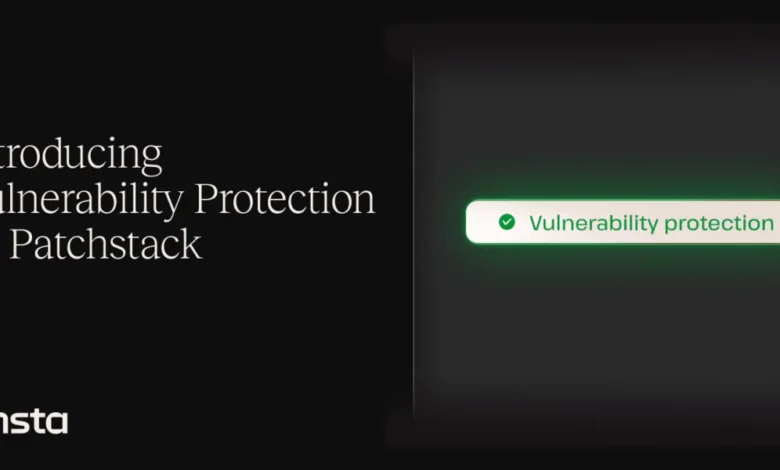
The digital landscape for WordPress administrators and web development agencies has grown increasingly perilous as the velocity of software vulnerabilities outpaces traditional patch management cycles. In response to this escalating threat environment, managed WordPress hosting provider Kinsta announced the official release of Vulnerability Protection on November 10, 2026. Powered by advanced threat intelligence from Patchstack, this automated security layer is designed to defend every Kinsta-hosted website against known plugin and theme vulnerabilities the moment they are identified. Crucially, this defensive measure operates even in the absence of an official vendor patch, bridging a critical window of exposure that has historically left millions of websites vulnerable to malicious actors.
The rollout of this feature marks a significant departure from standard industry practices. Historically, web hosting providers have treated application-level security vulnerabilities as the exclusive responsibility of the website owner or developer. While most hosts offer infrastructure-level protections such as basic firewalls and distributed denial-of-service (DDoS) mitigation, vulnerabilities residing within third-party plugins and themes typically required manual intervention, constant monitoring, and swift updating by the end user. By integrating automated application-layer protection directly into all hosting tiers at no extra charge, Kinsta is shifting the paradigm of managed hosting accountability.
The Threat Landscape: A Surge in Unpatched WordPress Vulnerabilities
The impetus behind Kinsta’s new security feature is rooted in alarming macroeconomic and cybersecurity data compiled within the industry. According to Patchstack’s State of WordPress Security in 2026 report, reported WordPress vulnerabilities surged by 42 percent over the course of the previous year. Even more concerning for enterprise users and site administrators is the statistic that 46 percent of all vulnerabilities disclosed in 2025 lacked an immediate vendor fix at the time of their public disclosure.
Furthermore, Patchstack’s comprehensive findings revealed that the broader ecosystem registered 11,334 new WordPress vulnerabilities throughout 2025 alone. High-severity vulnerabilities recorded during this twelve-month period outpaced the combined totals of the previous two years. Within this threat matrix, plugins continue to represent the primary vector of risk, accounting for a staggering 91 percent of all detected vulnerabilities. Themes and core WordPress software represent the remaining fractions, but the sheer ubiquity and complex codebases of third-party plugins make them the favored target for automated exploitation tools.
The intersection of artificial intelligence and cybercrime has further exacerbated these vulnerabilities. Modern threat actors increasingly rely on machine learning models and automated scripts to scan the web, identify newly published vulnerability disclosures, and weaponize them within minutes or hours. This velocity means that traditional human-driven patching cycles—where administrators wait for a developer to release an update and then manually apply it—are no longer fast enough to guarantee protection.
How Kinsta’s Vulnerability Protection Works
To counter the weaponization speed of modern cyber threats, Kinsta’s Vulnerability Protection operates continuously in the background without requiring manual oversight or configuration from the site owner. The system constantly monitors the active software inventory of every hosted WordPress installation, checking installed plugins, themes, and core versions against an up-to-date repository of known vulnerabilities.
When a vulnerability is detected, the system immediately applies a personalized, targeted firewall rule directly at the WordPress application layer. This intervention is executed without altering the underlying site code, thereby preserving site functionality and design integrity. Because the firewall rule is custom-tailored to block the specific exploit path associated with the vulnerability, the website remains completely shielded from potential attacks even if the plugin or theme author has not yet released a security patch. Once the vendor eventually issues a secure update, Kinsta’s automated update mechanisms can apply the official fix seamlessly.
This seamless automation offers profound logistical advantages, particularly for digital marketing and development agencies that manage extensive client portfolios. Under traditional hosting models, an agency managing hundreds of distinct WordPress installations must dedicate significant labor hours to tracking vulnerability databases, auditing client sites, and rushing to apply emergency patches. With Kinsta’s system, an agency managing 200 client websites receives instantaneous, automated protection across every single property without having to monitor a single vulnerability feed or execute manual patch deployments.
Early Metrics and Performance Validation
Although the formal announcement was made in November 2026, initial deployment phases and pilot testing yielded striking results. Within the first few weeks of its active deployment across the Kinsta network, the Patchstack-powered protection engine successfully blocked more than 1.5 million exploitation attempts spread across upwards of 68,000 individual Kinsta-hosted websites.
These figures underscore the relentless, automated nature of modern web attacks. The vast majority of exploitation attempts are not targeted human hacks, but rather automated botnets systematically probing the global web for known weaknesses in outdated software components. By intercepting these attempts at the application layer, Kinsta has drastically reduced the attack surface for its customer base.
Executive Perspectives on the Security Shift
Industry leaders from both Kinsta and Patchstack have emphasized that the modern threat environment demands a fundamental reimagining of hosting security standards.
Daniel Pataki, Chief Technology Officer at Kinsta, highlighted the role of artificial intelligence in reshaping the cybersecurity paradigm. "AI has dramatically increased how quickly hackers can find and exploit vulnerabilities in software," Pataki noted. "Application-level issues have traditionally not been addressed by hosts, but we believe stability and security of a site is essential and lets a business focus on growth. We see this as an investment in our customers’ experience."
Oliver Sild, Chief Executive Officer of Patchstack, echoed these sentiments, pointing to the critical need for rapid mitigation in an era defined by zero-day threats and rapid exploitation chains. "With the recent avalanche of vulnerability discoveries combined with the increasing speed of vulnerability weaponization, fast mitigation is non-negotiable for businesses of any size," Sild stated. He further commended Kinsta for democratizing enterprise-grade security, noting that the hosting provider "has made a major investment in its customers’ security and made a premium security solution available to everyone at no extra cost."
Integration With Kinsta’s Broader Defense Infrastructure
The introduction of Vulnerability Protection does not operate in a vacuum; rather, it forms a core component of a multi-layered security architecture that Kinsta applies to every WordPress hosting plan.
Prior to the rollout of application-layer vulnerability filtering, Kinsta integrated several advanced defensive technologies into its platform. Cloudflare-powered DDoS protection and a managed Web Application Firewall (WAF) operate at the network edge to intercept volumetric attacks and common web injection attempts before they reach the hosting server. In June 2026, Kinsta expanded this perimeter defense by launching specialized Bot Protection designed to control and filter malicious automated traffic, scraping scripts, and credential-stuffing bots.
Furthermore, Kinsta’s native Automatic Updates system ensures that once a software vendor officially releases a verified patch for a vulnerability, the update is deployed to the website swiftly and securely. Vulnerability Protection effectively acts as the vital defensive bridge that safeguards the site from the moment a flaw becomes public knowledge until the vendor-supplied patch is successfully installed.
Broader Implications for the WordPress Ecosystem
The decision by a major managed hosting provider to absorb the cost and technical complexity of application-layer vulnerability mitigation marks a pivotal turning point for the broader WordPress ecosystem. Historically, the open-source nature of WordPress has been both its greatest strength and its most prominent security challenge. Because the core software relies on an expansive, decentralized marketplace of third-party plugins and themes maintained by independent developers, security standards and update frequencies vary wildly.
This decentralization has frequently resulted in security incidents that damage the reputation of the platform as a whole, even when the underlying vulnerability stems from poorly maintained third-party code rather than WordPress core itself. By implementing proactive, automated shields that protect against unpatched third-party flaws, hosting providers are establishing a new baseline of consumer protection.
For business owners operating e-commerce stores, membership platforms, or corporate web presences, a security breach carries catastrophic financial and operational consequences. Beyond the immediate risk of lost sales and damaged brand reputation, a successful exploit can expose sensitive customer data, leading to severe regulatory penalties, compliance failures, and permanent loss of consumer trust. By neutralizing zero-day and unpatched plugin exploits automatically, Kinsta’s initiative helps insulate businesses from these existential risks.
About Kinsta and Patchstack
Kinsta has established itself as a premier managed WordPress hosting provider catering to a diverse clientele ranging from small businesses to Fortune 500 enterprises. Operating across 128 countries and supporting over 230,000 customers, the company experienced rapid expansion, onboarding more than 65,000 new sites in 2025 alone. Kinsta maintains high customer satisfaction ratings within the industry and provides round-the-clock technical support in ten languages through its engineering teams.
Patchstack is recognized globally as a leading vulnerability intelligence provider, specializing in the entire lifecycle of software security from discovery to mitigation. Powered by its proprietary RapidMitigate technology—which integrates software composition analysis, threat intelligence, and contextual prioritization—Patchstack delivers site-specific protection rules with high accuracy, minimal false positives, and zero code modification requirements.
As the digital threat landscape continues to evolve under the influence of automated tools and artificial intelligence, the collaboration between Kinsta and Patchstack sets a new benchmark for proactive web hosting security, proving that comprehensive defense can be achieved without imposing financial or administrative burdens on the end user.