In a significant milestone for medical informatics, Dyania Health’s Synapsis AI platform has successfully processed the comprehensive medical histories of over 7,800 heart-valve patients at the Cleveland Clinic. By leveraging localized Nvidia server infrastructure, the project represents a pivotal shift in how large-scale clinical data is analyzed, moving away from cloud-dependent processing toward secure, on-premises artificial intelligence deployments. This initiative addresses one of the most persistent bottlenecks in modern healthcare: the extraction of actionable clinical insights from decades of unstructured, narrative-heavy patient records.
The Challenge of Unstructured Clinical Data
The modern hospital environment is flooded with data, yet much of the most critical information—the nuances of a patient’s recovery, the specific observations of a cardiologist, or the subtle complications noted during a follow-up scan—remains trapped in the form of physician notes, PDFs, and unstructured reports. Unlike structured data fields, such as billing codes or standardized lab results, these clinical narratives represent the "dark matter" of healthcare.
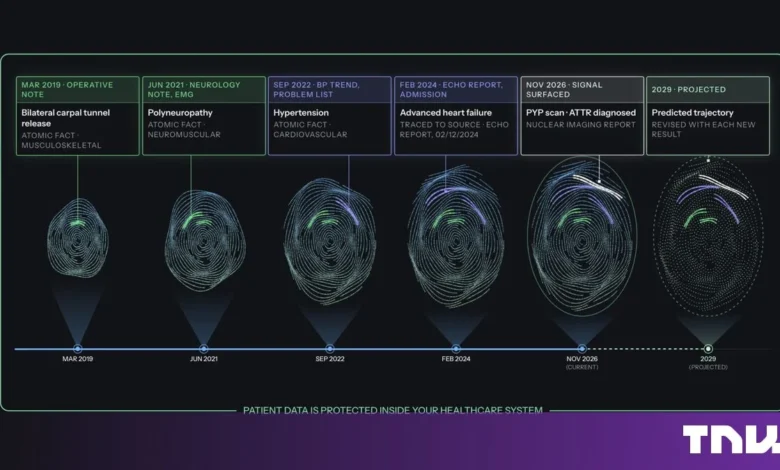
For the 7,800 patients involved in the Cleveland Clinic study, their records spanned up to 16 years. Manually reviewing this volume of documentation for a single patient is a time-intensive process that can take hours or even days. When scaled to a cohort of thousands, the task becomes physically impossible for human clinical teams to perform in a timely manner. Dyania’s Synapsis AI was designed to bridge this gap, using natural language processing to read and synthesize these records, effectively mapping years of longitudinal data into a coherent clinical timeline.
Chronology of the Integration
The deployment of Synapsis AI at the Cleveland Clinic is the culmination of a multi-year effort to modernize how the institution handles data-heavy research. The relationship between the startup and the hospital was solidified in August 2025, when the Cleveland Clinic officially announced its investment in Dyania Health and began integrating the platform to accelerate clinical trial recruitment.
The current study, which garnered attention this week, specifically focused on patients who underwent aortic valve replacement surgery between 2005 and 2021. The AI system was tasked with answering 88 distinct clinical questions for every patient file, effectively automating the data-abstraction phase of the research. By processing this information on-site, the clinic ensured that sensitive patient data remained within the hospital’s secure firewall, mitigating the privacy concerns typically associated with third-party cloud-based AI processing.
Technical Infrastructure and Data Sovereignty
A defining characteristic of this partnership is the reliance on "sovereign" AI infrastructure. By running the Synapsis AI on Nvidia hardware located directly within the Cleveland Clinic’s data center, the project avoids the risks associated with transmitting protected health information (PHI) over the public internet. This approach mirrors other high-profile, secure healthcare AI deployments, such as the UK’s National Health Service (NHS) triage initiatives, which also rely on localized hardware to maintain strict compliance with data protection regulations.
This "on-premises" model is gaining traction as hospitals face increased pressure to protect patient privacy while simultaneously digitizing their records to improve outcomes. By keeping the processing local, institutions maintain total control over their data, ensuring that the AI tool operates within the same secure perimeter as the Electronic Health Record (EHR) system.
Clinical Implications and Predictive Modeling
The data harvested by the Synapsis AI was not merely archived; it was utilized to train a predictive model capable of forecasting the risk of replacement valve failure at the three-year, five-year, and ten-year marks post-surgery. This capability represents a significant evolution in personalized medicine. Instead of relying solely on general population statistics, physicians can now potentially look at an individual patient’s specific history—including past complications and physiological markers extracted from years of notes—to assess their unique long-term risk profile.
Lars Svensson, head of the Cleveland Clinic’s Heart, Vascular & Thoracic Institute, characterized the results as a "promising step towards enhanced outcomes and more personalized care." However, it is essential to note that the system remains a clinical decision-support tool rather than an autonomous diagnostic agent. Every conclusion reached by the AI is subject to physician review. The AI functions as a sophisticated research assistant, identifying patterns and highlighting anomalies that a human doctor might overlook in a mountain of paperwork, but the final medical judgment remains firmly in the hands of the clinician.
Broadening the Scope: Industry Trends and Challenges
The Cleveland Clinic-Dyania partnership is part of a larger, aggressive push by major technology conglomerates and specialized startups into the healthcare space. Google Cloud, for example, recently debuted its "Gemini for Healthcare" suite, aimed at integrating AI agents into hospital workflows. Similarly, companies like Bunkerhill Health have secured significant venture capital—including a recent $55 million round—to deploy agentic AI that can automate diagnostic tasks.
Despite this momentum, the healthcare industry remains cautious. Critics, including various medical associations and physician advocacy groups, have frequently pushed back against the "black box" nature of some AI models. There is a palpable concern that the industry is over-promising on the immediate impact of these tools, while under-representing the logistical challenges of integrating them into existing clinical workflows.
Furthermore, Dyania Health has been transparent about the limitations of its current findings. The tool has proven it can aggregate large datasets and identify risk markers, but it has not yet undergone the rigorous external clinical validation required to definitively state that it "improves" patient outcomes. The leap from data processing to actual clinical improvement is significant, requiring multi-site, randomized controlled trials that demonstrate clear, measurable benefits to patient health.
The Path Forward for Healthcare AI
The future of hospital-grade AI likely rests on the successful integration of these tools into the daily rhythm of patient care. The Cleveland Clinic project provides a template for how this can be achieved safely: through deep institutional partnerships, localized server deployments, and a "human-in-the-loop" philosophy that keeps doctors at the center of the decision-making process.
As these technologies mature, the industry will need to address three key hurdles:
- Interoperability: Moving beyond proprietary systems to ensure that AI can read records across different EHR platforms.
- Clinical Validation: Moving from retrospective data analysis (like the 2005–2021 study) to prospective trials that prove AI interventions prevent adverse events.
- Regulatory Standardization: Establishing clear guidelines for how AI-derived predictive models are audited and maintained over time.
For now, the Dyania and Nvidia collaboration serves as a proof-of-concept for the scale of analysis possible with current AI architectures. By transforming years of disparate clinical notes into structured, predictive data, the Cleveland Clinic is setting a precedent for how medical institutions can leverage their own historical data to build a more predictive and personalized future for cardiac care. As the project enters its next phase, the focus will undoubtedly shift from the efficiency of data extraction to the long-term clinical utility of the models it has helped to create.