The State of Modern Indoor Gardening: Assessing Current Hydroponic Systems for Home Use

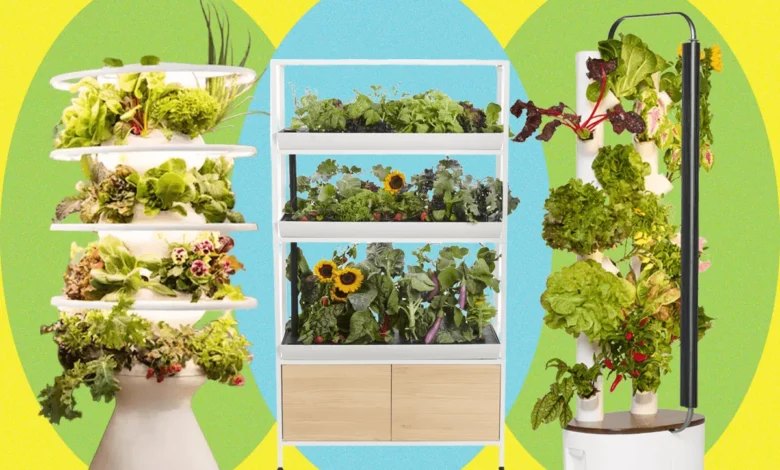
The intersection of consumer technology and home horticulture has undergone a significant transformation over the last decade. Once the domain of specialized enthusiasts and industrial agriculturalists, indoor hydroponic gardening has entered the mainstream consumer market, driven by a desire for localized food production, year-round cultivation, and aesthetic home integration. However, as the market matures, a clear divide has emerged between systems that offer genuine utility and those that function primarily as decorative household objects. An objective analysis of current market offerings reveals that while technology has lowered the barrier to entry, the promise of self-sufficiency often clashes with the realities of maintenance, yield capacity, and system longevity.
The Evolution of Residential Hydroponics
Hydroponic gardening—the practice of cultivating plants in nutrient-rich water solutions rather than soil—has its roots in ancient agricultural methods, most notably the floating gardens of the Aztecs and the Hanging Gardens of Babylon. In the modern era, the practice was formalized by academic researchers like Dr. Bernard Kratky, whose "Kratky method" provided a passive, low-maintenance framework for hydroponics that requires no electricity or pumps.
Today, this scientific foundation supports a multi-million-dollar industry. Recent data suggests that the indoor gardening market is expected to grow significantly through 2030, propelled by urbanization and the increasing cost of fresh, organic produce. Yet, the transition from industrial research to consumer appliances has been uneven. Early adopters in the 2010s dealt with complex plumbing and high power consumption; contemporary users, however, are presented with "smart" systems that prioritize automation.
Performance Analysis: Notable Consumer Systems
The current market landscape is characterized by a range of solutions, from passive jar systems to sophisticated, light-controlled units.

The Click & Grow Smart Garden 9 represents the entry-level segment of automated gardening. Utilizing a "smart soil" medium and a wick-based watering system, it prioritizes ease of use over output. Testing indicates that while it is an effective system for non-fruiting plants or flowers, its growth rate is notably slower than systems using direct water-root contact. The primary limitation of such closed-pod systems is the recurring cost of proprietary seed refills, which can be approximately 15 dollars for a three-pack, creating a long-term financial commitment that contradicts the goal of cost-effective food production.
In the mid-tier, the Lettuce Grow Counterstand offers a more aesthetic, laboratory-inspired approach to the Kratky method. Retailing at 149 dollars, the system includes an LED light array and three seedling credits. While the unit provides a consistent environment for growth, the yield is limited by its physical footprint. For a household, the production capacity is insufficient to replace grocery store purchases, serving instead as a supplemental or decorative fixture.
For those interested in microgreens, the Vego EZ Microgreens Planter addresses the high-nutrient, high-turnover sector of indoor gardening. By utilizing bamboo-fiber mats rather than complex electronics, this system avoids the pitfalls of pump failure or electrical interference. It is a prime example of how low-tech solutions can often outperform high-tech alternatives in terms of reliability and user satisfaction, provided the user is willing to manage the manual requirements of daily light exposure or supplemental lighting.
Failures in Innovation and Quality Control
The push for "smart" features—often marketed as the pinnacle of agricultural innovation—has frequently led to products that prioritize marketing buzzwords over functional reliability.
The Plantaform Smart Indoor Garden, which gained significant industry attention at CES 2025, serves as a cautionary tale. Marketed as a "fogponics" system that uses ultrasonic misting to deliver nutrients, the unit faced intense scrutiny regarding its environmental impact within the home. Independent testing revealed that the system, while aesthetically striking, failed to contain the aerosolized fertilizer solution, leading to compromised indoor air quality. Furthermore, the restriction to monoculture—where a user must grow only one type of plant at a time—limits the system’s utility. This case highlights a broader industry trend: the prioritization of "futuristic" design over rigorous testing of environmental health and safety.

Similarly, the LetPot Smart Seed Starter, while feature-rich on paper, illustrates the dangers of poor quality control. Despite including sensors for electrical conductivity (EC) and temperature, reports of coil whine, sensor drift, and intermittent power failure suggest that the manufacturing standards for many mid-market "smart" gardening devices remain inconsistent.
Economic and Practical Implications
A central question for prospective buyers is the return on investment. According to industry experts, most residential hydroponic systems are not designed to be cost-neutral or profitable. Instead, they function as convenience appliances. The recurring costs of electricity, proprietary pods, and nutrient solutions mean that the cost per ounce of produce is significantly higher than that of store-bought organic vegetables.
However, the value proposition often lies in the "hassle-free" experience. By automating the watering, light, and nutrient delivery schedules, these systems remove the human error that typically kills indoor plants. For the urban dweller with limited natural light and space, these devices offer a window into biological cycles that would otherwise be inaccessible.
Technical Challenges: Noise, Space, and Maintenance
For consumers integrating these systems into residential spaces, several practical factors must be considered:
- Acoustics: Many hydroponic systems rely on mechanical pumps to circulate nutrient solutions. In a quiet living environment, the intermittent cycling of these pumps can be disruptive. Systems without pumps, or those that utilize silent aeration, are generally preferred for bedroom or office placement.
- Light Pollution: High-intensity LED grow lights are necessary for rapid plant development, but they can be visually overwhelming in a living space. Prospective users should ensure their chosen unit features adjustable light schedules or physical shielding to minimize glare.
- Water Management: The containment of water is a recurring technical risk. Systems that are not properly sealed or that rely on complex internal plumbing can be prone to leaks, which may cause damage to household surfaces.
- Algae and Pathogens: Even in the cleanest environments, stagnant or nutrient-rich water is a breeding ground for algae and bacteria. Regular cleaning schedules—often more demanding than the manufacturers advertise—are essential to prevent crop loss.
Future Outlook for the Industry
As the sector matures, the industry appears to be moving toward a bifurcation. On one side are the "lifestyle" products—compact, aesthetically pleasing units designed for small-scale, ornamental, or occasional herb harvesting. On the other side are the "industrial-lite" systems, which offer higher output and greater control but require a higher degree of user expertise and space.

The consensus among horticulturists is that the next generation of smart gardens must focus on three key areas to achieve widespread adoption: sustainability of materials, transparency regarding recurring costs, and, crucially, the integration of sensors that are both accurate and durable.
For the time being, consumers are advised to approach the market with a clear understanding of their goals. If the objective is to save money on groceries, the current market is ill-equipped to meet that demand. If the objective is to engage with plant biology, reduce the environmental footprint associated with long-distance produce transport, or simply enjoy the aesthetic of living greenery in a controlled indoor environment, there are viable options—provided the buyer looks past the "smart" marketing and focuses on systems with proven reliability and minimal mechanical complexity.
In conclusion, the hydroponic home garden remains a work in progress. While the technology has successfully brought the farm into the living room, it has yet to perfect the balance between technological sophistication and the basic, rugged needs of the plants themselves. As with any emerging consumer technology, the wisest path for the consumer is to verify manufacturer claims with independent, long-term testing and to prioritize systems that emphasize simplicity over unnecessary complexity.