Infinite Uploads Version 3.5 Revolutionizes WordPress Media Management with Expanded Free Access and Enhanced Security Features

The release of Infinite Uploads version 3.5 marks a significant shift in the landscape of WordPress site management, particularly for agencies and freelance developers tasked with maintaining large-scale digital assets. By introducing a robust free-tier offering, advanced media cleanup tools, and sophisticated URL signing for e-commerce platforms, the update addresses long-standing challenges related to server storage, site performance, and digital asset security. For professionals managing multiple client sites, this update provides a streamlined workflow that mitigates the risk of storage overflow and unauthorized content distribution.
The Evolution of Media Offloading in WordPress
For years, the standard WordPress architecture has relied on local storage for media files, an approach that becomes increasingly unsustainable as a site scales. In large installations—such as those managed by digital agencies—media libraries can easily balloon to tens of thousands of files. This accumulation of high-resolution images, video assets, and legacy documents often leads to slow backup times, increased server migration complexity, and significant storage costs on traditional hosting plans.
The introduction of cloud-based media offloading has historically been a premium service, often requiring upfront financial commitments. With version 3.5, Infinite Uploads has lowered the barrier to entry, allowing developers to implement offloading on client sites without the need for initial credit card authentication. This change reflects a broader industry trend toward "product-led growth," where service providers offer functional, no-cost entry points to prove value before scaling to enterprise-level requirements.

Analyzing the New Free-Tier Ecosystem
The core of the version 3.5 update is a revamped free-access model. Users can now leverage 10 GB of cloud storage and 20 GB of content delivery network (CDN) bandwidth per month. Crucially, this allowance is shared across all sites connected to a single account, providing flexibility for agencies with a mix of small and medium-sized clients.
From a technical operations perspective, the implementation of these limits is designed to prevent data fragmentation. If a site approaches its storage threshold, the system triggers a pause in uploads rather than allowing a partial sync. This "all-or-nothing" approach ensures that the media library remains consistent between the local environment and the cloud. The platform also includes an automated lifecycle management policy: free sites that remain inactive for 90 days are archived, with two prior notifications sent to the administrator to ensure data is not lost inadvertently. This policy serves as a safeguard against "zombie" sites that consume resources without providing value to the end user.
Deep Dive: Media Cleanup and Library Integrity
One of the most requested features in the WordPress ecosystem is the ability to prune unused media files. As sites evolve, they inevitably accumulate orphaned images—logos from abandoned campaigns, draft thumbnails, and unused variations of media assets. These files contribute to "digital bloat," which can negatively impact site performance and administrative efficiency.
The Media Cleanup tool introduced in version 3.5 operates by conducting an exhaustive scan of the WordPress environment. Unlike basic cleanup plugins that only check the main post content, the Infinite Uploads engine performs a comprehensive audit across:

- Page Builders: Full compatibility with Elementor, Beaver Builder, Divi, Bricks, and Oxygen.
- E-commerce Infrastructure: Analysis of WooCommerce products, categories, and custom order metadata.
- Custom Fields: Integration with Advanced Custom Fields (ACF).
- Theme/Widget Settings: Scrutiny of sidebar widgets, header/footer layouts, and global site settings.
Once the scan is complete, files are categorized as "In use," "Possibly unused," or "Unknown." This tiered classification is vital for risk mitigation. For instance, a PDF linked in a direct email marketing campaign might not be referenced in the database, leading the system to label it as "Unknown." By providing a granular interface where administrators can hover over files to identify their usage origin, the tool empowers developers to make informed deletion decisions. Furthermore, the grouping of duplicate files—down to the byte level—allows for a significant reduction in storage footprint without compromising the visual integrity of the site.
Strengthening E-commerce Security with Signed URLs
The rise of digital product sales via WooCommerce and Easy Digital Downloads (EDD) has introduced a persistent security vulnerability: URL sharing. Historically, if a customer obtained the direct URL to a paid digital download, that link could be shared publicly, bypassing the store’s purchase verification process and enabling unauthorized distribution of premium content.
Infinite Uploads 3.5 addresses this through the implementation of cryptographically signed URLs. Under this new protocol:
- Request Validation: When a user clicks a download link, the system initiates a verification handshake with the store’s backend.
- Signature Generation: If the purchase is validated, the CDN issues a time-sensitive, signed link.
- Access Control: This link remains active for a strictly defined window (defaulting to 10 minutes).
- Enforcement: Any request for the file made without a valid signature, or after the expiration window, results in a "403 Forbidden" error.
This architectural shift moves the burden of security from the WordPress application level to the CDN edge. Because the CDN rejects unauthorized requests before they even reach the origin server, the site’s performance remains stable even during high-traffic release periods, and the intellectual property of the content creator remains protected.

Redesigning the Administrative Experience
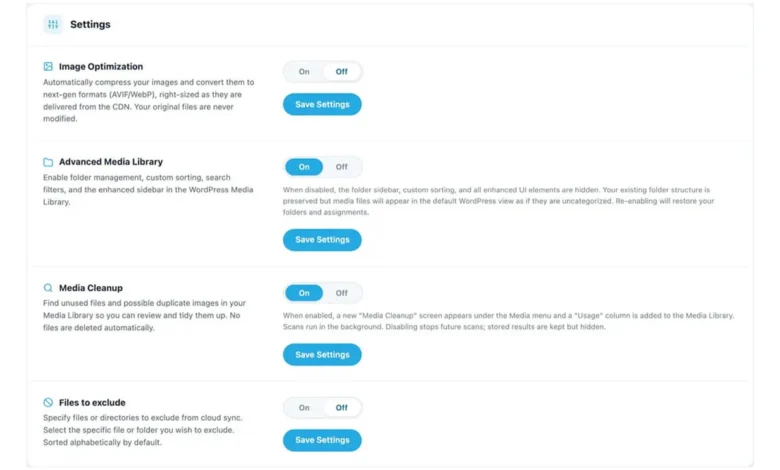
The update includes a comprehensive UI/UX overhaul, reflecting a shift toward cleaner, more data-centric administrative dashboards. The new interface prioritizes visibility, with full-width layouts that allow for more detailed tracking of sync status, bandwidth usage, and storage allocation. By integrating these metrics directly into the WordPress admin, the developers have successfully minimized context switching, allowing site administrators to manage media assets, folder structures, and optimization settings within a unified workspace.
Implications for Agency Workflow and Scalability
The economic model presented in the 3.5 update—charging based on total storage and bandwidth rather than per-site licensing—is particularly advantageous for high-volume agencies. This model decouples the cost of infrastructure from the number of sites under management, facilitating more predictable budgeting for client maintenance contracts.
The shift toward this model acknowledges that modern web development is increasingly decentralized. Agencies are no longer managing single, monolithic installations; they are managing ecosystems of interconnected sites. By providing tools that handle the heavy lifting of storage, cleanup, and security, Infinite Uploads is positioning itself as a core infrastructure provider rather than just a secondary storage plugin.
Future-Proofing WordPress Assets
As the volume of data on the average website continues to climb, the importance of robust media management cannot be overstated. According to recent web performance studies, the average page weight has increased by over 300% in the last decade, with images and media assets accounting for the vast majority of that load. Tools that provide automated optimization and offloading are no longer "nice-to-haves"—they are essential components of a modern, performant web presence.

The 3.5 update serves as a clear indicator of where the industry is heading. By combining the accessibility of a free entry point with the high-level security features required by modern e-commerce platforms, the developers have addressed the primary friction points of the WordPress media experience. For agencies and site owners, the focus will now shift toward leveraging these tools to maintain leaner, more secure, and more efficient digital properties. As the platform continues to evolve, the integration of automated cleanup and intelligent security will likely become the standard expectation for all high-traffic WordPress installations.