WordPress, the world’s most popular content management system, has long grappled with inherent limitations in its native media library, posing significant challenges for site owners, developers, and digital agencies alike. For years, managing a burgeoning collection of digital assets on WordPress has typically necessitated a patchwork of third-party plugins and external services, leading to increased complexity, higher costs, and often, compromised efficiency. This fragmented approach, characterized by the need for separate solutions for cloud offloading, folder organization, and advanced search, has been a persistent source of frustration within the WordPress ecosystem. A single site, such as WP Mayor, can easily accumulate upwards of 25,000 media files, underscoring the monumental task of maintaining order without robust tools.
Into this landscape steps Infinite Uploads, a comprehensive media library solution that fundamentally redefines how WordPress users interact with their digital assets. By integrating cloud storage, content delivery network (CDN) capabilities, advanced folder organization, granular sorting, and powerful search functionalities into a singular, cohesive platform, Infinite Uploads aims to consolidate what traditionally required three or more separate plugins and subscriptions. This strategic integration marks a pivotal shift, moving away from disparate tools towards a unified, streamlined experience designed to enhance performance, improve workflow, and simplify media management for sites of all sizes.
The Chronic Challenges of WordPress Media Management
The journey to effective media management on WordPress has been fraught with historical difficulties. At its core, WordPress’s default media library, while functional for smaller sites, struggles significantly under the weight of large, diverse media collections. The system was originally designed with simplicity in mind, leading to a flat, date-based directory structure for uploaded files. This approach, while straightforward initially, quickly devolves into an unmanageable digital archive as a site grows.

- Fragmented Ecosystem: The absence of native cloud offloading meant that all media files resided on the web server, consuming valuable storage and bandwidth, and potentially slowing down site performance. This led to the proliferation of media offloading plugins, which allowed users to connect their WordPress sites to external cloud storage services like Amazon S3, often requiring additional configuration with CDNs like CloudFront for optimal delivery speed.
- Lack of Organization: WordPress ships without any inherent folder structure within its media library interface. All uploaded files, regardless of their purpose or content, are dumped into a single chronological stream. This forced users to rely on file naming conventions or external spreadsheets to keep track of assets, a process that quickly became unsustainable. To combat this, a second category of plugins emerged: dedicated media folder plugins, which introduced a visual organizational layer within the WordPress admin, mimicking a traditional file system.
- Substandard Search and Sorting: Even with folder plugins, fundamental issues persisted. The native sorting options in WordPress are severely limited, typically locked to the upload date. Finding a specific file among thousands, or even tens of thousands, became a laborious task without advanced filters. Furthermore, the default search functionality in WordPress’s media library has long been criticized for its ambiguity and inefficiency. Users often find themselves guessing whether the search queries filename, title, alt text, or captions, leading to a "hit-and-hope" approach that wastes valuable time.
- The "Plugin Sprawl" Dilemma: The cumulative effect of these limitations was a "plugin sprawl" where site owners and agencies would find themselves juggling multiple plugins from different vendors, each with its own subscription, dashboard, and potential for compatibility conflicts. This not only increased operational overhead and costs but also introduced multiple points of failure, making site maintenance and troubleshooting considerably more complex.
Infinite Uploads: A Unified Approach to Media Efficiency
Infinite Uploads directly confronts these long-standing issues by offering a holistic solution that integrates previously disparate functionalities into a single, streamlined service. This consolidation is not merely about convenience; it’s about establishing a more robust, efficient, and scalable foundation for media management on WordPress.
1. Cloud Integration and Performance Optimization:
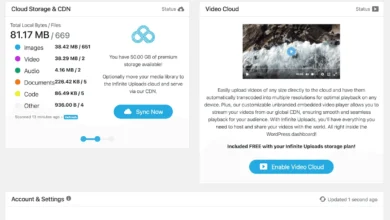
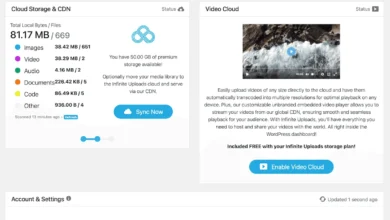
At its core, Infinite Uploads provides seamless cloud offloading, ensuring that media files are stored externally rather than burdening the web server. This approach offers several critical advantages:
- Enhanced Site Performance: By offloading media, server load is significantly reduced, leading to faster page load times and a smoother user experience. Integrated CDN delivery further accelerates content distribution globally.
- Scalability: As sites grow and accumulate more media, the cloud infrastructure scales effortlessly, removing concerns about server storage limits.
- Reliability and Security: Leveraging robust cloud services provides higher uptime and enhanced data redundancy, safeguarding valuable assets.
- Video Hosting: Beyond images, Infinite Uploads also offers integrated video hosting, a crucial feature for modern content strategies, removing the need for separate video platforms or specialized plugins.
2. Intuitive and Powerful Folder Management:
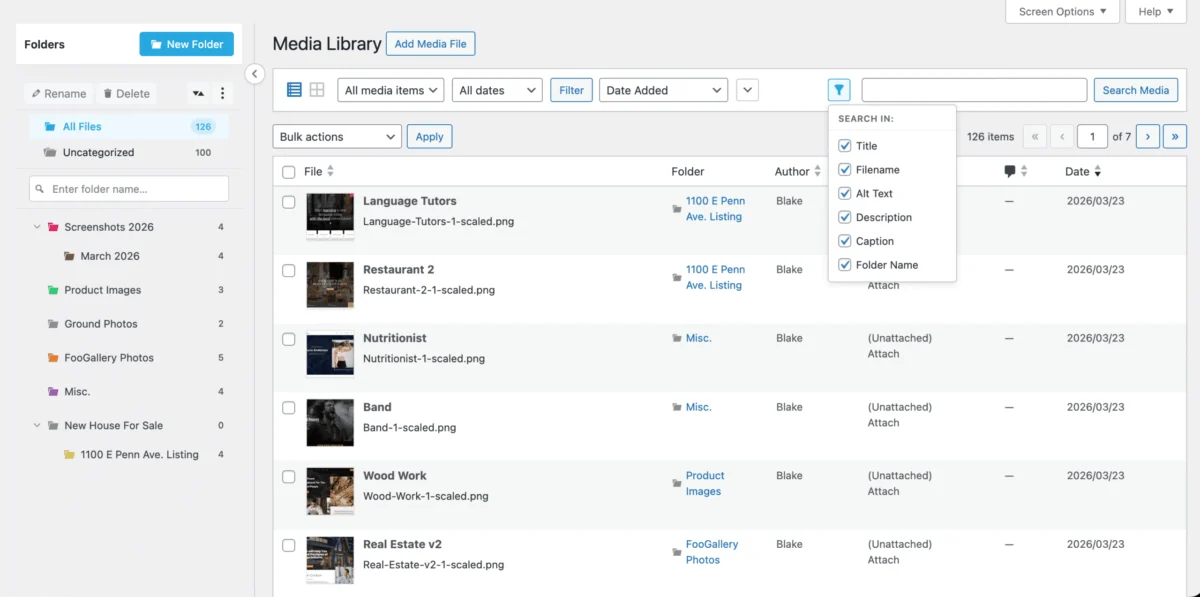
Moving beyond the flat structure of native WordPress, Infinite Uploads introduces a sophisticated folder system directly within the media library. This feature is designed to mirror the intuitive organization users expect from a desktop file explorer:
- Unlimited Nested Folders: Users can create an unlimited number of fully nested folders, allowing for highly granular organization tailored to specific workflows. Whether structuring assets by client projects, marketing campaigns, product SKUs for e-commerce, or content categories, the system accommodates diverse needs.
- Direct Uploads: A significant improvement over the default WordPress behavior, media files can be uploaded directly into specific folders, including entire folder structures. This eliminates the post-upload sorting chore and ensures assets are categorized from the outset.
- Visual Enhancements and Workflow Efficiency: The interface includes practical features like color-coded folders for quick visual identification, a resizable sidebar for optimal viewing, and multiple theme options, including a familiar Dropbox-style layout. Drag-and-drop functionality simplifies moving individual files or bulk selections between folders, drastically speeding up organization. Bulk folder actions allow for moving or deleting multiple folders at once, with files within deleted folders automatically re-categorized as "Uncategorized" rather than being deleted, preserving data integrity.
3. Advanced Sorting Capabilities:
The limitations of WordPress’s default sorting (primarily by upload date) are completely overcome with Infinite Uploads. The solution provides eight distinct sorting options, each available in ascending or descending order, empowering users to quickly locate specific assets:

- Date Added: The traditional sorting method.
- Date Modified: Useful for tracking recent changes or updates to media.
- Alphabetical sorting by the media item’s title.
- Filename: Sorting by the actual file name, often crucial for developers or designers.
- Author: For multi-user sites, quickly find media uploaded by a specific contributor.
- File Type: Grouping by image, video, document, etc.
- Extension: Sorting by file format (e.g., .jpg, .png, .gif, .mp4).
- File Size: Useful for identifying large files that might impact performance or for managing storage.
This level of granularity is transformative for managing libraries with thousands of files across varied content types, significantly enhancing discoverability.
4. Precision Search for Large Libraries:
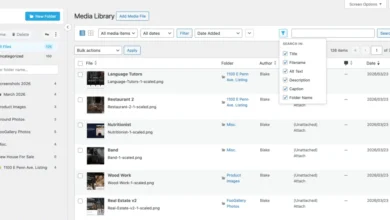
Perhaps one of the most impactful enhancements is the overhaul of the media library search function. Recognizing the inherent ambiguity of WordPress’s native search, Infinite Uploads introduces explicit, filterable search parameters:
- Six Selectable Filters: Users can precisely define their search scope by querying: filename, title, alt text, caption, description, or author. This eliminates the guesswork and ensures that searches yield relevant results quickly and accurately. This precision is invaluable for content creators, SEO specialists, and anyone needing to quickly retrieve specific assets based on metadata.
5. Seamless Migration for Existing Users:
Understanding that many users have already invested time in building folder structures with other plugins, Infinite Uploads is developing a migrator tool for popular folder plugins like FileBird and HappyFiles. This forthcoming feature will allow users to import their existing folder structures directly into Infinite Uploads, eliminating the need to start over and ensuring a smooth transition to the integrated platform. This commitment to interoperability demonstrates a user-centric approach, acknowledging the existing efforts of the WordPress community.
Economic and Operational Implications
The broader impact of Infinite Uploads extends beyond mere feature upgrades; it signifies a strategic consolidation with profound economic and operational implications for WordPress users and agencies.
- Cost Savings Through Consolidation: By replacing multiple plugins and services (offload, CDN, folders, search, video hosting) with a single subscription, Infinite Uploads offers significant cost savings. The traditional setup often involves several monthly or annual payments to different vendors, whereas Infinite Uploads starts at a competitive price point, such as $19/month, for a comprehensive suite of features.
- Streamlined Workflow and Reduced Administrative Burden: Managing one plugin, one dashboard, and one renewal cycle drastically simplifies administrative tasks. This reduces the time spent on plugin updates, compatibility checks, and troubleshooting, freeing up resources for content creation and site development.
- Enhanced Performance and Reliability: The integrated cloud offloading and CDN ensure that sites benefit from superior performance, faster loading times, and higher availability. This directly translates to improved user experience, better SEO rankings, and reduced bounce rates.
- Scalability for Growth: For rapidly expanding businesses, e-commerce sites, or agencies managing numerous client projects, Infinite Uploads provides a scalable infrastructure that can handle tens of thousands of media files without compromising performance or organization.
- Agency Advantage: Unlimited Sites Model: A particularly attractive feature for digital agencies is the unlimited sites model. Instead of paying per site or managing individual licenses across a client portfolio, agencies can deploy the full feature set of Infinite Uploads across all their managed sites under a single subscription. This simplifies billing, licensing, and feature rollout, providing a consistent and powerful media management solution for every client.
- Data Integrity and Reversibility: The fact that the folder structure is stored independently of the actual file data is a critical design choice. This ensures that existing cloud-offloaded media remains unaffected. Furthermore, the option to revert to the standard WordPress view at any point by flattening everything back to "Uncategorized" without deleting any files provides peace of mind and flexibility for users.
Market Position and Future Outlook

Infinite Uploads is strategically positioning itself as not just another media offload plugin, but as the definitive answer to integrated, cloud-backed media library management on WordPress. It moves beyond solving isolated problems to offering a holistic ecosystem for digital assets. This approach addresses a long-standing pain point in the WordPress community, which has consistently demanded more robust, native-like solutions for complex tasks.
The demand for sophisticated WordPress tools continues to grow as the platform powers an increasing share of the internet. Solutions that offer consolidation, improved performance, and enhanced user experience are likely to gain significant traction. Infinite Uploads’ proactive development of features like the migrator for other folder plugins demonstrates an understanding of the existing market and a commitment to facilitating a smooth transition for users seeking a more integrated solution.
For anyone already utilizing Infinite Uploads for its offload and CDN capabilities, the immediate availability of these new organizational and search features is a significant value add, enhancing their existing investment without additional cost. For those still navigating the complexities of multiple plugins for media management, this presents a compelling opportunity to reconsider their current technology stack.
Users interested in experiencing this transformative approach to WordPress media management can explore the full range of features and initiate a free 7-day trial directly on the Infinite Uploads website. This integrated solution promises to bring order, efficiency, and scalability to even the most extensive WordPress media libraries, finally delivering the organized, searchable, and cloud-backed experience users have long desired.