Securing WordPress Infrastructure Against Malicious File Uploads with attachmentAV

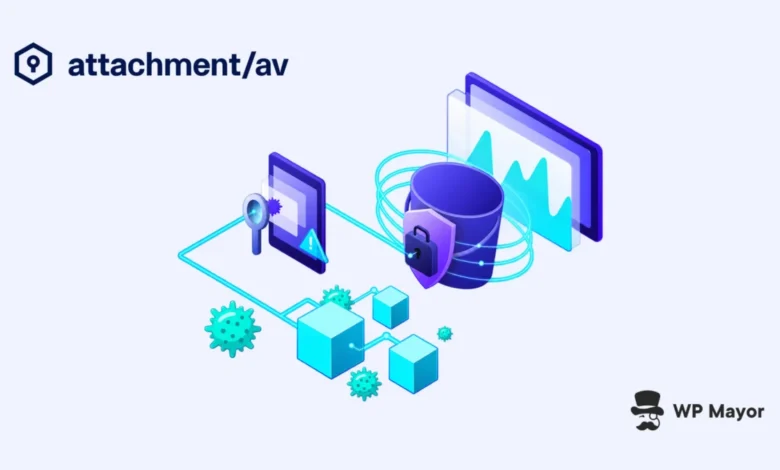
The ubiquity of WordPress as a content management system, powering over 40% of the internet, has naturally transformed it into a primary target for automated cyberattacks. While administrators frequently focus on hardening login portals and monitoring core file integrity, a significant, often overlooked vulnerability remains: the file upload field. From corporate careers pages accepting CVs to client intake forms and collaborative editorial media libraries, the ability for users to upload files is essential but inherently risky. Without robust, real-time scanning, these entry points serve as direct conduits for ransomware, trojans, and malicious scripts to infiltrate a server or propagate via email to unsuspecting staff.
The emergence of attachmentAV, a specialized security solution, addresses this systemic gap by integrating advanced threat detection directly into the file upload process. By leveraging the Sophos anti-malware engine, the platform provides a preemptive barrier that identifies and neutralizes threats before they are ever stored on the host server.
The Anatomy of the Threat: Why Uploads Are Critical
The threat landscape for WordPress has evolved significantly over the past decade. Historically, attacks focused on brute-forcing administrative credentials or exploiting vulnerabilities in outdated plugins. However, as web application firewalls (WAFs) have become standard, attackers have shifted their focus to "application-level" payloads.

When a user uploads a file—whether a PDF, image, or document—that file is traditionally written to the server’s local storage or moved to an external bucket. If that file contains embedded malware, it can execute scripts that compromise the server, inject malicious code into the database, or create a backdoor for persistent access. Furthermore, if the compromised file is subsequently downloaded by a site administrator or sent to an email inbox, the threat crosses the perimeter of the web server into the corporate network.
Data from the cybersecurity sector indicates that web-based file uploads are a leading vector for "zero-day" attacks, where hackers exploit unknown software vulnerabilities. Because traditional security plugins typically scan files on a set schedule—often daily or weekly—a malicious file can remain dormant and active on a server for hours, or even days, before being flagged. By the time a scheduled scan occurs, the damage, such as data exfiltration or malware distribution, may have already been completed.
Technological Integration and Operational Chronology
attachmentAV functions as a specialized bridge between WordPress form plugins and high-level threat intelligence. The architecture of the tool is designed for seamless integration rather than system disruption. It operates as a fully managed service, meaning it does not burden the WordPress host with the overhead of maintaining local virus definitions or massive malware databases.
The operational workflow follows a strict, non-negotiable sequence:

- Submission: A user initiates an upload through a supported interface, such as Gravity Forms, WPForms, Contact Form 7, Formidable Forms, or the standard WordPress Media Library.
- Interception: Before the file is written to the server disk, attachmentAV intercepts the binary data.
- Transmission: The file is securely encrypted and transmitted via API to the Sophos-backed scanning infrastructure.
- Analysis: The Sophos engine performs a multi-layered analysis, checking for signatures of known threats and utilizing behavioral heuristics to detect suspicious, undocumented code.
- Verdict: If the file is deemed safe, it proceeds to the storage directory. If it is flagged as malicious, the upload is rejected instantly. The submission is blocked, the file is discarded, and an automated alert is triggered.
This "zero-trust" approach ensures that no file, regardless of origin, is granted access to the server environment without a clean bill of health.
Empirical Evidence: The Scale of the Risk
The necessity of such real-time tools is underscored by recent metrics. In the 30-day period concluding on September 29, 2026, attachmentAV reported that its scanning infrastructure processed approximately 1.9 terabytes of data. During this single month, the system successfully identified and blocked 402 distinct instances of malware.
This statistic highlights two critical realities: first, that malicious actors are actively probing WordPress upload fields on a massive scale; and second, that without active, real-time protection, those 402 files would have successfully resided on the respective websites. The implications for site owners are severe. Search engines, such as Google and Bing, monitor websites for the distribution of malware. A site identified as a source of infected downloads faces immediate blacklisting, resulting in a catastrophic loss of search engine visibility, traffic, and brand reputation—a recovery process that can take months.
Strategic Compliance and Professional Standards
For organizations operating in regulated industries, security is not merely a technical concern but a legal and contractual requirement. attachmentAV addresses this through strict adherence to international standards. The company is ISO 27001 certified—the gold standard for information security management systems—and maintains its operations within Germany, ensuring full alignment with the General Data Protection Regulation (GDPR).

By implementing a rigorous Data Processing Agreement (DPA) and ensuring that all files are encrypted both in transit and at rest, the platform provides the documentation necessary for security audits. For agencies that manage client sites, this level of professional compliance is vital. When a client presents a security questionnaire, being able to verify that every inbound file is scanned by a globally recognized engine like Sophos provides a quantifiable level of assurance that "security through obscurity" cannot offer.
Industry Impact: Agencies, Developers, and Creators
The impact of attachmentAV varies based on the operational needs of the user, yet it remains a universal utility for WordPress power users:
- For Digital Agencies: The ability to offer a "security-first" care plan is a significant differentiator. By utilizing an unlimited site-scan model, agencies can standardize their protection across their entire client portfolio without the need for complex, per-site cost accounting.
- For Developers: The primary value proposition is the reduction of technical debt. By offloading the security infrastructure to a managed API, developers avoid the complexities of maintaining server-side antivirus software, which is notoriously difficult to configure and can often lead to performance degradation.
- For Content Creators: The Media Library is often the most neglected security vector. On blogs with multiple contributors, the risk of a "trusted" user inadvertently uploading an infected image or document is high. attachmentAV removes the human error factor, ensuring that the editorial workflow remains uninterrupted while maintaining a secure environment.
A Cost-Benefit Analysis of Prevention
The financial argument for implementing automated, real-time scanning is straightforward when compared to the cost of incident response. Recovering a compromised WordPress site involves significant labor costs: identifying the entry point, cleaning the database, purging malicious files, patching the vulnerability, and performing a comprehensive security audit.
Beyond the direct costs, there is the "hidden" expense of business interruption. For an e-commerce site, even a few hours of downtime or blacklisting can equate to significant revenue loss. With the Professional plan priced at approximately €57.82 annually, the cost per site is less than €5 per month. In the context of modern web infrastructure, this represents a low-cost insurance policy against the high-stakes risk of a complete security breach.

Looking Forward: The Evolution of WordPress Security
As WordPress continues to expand its functionality, the complexity of its attack surface will only increase. The move toward "serverless" security, where the heavy lifting of threat detection is moved to the cloud, represents the future of web security.
attachmentAV exemplifies this transition by proving that advanced security does not require high technical expertise or massive server resources. By focusing on the specific, high-risk moment of file ingestion, it creates a perimeter that is both invisible to the end-user and impenetrable to standard malware payloads. As web administrators continue to balance the need for user interaction with the mandate for site security, tools that automate the detection of malicious content will become an essential component of the standard WordPress stack. For any entity accepting data from external sources, the question is no longer whether they need this layer of protection, but how long they can afford to operate without it.
Related posts: