Navigating the Automated Web: How Website Managers Can Balance Bot Traffic, Security, and Performance


Automated web traffic is fundamentally reshaping the architecture and management of modern digital infrastructure. As artificial intelligence continues its rapid evolution, autonomous scripts, data scrapers, and AI-driven web crawlers now account for a staggering share of global internet activity. A comprehensive multi-billion-request analysis released by managed hosting provider Kinsta underscores this digital shift, revealing that AI-driven bot traffic surged by approximately 300 percent over a single twelve-month period. This dramatic influx has elevated bot management from a secondary IT maintenance task to an essential component of modern website administration.
The exponential rise of automated web visitors presents website owners, digital agencies, and enterprise organizations with a complex dilemma. While some automated scripts are entirely malicious—designed to execute distributed denial-of-service (DDoS) attacks, scrape proprietary content, or exploit dynamic backend endpoints—others provide indispensable services. Search engine crawlers, SEO monitors, and legitimate indexing tools are vital for maintaining online visibility. Consequently, web administrators can no longer rely on simplistic, broad-stroke security measures. The modern approach to web management requires a nuanced, highly calibrated strategy that carefully distinguishes between beneficial automation, resource-heavy neutral crawlers, and aggressive security threats.
The Chronology and Evolution of Web Automation

The phenomenon of non-human web traffic is not entirely new, but its composition and operational scale have transformed dramatically over the past decade. In the early days of commercial internet expansion, automated traffic primarily consisted of search engine spiders—most notably Googlebot and Bingbot—alongside basic uptime monitoring services. These systems operated within predictable parameters, respecting site guidelines and placing minimal strain on server infrastructure.
By the mid-2010s, the proliferation of programmatic advertising and content scraping gave rise to a more invasive class of bots. E-commerce sites frequently contended with inventory-scraping tools, credential-stuffing scripts, and automated checkout bots that manipulated product availability. However, the most profound acceleration occurred recently with the mainstream adoption of generative artificial intelligence. Large language model (LLM) developers deployed massive fleets of web-scraping crawlers to ingest vast swaths of internet content for model training. This recent wave triggered the 300 percent year-over-year surge documented by industry analysts, pushing numerous enterprise and small-business servers to their operational limits.
Understanding the Impact of Unchecked Bot Traffic
When automated scripts operate without adequate oversight, the consequences for website performance can be severe. Servers inundated with excessive requests experience degraded load times, which directly harms user experience for genuine human visitors. Furthermore, dynamic endpoints—such as user login portals, search bars, shopping carts, and e-commerce checkout pages like those found on WooCommerce platforms—demand substantial computational resources. When bots flood these resource-intensive areas, server CPU and database capacities are rapidly depleted.
The impact extends beyond mere performance degradation. Unchecked scraping can lead to intellectual property theft, unauthorized data harvesting, and skewed analytical metrics, making it difficult for businesses to accurately measure their human audience engagement. Conversely, an overly aggressive defensive posture that indiscriminately blocks all incoming automated traffic can inadvertently suppress search engine indexing, ruin SEO rankings, and alienate legitimate digital partners.
Establishing a Proactive Response Framework
Industry experts and security professionals increasingly advocate for a systematic, four-phase framework to manage bot traffic effectively: assessment, stabilization, strategic rule implementation, and ongoing monitoring.
Phase One: Assessment and Identification
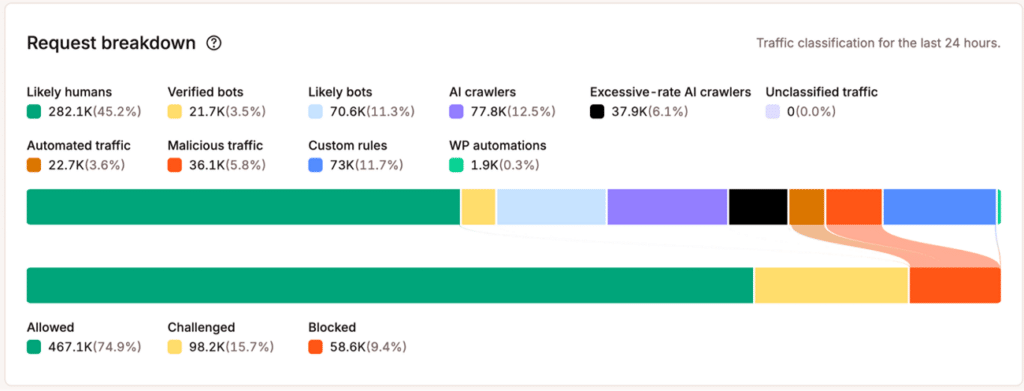
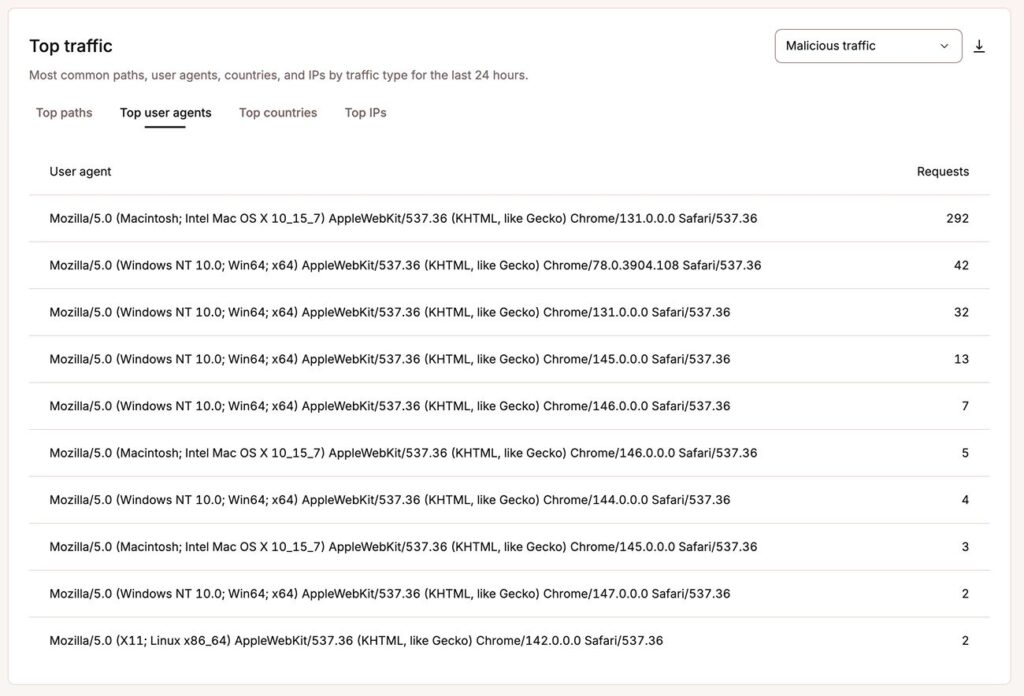
Before deploying defensive measures, administrators must accurately diagnose the nature of the traffic hitting their digital properties. Modern analytics dashboards—such as those integrated into Kinsta’s infrastructure—allow managers to inspect request breakdowns by specific categories, user agents, geographic origins, and IP addresses. By analyzing top traffic paths, administrators can determine whether their servers are experiencing routine indexing, heavy resource consumption by neutral crawlers, or a coordinated cyberattack.
Phase Two: Immediate Site Stabilization
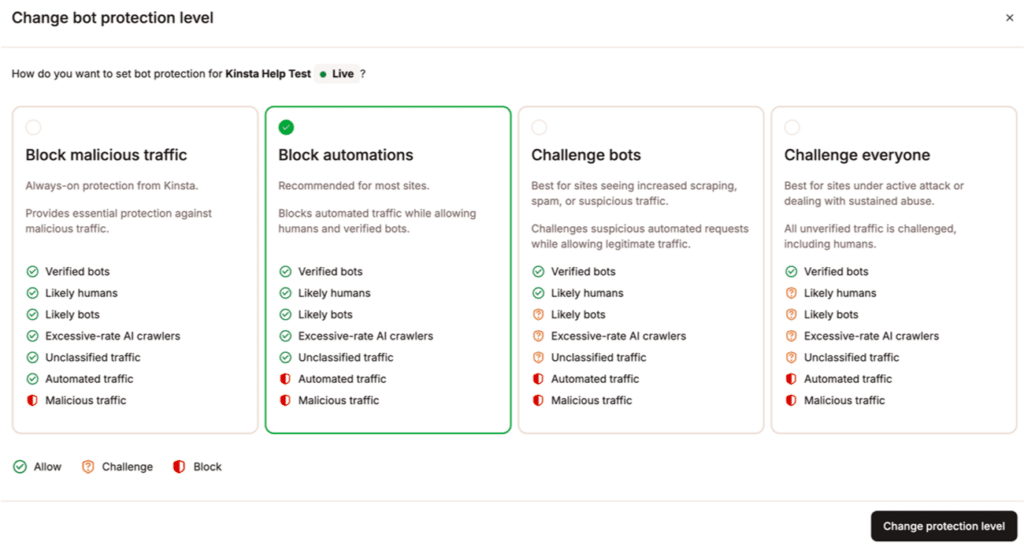
If a website is actively buckling under pressure—evidenced by soaring error rates, database timeouts, or unresponsive pages—investigation must take a back seat to emergency stabilization. In these acute scenarios, administrators are advised to temporarily elevate their security posture. Implementing strict bot protection levels, such as challenging all unverified automated traffic or deploying JavaScript challenges, provides immediate relief. Once server equilibrium is restored, administrators can gradually relax restrictions and implement more refined, long-term policies.
Phase Three: Granular Policy Formulation (Allow, Challenge, Block)
With stability secured, website managers can establish a structured policy governing different classes of bots. This framework relies on three primary actions: allowing beneficial traffic, challenging suspicious or ambiguous requests, and outright blocking malicious entities. Rather than applying universal rules across an entire domain, advanced management tools enable granular exceptions based on specific parameters like URL paths, geographic locations, or verified signatures. For instance, a site owner might permit a trusted search engine to crawl static blog content while heavily restricting or blocking AI scrapers from accessing sensitive user directories or expensive dynamic database endpoints.
Phase Four: Continuous Monitoring and Refinement
Bot behavior and crawler signatures evolve constantly, necessitating continuous oversight. Following the implementation of a bot management strategy, administrators must routinely evaluate key performance indicators, including server resource utilization, search engine visibility, organic traffic trends, and conversion rates. Regular audits ensure that defensive rules remain aligned with business objectives without inadvertently penalizing legitimate users.
Broader Implications for the Digital Ecosystem
The ongoing surge in automated web traffic highlights a maturing friction point in the digital economy: the tension between open data access and server resource ownership. As artificial intelligence developers continue to demand vast quantities of training data, and as bad actors refine automated attack vectors, the traditional open-door policy of the World Wide Web is undergoing a forced evolution.
Hosting providers and cybersecurity firms are responding by embedding intelligent bot management directly into foundational infrastructure layers, shifting the burden away from individual developers who lack the resources to manually filter millions of daily requests. Features like Kinsta’s integrated bot protection tools reflect this industry-wide pivot, offering granular visibility and automated remediation controls.
Ultimately, the proliferation of bots establishes a new normal for web administration. Success in this environment requires abandoning the false dichotomy of total openness versus total isolation. By adopting proactive, data-driven management strategies, website operators can safeguard their digital assets, protect server performance, and maintain a welcoming environment for human visitors in an increasingly automated world.