Securing WordPress File Uploads: Why Real-Time Malware Scanning is the New Standard for Website Integrity

For years, the standard architecture of a functional WordPress website has relied on a high degree of user-generated input. From careers pages accepting CVs and quote forms receiving project briefs to multi-author blogs managing media assets, file upload fields have become foundational elements of the digital user experience. However, this convenience introduces a persistent and often overlooked security vulnerability: the potential for malicious actors to introduce viruses, ransomware, and trojans directly into a server environment. As cyber threats become increasingly sophisticated, the industry is shifting toward a "zero-trust" model for inbound data, with tools like attachmentAV emerging as a critical defense layer.
The core of the problem lies in the inherent trust placed in file uploads. When a user submits a file, it is frequently moved to a local server directory, emailed to an administrator, or synced with a third-party CRM. If that file is infected, the payload can trigger long before a traditional security plugin—designed primarily for core file integrity or login protection—has the chance to run a scheduled scan. The evolution of web-based attacks has moved beyond brute-force login attempts toward the exploitation of legitimate site features. By leveraging form submission points, attackers can bypass perimeter defenses, turning a website into a carrier for malware that can affect both the host and the downstream recipients of the data.

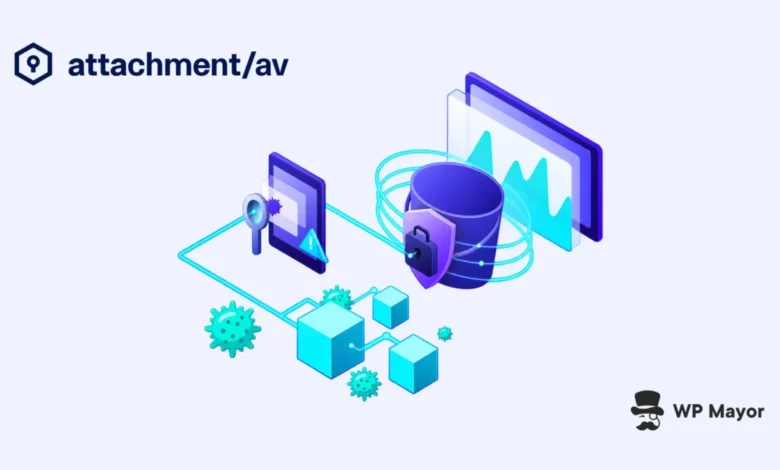
The rise of dedicated, real-time scanning solutions is a direct response to the increasing frequency of "file-based" injection attacks. Unlike standard security suites that focus on the health of the WordPress installation itself, attachmentAV functions as an upstream interceptor. By integrating directly with the hooks provided by popular form plugins—including Contact Form 7, WPForms, Gravity Forms, Formidable Forms, and Forminator—as well as the native WordPress Media Library, the service performs a comprehensive diagnostic check the moment a file is uploaded.
A critical component of this security architecture is its reliance on industry-standard threat intelligence. Through an official OEM partnership with Sophos, the platform provides users with access to continuously updated virus signatures and heuristic analysis tools. This is particularly vital for zero-day protection, where signatures for new threats are identified and blocked before they can penetrate a site’s defenses. The technical implementation is designed to be lightweight, utilizing an API-driven model. This ensures that the resource-intensive process of scanning large files does not occur on the site’s own server, effectively offloading the computational burden and preventing the performance degradation often associated with traditional, resource-heavy antivirus software.
The scale of the threat is quantifiable. Recent data indicates that between August and September 2026, scanning engines operating within this ecosystem processed approximately 1.9 terabytes of data, identifying and neutralizing 402 distinct malicious infections. These statistics underscore the reality that file uploads are not merely theoretical attack vectors; they are active gateways for cyber-criminal activity. For site owners, the cost of a breach is rarely confined to the technical cleanup. The broader implications include a severe hit to search engine optimization (SEO) rankings. Search engines like Google proactively penalize websites that distribute malware, leading to a rapid decline in organic traffic and potential blacklisting—a catastrophe for businesses that rely on web presence for revenue.

The chronological progression of security practices in WordPress reveals a distinct shift in priorities. Early iterations of site security focused almost exclusively on strong passwords and limiting brute-force attempts. By the early 2020s, the focus expanded to include web application firewalls (WAFs) and file-change detection. Today, the focus has shifted to the "inbound supply chain." Security professionals now recognize that the most vulnerable moment in a file’s lifecycle is the point of ingestion. By preventing the file from ever reaching the server’s storage, the risk of cross-site scripting (XSS), privilege escalation, or lateral movement within a corporate network is effectively mitigated at the edge.
For agencies managing dozens or hundreds of client sites, this paradigm shift is particularly important. A single breach on one client’s site can cause reputational damage that ripples across an entire portfolio. The adoption of a centralized, managed security service allows agencies to standardize their security posture. Rather than managing disparate scanning protocols for different clients, an API-based, cloud-managed solution provides a uniform, audit-ready approach. This is particularly relevant in industries governed by strict data protection regulations, such as healthcare, legal, and finance, where "due diligence" in handling user data is a legal mandate.
The technical specifications of these modern security tools also highlight the growing importance of regulatory compliance. With certifications such as ISO 27001 and strict adherence to GDPR-compliant Data Processing Agreements, providers like attachmentAV are positioning themselves to meet the needs of enterprise-level clients. Key features, such as the encryption of files both in transit and at rest, and the mandatory deletion of files post-scan, ensure that the security tool itself does not become a new privacy liability.

The implications for developers are equally significant. Traditionally, implementing file-upload security required custom PHP scripts, server-side cron jobs, and the maintenance of local ClamAV databases—all of which are prone to misconfiguration and performance bottlenecks. By adopting a fully managed API service, developers can offload the responsibility of signature maintenance and infrastructure scaling to the provider. This allows for a more streamlined development workflow, where security is a configurable service rather than a maintenance burden.
In terms of market impact, the shift toward managed, real-time scanning represents a maturing of the WordPress ecosystem. As the platform continues to power a significant percentage of the web, it has become a primary target for automated malware distribution. The move toward professionalized security, often involving paid subscriptions for higher-tier services, is a necessary evolution. While the free version of such plugins provides a baseline for individual users, the professional and agency-grade plans, priced to compete with standard SaaS security products, offer a scalable path for organizations of all sizes.
Ultimately, the choice to implement real-time attachment scanning is a strategic decision that reflects an organization’s risk appetite. For a basic, static brochure site, the threat level may be negligible. However, for any entity that processes forms, collects resumes, or allows team members to upload media, the "act of trust" inherent in these features must be tempered with technical verification.

The economic argument for such tools is straightforward: the cost of a preventative monthly subscription is significantly lower than the cost of incident response, forensic analysis, and the loss of business continuity following a successful breach. By neutralizing threats at the point of upload, administrators gain the ability to maintain a clean environment without sacrificing the usability or functionality that their users expect. As the digital landscape continues to evolve, the integration of intelligent, automated security layers into the core of web content management will likely become as standard as the installation of an SSL certificate. In an era of increasing digital risk, the ability to guarantee the integrity of every incoming file is not just a best practice—it is an essential component of professional web management.