HoverEcho Introduces Interactive Audio Elements to WordPress to Bridge the Engagement Gap Between Browsing and Conversion

The digital landscape has long been defined by a linear, rigid user journey: a visitor observes a web element, clicks it, and only then gains the information required to make an informed decision. This "see-click-discover" paradigm has persisted since the inception of the graphical web, yet it remains a primary source of user friction. Recent analytics from session recording software consistently reveal a recurring pattern: potential customers hover over pricing tiers, navigation menus, or promotional advertisements, only to abandon the page without ever clicking. HoverEcho, a newly launched technology, seeks to disrupt this standard by enabling individual website elements to "speak" to users, effectively moving the discovery phase to the moment of initial interest.
The Evolution of Web Interaction
For decades, web design has prioritized visual aesthetics and navigational structure, often at the expense of immediate context. While advancements in multimedia—including high-definition video, complex animations, and responsive design—have improved the user experience, the fundamental interaction sequence remains tethered to the mouse click.
HoverEcho proposes a departure from this model by integrating audio directly into specific page elements. Through a proprietary integration, web administrators can assign short, descriptive audio clips to buttons, form fields, pricing plans, or advertisements. The interaction is context-aware: on desktop systems, the audio triggers upon hovering; on mobile devices, it activates via a "touch and hold" gesture; and for television-based browsers, it engages when an element is brought into focus.
Chronology of Development and Release
The development of HoverEcho reflects a growing industry trend toward "micro-interactions"—small, functional movements or sounds that provide feedback to the user. The company recently finalized its WordPress plugin, marking a strategic pivot from a standalone service to a native integration within the world’s most popular content management system.
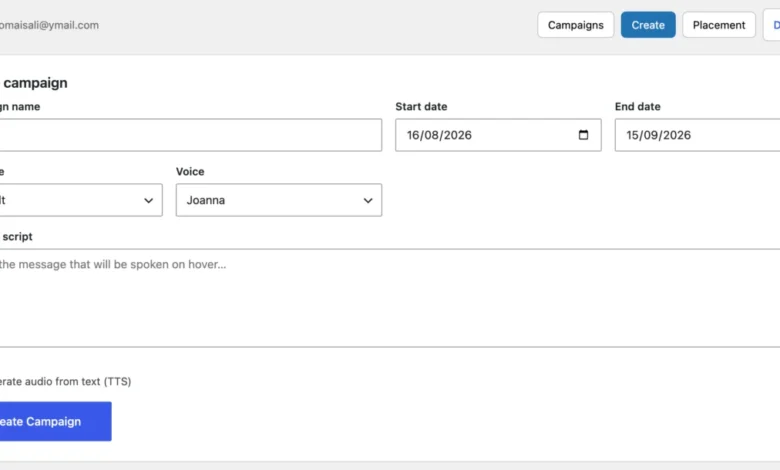
The plugin release follows months of testing aimed at ensuring compatibility with various themes and page builders. By centralizing the management of these audio campaigns within the WordPress dashboard, the developers have eliminated the need for manual code injection across multiple pages. This infrastructure is designed to scale for large publisher networks or digital agencies, where updating individual embedded scripts previously required significant manual labor and posed a high risk of version fragmentation.

Data-Driven Implications for Conversion
The core value proposition of HoverEcho lies in its potential to mitigate "bounce rates" and cart abandonment. Industry data from the Baymard Institute indicates that the average e-commerce cart abandonment rate hovers near 70%, with many users leaving because of a lack of information or confusion regarding pricing and checkout processes.
By providing a "spoken nudge," site owners can deliver essential context—such as a brief explanation of a product benefit or a clarification of a form field requirement—without forcing the user to load a new page. This is particularly relevant in high-stakes conversion zones. For instance, a complex pricing table that typically requires a user to click through to a FAQ page could instead provide a five-second, audio-based summary upon hover. This shift from "see, click, discover" to "see, hear, decide, click" aims to streamline the decision-making process, reducing the cognitive load on the visitor.
Accessibility and Ethical Considerations
While HoverEcho frames its technology as an accessibility tool, the implementation of audio-on-hover requires a nuanced approach. The technology can provide valuable, audible context for users navigating via keyboard or screen readers; however, it is not a substitute for standard accessibility protocols such as ARIA labels or semantic HTML.
Industry experts emphasize that such enhancements should function as an additional layer of information rather than a replacement for core accessibility features. Furthermore, there is the risk of "audio fatigue." If deployed indiscriminately across a website, the feature could overwhelm users, leading to a negative experience. The developers have acknowledged this, suggesting that the most effective use cases involve restraint—targeting specific, high-friction elements rather than saturating a page with sound.
Technical Implementation and Voice Synthesis
The HoverEcho platform offers two primary methods for audio deployment: text-to-speech (TTS) synthesis and direct file uploads. The TTS engine allows users to select from a variety of voices, facilitating rapid deployment across large sites. However, the quality of TTS remains a variable factor. While simple, declarative sentences perform well, the inclusion of complex product names, specialized acronyms, or non-standard punctuation often highlights the limitations of synthetic voices.
To address this, the platform includes an upload feature, enabling site owners to provide high-fidelity, human-recorded audio. This allows for a higher level of branding and tonal consistency, which is critical for businesses that rely on a specific brand voice to communicate with their audience. The platform’s ability to allow for both automated and custom content gives agencies the flexibility to scale their operations while maintaining quality control.

Strategic Applications in Digital Marketing
The most immediate applications for HoverEcho are found in advertising and e-commerce. In the display advertising sector, a banner ad that provides a spoken preview upon engagement offers a competitive advantage over static ads that rely solely on visual copy. By the time a user clicks, they are already informed, which typically results in higher-quality traffic and improved lead conversion rates.
In e-commerce, the technology serves as a digital sales assistant. By placing audio cues near "Add to Cart" buttons or shipping calculators, retailers can address common objections in real-time. Similarly, for content publishers, audio cues can be used to highlight related articles or newsletter sign-ups, providing a subtle, non-intrusive call to action that does not interrupt the reading experience.
Future Outlook and Performance Metrics
As HoverEcho moves into the broader market, the success of the platform will likely be measured by its impact on key performance indicators (KPIs) such as average session duration, conversion rates, and click-through rates (CTR) on specific elements.
To derive meaningful results, site owners are encouraged to treat the integration as an experimental feature. Recommended best practices include:
- A/B Testing: Launching the feature on a single, high-traffic page to measure the delta in engagement compared to a control group.
- Auditory Testing: Evaluating the audio quality across various devices—specifically mobile phone speakers—to ensure the message remains clear and professional.
- Defined Goals: Establishing specific success criteria, such as an increase in "Add to Cart" actions, rather than relying on qualitative impressions.
The introduction of the WordPress plugin significantly lowers the barrier to entry for this technology, allowing for a 30-day trial period that provides ample time for controlled testing. Whether this "talking element" approach becomes a standard feature in modern web design or remains a niche enhancement will depend on the sensitivity with which it is deployed. If used sparingly and with a focus on user utility, it may offer a viable solution for increasing engagement in an era of shortening attention spans. However, the onus remains on developers to ensure that the user experience is enhanced rather than interrupted.
As the digital ecosystem continues to prioritize intuitive, frictionless interactions, tools like HoverEcho represent an interesting, if experimental, shift toward a more conversational web. The coming months of user data will determine if this auditory approach truly resolves the friction points that have hindered web conversions for years, or if it represents a temporary trend in the ongoing effort to capture and hold user attention in an increasingly crowded online environment.
Related posts: