Congressional Democrats Launch High-Stakes Inquiry Into Trump Administration Nvidia China Chip Deal Following Jensen Huang Ouster

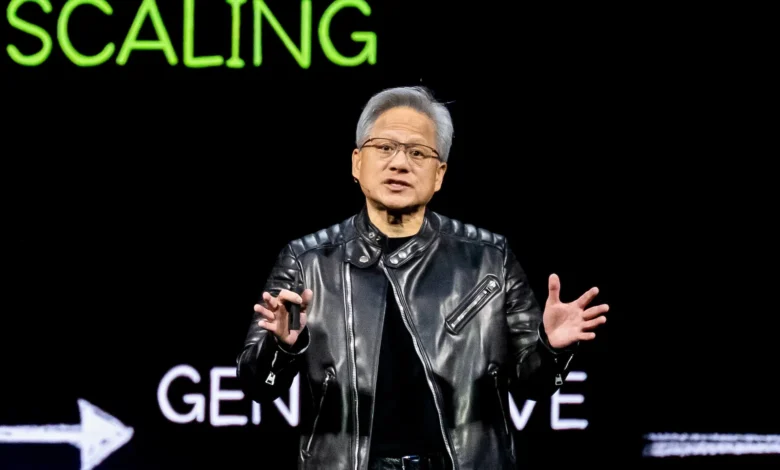
Washington — Congressional Democrats officially opened a sweeping legislative inquiry on Thursday into the Trump administration’s regulatory oversight and handling of advanced artificial intelligence semiconductor sales to China by Silicon Valley giant Nvidia. The announcement follows a turbulent 24 hours that saw the dramatic ouster of Nvidia co-founder and longtime Chief Executive Officer Jensen Huang, subsequent revelations regarding corporate governance failures, and intense bipartisan scrutiny over how U.S. technology policy intersects with national security and executive branch leverage.
The Democratic investigation is spearheaded by Representative Richard Neal of Massachusetts, the ranking member of the House Ways and Means Committee, alongside Senator Ron Wyden of Oregon, the ranking member of the Senate Finance Committee. In a formal, highly critical correspondence directed to Commerce Secretary Howard Lutnick, the lawmakers demanded the immediate preservation of all agency records concerning an arrangement they characterize as both constitutionally dubious and potentially unlawful.
This latest parliamentary maneuver marks the second concurrent congressional probe into Nvidia’s export mechanisms and leadership crisis. Simultaneously, a separate, Republican-led coalition of House committees—comprising leadership from the Select Committee on the Chinese Communist Party, the House Committee on Foreign Affairs, and the House Intelligence Committee—has compelled Jensen Huang to testify in a closed-door deposition following weeks of escalating pressure and threatened subpoenas.
The Genesis of the Crisis: Personal Compromise and Corporate Fallout
The cascade of events culminating in Thursday’s dual inquiries began earlier in the week when Nvidia announced that Jensen Huang was stepping down from the chief executive role he held since founding the company in 1993, with Chief Financial Officer Colette Kress stepping in as interim CEO. The executive shakeup followed Huang’s formal confession regarding an extramarital affair with an individual identified by U.S. intelligence officials as Alice Huang, an executive at Singapore-based technology customer Megaspeed.
Megaspeed has emerged as a primary focus of federal investigators, who suspect the firm operated as a secondary transit node designed to illicitly route restricted, high-performance Nvidia semiconductor units into mainland China in circumvention of federal export controls. Subsequent investigative reports have further complicated the corporate landscape, revealing that Huang was allegedly involved in additional workplace relationships with Nvidia employees, severely undermining the board’s confidence in executive oversight and prompting rapid internal separation measures.
The Revenue-Sharing Arrangement and the Export Tax Allegations
At the core of the Democratic inquiry led by Rep. Neal and Sen. Wyden is a controversial public policy mechanism established in August 2025. Under that arrangement, the administration permitted Nvidia and competitor AMD to fulfill specific export orders for advanced chips—such as the H200 series—to Chinese buyers, provided that the hardware was physically routed through the United States first. Upon arrival on domestic soil, the administration levied a 15% tariff on the sales, creating a revenue-sharing model where the federal government directly profited from commercial AI transactions destined for overseas markets.
The lawmakers’ letter to Secretary Lutnick outlines a mechanism they describe as an unconstitutional export tax system. According to the document, the administration effectively leveraged its regulatory authority over export licenses to take a direct financial cut of private corporate sales.
"The scheme worked like this," the lawmakers wrote, detailing how the executive branch extracted financial remuneration while green-lighting transactions that bypass standard national security protocols. Furthermore, the congressional letter questions why the Department of Commerce under Lutnick continued to approve export licenses for Megaspeed and other Asian intermediaries long after intelligence officials reportedly flagged operational anomalies—including registered corporate entities with no verifiable physical presence at their listed addresses.
Intersections of Corporate Philanthropy and Executive Leverage
Beyond export licensing mechanics, the Democratic inquiry seeks to examine whether corporate financial contributions influenced federal regulatory leniency. The lawmakers’ correspondence highlights a $26 million donation made by Nvidia toward presidential infrastructure initiatives, including the construction of a new White House executive ballroom, which was finalized during a period when the administration was weighing exemptions to semiconductor export restrictions.
Investigators are probing the timeline of these donations relative to executive awareness of Huang’s personal vulnerabilities. Specifically, the inquiry aims to determine whether the administration utilized advance intelligence regarding Huang’s relationship with the alleged foreign operative as leverage to secure favorable financial commitments and policy compliance from the chipmaker.
This line of questioning gains additional context from recent public statements made by the administration. In a televised interview broadcast nationally on Sunday, President Trump recounted discussions involving an unnamed chief executive of a major artificial intelligence corporation, noting that administration officials had explicitly warned the executive of potential criminal prosecution, after which the leadership dynamic "totally changed."
Bipartisan Pressure and the Road Ahead
As the minority party in both chambers of Congress, Neal and Wyden lack subpoena power, meaning their current inquiry relies on formal document preservation requests, public pressure, and oversight oversight hearings. However, the alignment of parallel Republican-led national security investigations ensures that Nvidia and its former leadership will face rigorous, bipartisan oversight from multiple legislative angles.
Huang, having agreed to testify voluntarily before the Republican-led committees following his resignation, faces intense questioning regarding export compliance failures, supply chain transparency, and corporate security protocols. Meanwhile, interim CEO Colette Kress and the Nvidia board of directors are tasked with navigating an unprecedented regulatory storm while attempting to stabilize market confidence in the world’s most valuable semiconductor manufacturer.
The outcome of these concurrent congressional inquiries could establish vital legal and regulatory precedents regarding the intersection of executive branch authority, national security export controls, and corporate governance standards within the rapidly evolving artificial intelligence sector.