WP Trend Watcher: Bridging the Gap Between WordPress Information Overload and Meaningful Insight

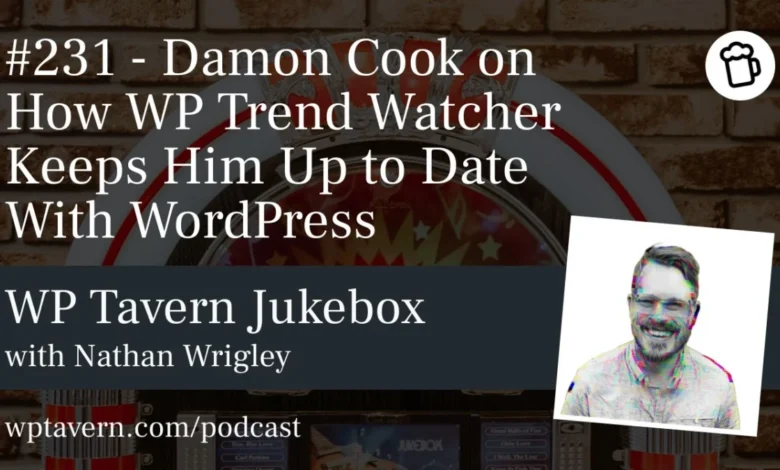
The WordPress ecosystem, a vast digital landscape powering over 40% of the world’s websites, has long grappled with a significant challenge: the fragmentation and sheer volume of technical and community-driven information. For developers, agency owners, and independent consultants, the duty to remain current with core updates, plugin vulnerabilities, and shifting architectural paradigms has become increasingly arduous. To address this, veteran WordPress developer Damon Cook has introduced an open-source tool titled WP Trend Watcher. This project leverages local artificial intelligence to aggregate, summarize, and curate the deluge of information originating from disparate RSS feeds, providing a refined snapshot of the WordPress zeitgeist for busy professionals.
The Problem of Information Saturation
The rapid pace of WordPress development—marked by frequent core releases, the evolution of the block editor, and the constant influx of new plugins and themes—has created a "fire hose" effect for those tasked with maintaining client sites. Historically, professionals relied on a mix of manual RSS feed curation, social media monitoring, and participation in community channels like Slack and Trac. However, as the ecosystem has matured, the number of sources has proliferated while the time available for deep, critical reading has diminished.
Damon Cook, a developer with over a decade of experience within WordPress-centric agencies and the current lead of the freelance practice Noma Digital, identified this bottleneck as a significant professional liability. The challenge is not merely accessing information, but identifying which updates hold long-term significance versus those that are transitory or noise. By creating WP Trend Watcher, Cook aims to automate the initial discovery phase while maintaining a strictly human-centric approach to the final synthesis of information.
Technical Architecture and Local AI Integration
WP Trend Watcher is built on a TypeScript codebase designed for local execution, ensuring that data processing remains under the control of the user. Unlike cloud-based SaaS solutions that send data to third-party servers, this tool operates on the user’s local machine. Cook utilizes applications like LM Studio to interface with open-source Large Language Models (LLMs) capable of running on standard consumer hardware, such as Apple Silicon Macs with unified memory.
The workflow of the tool is deliberate and multi-staged. Initially, the script scrapes a curated list of RSS feeds representing high-authority WordPress news sources. It then filters this raw data for duplicates and relevance. The selected content is passed through an AI prompt specifically engineered to generate summaries tailored for developers and agency stakeholders.
Crucially, the tool does not automatically publish its findings. Instead, it generates a structured report that serves as a foundation for human review. This design choice addresses a common concern in the tech industry regarding the reliability of AI, as it prevents the dissemination of hallucinations or inaccurate interpretations. Cook’s methodology requires him to manually verify the AI-generated summaries against the source articles, ensuring that the "human-in-the-loop" requirement is met before any information is shared publicly.
The Role of Human Curation in an Automated Era
The evolution of AI in 2026 has shifted the conversation from the novelty of generative capabilities to the necessity of curation. As the volume of machine-generated content on the web increases, the value of verified, expert-vetted information has risen. WP Trend Watcher serves as a case study in using automation as a filter rather than a replacement for professional judgment.
By limiting the scope of the AI’s influence to the initial summarization phase, Cook preserves the critical thinking component that is often absent in fully automated news aggregators. This "human-in-the-loop" model ensures that when a professional reads a WP Trend Watcher briefing, they are not merely consuming a summary of an article, but also benefiting from the context provided by an experienced peer. The tool encourages the user to click through to the original source, maintaining the vital link between the summary and the underlying documentation, which is essential for technical accuracy.
Implications for the WordPress Ecosystem
The broader implications of this tool suggest a shift in how community members may interact with information in the coming years. If adopted and refined, such tools could allow for longitudinal tracking of WordPress development trends. By archiving these weekly reports, users could theoretically query their own databases to identify historical patterns in core development, the adoption rate of new features, or the lifecycle of specific architectural proposals.
Furthermore, the open-source nature of WP Trend Watcher invites community participation. As more developers fork the project or contribute new sources to the feed, the collective intelligence of the tool improves. This collaborative approach mirrors the core values of the WordPress project itself, which has always relied on the distributed efforts of its contributors to thrive.
Future Developments and Scalability
As the project matures, there is potential for increased determinism in the reporting process. Cook has expressed an interest in refining the output formatting to ensure that footnotes and source citations are consistently rendered. There is also the prospect of implementing more advanced trend analysis, where the AI is tasked not just with summarizing current news, but with identifying correlations between reports over several months.
This could provide insights into, for example, the delayed implementation of a feature or the shifting market share of specific plugin categories. Such a capability would represent a significant leap forward from simple aggregation to predictive analysis. However, Cook remains cautious about scope creep, emphasizing that the primary objective remains the utility of the tool for the daily professional, rather than the construction of an overly complex analytical suite.
Conclusion
WP Trend Watcher represents a balanced response to the challenges of modern digital information management. By combining the efficiency of local AI processing with the necessity of human verification, Damon Cook has created a system that respects both the user’s time and the need for factual integrity.
For the WordPress community, this project serves as a reminder that while the volume of information will continue to expand, the ability to discern relevant trends remains a human prerogative. As professionals navigate the next few years of WordPress development, tools like WP Trend Watcher may prove essential in distinguishing between the "dross" of a noisy internet and the meaningful updates that shape the future of the web. Interested parties can access the source code on GitHub and review the ongoing weekly reports, which offer a transparent look into how one developer is successfully managing the relentless pace of innovation in the WordPress space.