Ford and Apple Forge Strategic Alliance to Power Next-Generation Electric Vehicle Software and Autonomous Driving Systems

In a landmark shift for the global automotive industry, Ford Motor Company has announced a deep strategic partnership with Apple Inc. to integrate the tech giant’s software into the core of its upcoming electric vehicle (EV) lineup. The $56 billion American automaker confirmed this week that it will leverage Apple’s advanced software architecture to power critical driver-assistance systems and in-car interfaces, marking a departure from the traditional industry practice of maintaining proprietary control over vehicle operating systems. This collaboration, set to debut in vehicles reaching showrooms next year, positions Apple as a central architect in Ford’s autonomous future and signals a significant realignment in the race to define the "software-defined vehicle."
The partnership moves beyond the standard Apple CarPlay integration currently found in over 800 vehicle models globally. While CarPlay traditionally functions as a secondary interface mirrored from a user’s iPhone, Ford’s new initiative involves embedding Apple’s software directly into the vehicle’s hardware. This means that for the first time, Apple’s engineering will play a fundamental role in controlling how electric vehicles operate during autonomous and semi-autonomous driving modes. According to reports from The New York Times, this unprecedented level of cooperation grants the iPhone maker an essential role in the mechanical and digital operations of Ford’s next-generation fleet.
A New Model for Automotive Collaboration
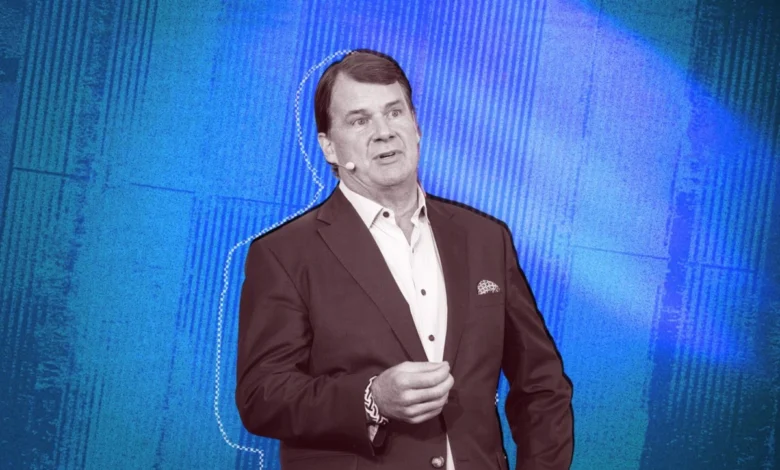
For years, the relationship between Silicon Valley and Detroit has been characterized by a cautious "arms-length" approach. Major automakers have historically been reluctant to hand over the "keys" to their digital ecosystems, fearing that tech giants like Apple and Google would eventually commoditize the car itself and capture the lucrative data and subscription revenue generated by drivers. However, Ford CEO Jim Farley has signaled a change in philosophy, prioritizing speed to market and consumer-facing technological excellence over the costly development of in-house software that often struggles to match the polish of Big Tech products.
"Apple Maps will be embedded in the vehicle, so you don’t have to pay anything extra," Farley stated in a recent interview. "This is one of the most important announcements for Ford." Farley emphasized that by collaborating directly with Apple, Ford can significantly reduce the research and development expenditures required to build sophisticated navigation and driver-assistance features from scratch. This financial pragmatism comes as Ford navigates the high costs of the EV transition, where the company’s "Model e" electric division has faced multi-billion dollar losses in its efforts to scale production.
The collaboration has already seen Apple and Ford engineers working side-by-side to refine self-driving features. Unlike previous iterations of CarPlay, the new software will be native to the vehicle, allowing drivers to access advanced features without the need for an iPhone to be present or connected. This "built-in" approach ensures that the vehicle’s sensors, cameras, and driving logic are seamlessly synchronized with Apple’s interface.
The $30,000 Electric Pickup: The First Test Case
The flagship project for this new software integration is a highly anticipated, affordable electric pickup truck scheduled for release next year. This project is being overseen by a specialized "skunkworks" team within Ford, led by Alan Clarke, a former high-ranking Tesla executive. The choice of Clarke to lead this initiative underscores Ford’s intention to combine Tesla’s lean engineering approach with Apple’s user-experience expertise.
Ford aims to price this new electric pickup at approximately $30,000, a move designed to disrupt a market currently dominated by high-priced luxury EVs. By integrating Apple’s software, Ford hopes to offer a premium tech experience at a mass-market price point. The success of this vehicle is seen as critical to Ford’s broader strategy of making EVs profitable. The company has recently pivoted away from larger, more expensive electric SUVs toward smaller, more efficient platforms that can compete with low-cost Chinese manufacturers and Tesla’s entry-level models.
Industry Divergence: The Great Software Divide
Ford’s decision to embrace Apple stands in stark contrast to the strategies adopted by its primary competitors. The automotive industry is currently split into two camps regarding software sovereignty. On one side are the "Integrationists," like Ford, who believe that partnering with established tech ecosystems provides the best user experience and reduces development risk. On the other side are the "Sovereignists," such as General Motors (GM), Tesla, and Rivian, who insist on building and controlling their own software stacks.
General Motors recently made headlines by announcing it would phase out Apple CarPlay and Android Auto in its future EVs, replacing them with a proprietary system developed in collaboration with Google but controlled by GM. The rationale behind GM’s move is the capture of user data and the potential for "software-as-a-service" (SaaS) revenue, such as monthly fees for advanced navigation or performance upgrades.
Tesla and Rivian have never offered Apple CarPlay, opting instead to build highly integrated, closed-loop systems that allow them to push over-the-air updates and control every aspect of the driver’s digital life. By choosing the Apple path, Ford is betting that consumers value the familiarity and reliability of the Apple ecosystem more than they value a unique, manufacturer-specific software interface.
The Economic Power Balance
The partnership also highlights the staggering disparity in market valuation and R&D budgets between the tech and auto sectors. At the time of the announcement, Apple’s market capitalization hovered around $4.7 trillion, making it one of the most valuable entities in human history. In contrast, Ford’s market cap stands at approximately $56 billion, while General Motors sits at roughly $72 billion.
For Apple, this partnership provides a strategic "Plan B" following the reported cancellation of "Project Titan," its long-rumored internal effort to build a branded Apple Car. Instead of taking on the low-margin, high-complexity task of manufacturing physical vehicles, Apple is now positioning itself as the "Intel Inside" of the automotive world—the essential software layer that powers the hardware of traditional manufacturers.
Eddy Cue, Apple’s Senior Vice President of Services and Health, noted that while Ford is the first major partner for this specific level of deep integration, Apple intends to offer these capabilities to other automakers. This suggests a future where Apple’s iOS could become a dominant operating system for the entire automotive industry, much as it is for the smartphone market.
Timeline and Technical Implications
The rollout of the Apple-powered Ford systems is expected to follow a rigorous timeline:
- 2024: Finalization of the "skunkworks" electric platform and software beta testing.
- 2025: Launch of the $30,000 electric pickup truck featuring the first generation of the embedded Apple software.
- 2026 and beyond: Expansion of the Apple software suite across Ford’s entire battery-electric vehicle (BEV) lineup, including future iterations of the Mustang Mach-E and F-150 Lightning.
Technically, the integration will allow Apple’s software to access vehicle-specific data such as battery state-of-charge, tire pressure, and climate control settings. This level of access is necessary for Apple Maps to provide accurate EV routing, which includes real-time charging stop suggestions based on the car’s current energy consumption. Furthermore, the integration with Ford’s driver-assistance hardware suggests that Apple’s machine learning algorithms will assist in processing sensor data for features like lane-keeping, adaptive cruise control, and eventually, more advanced hands-free driving capabilities.
Strategic Analysis: Risks and Rewards
The implications of this deal are profound for the future of Ford. By outsourcing its software core to Apple, Ford risks becoming a "white-label" hardware manufacturer, potentially losing the ability to differentiate its brand through digital innovation. There is also the question of data ownership: if Apple controls the software, who owns the valuable data generated by the driver’s habits, locations, and preferences?
However, the rewards could outweigh the risks. Ford has struggled with software glitches in its recent vehicle launches, leading to costly recalls and diminished consumer trust. By leveraging Apple’s world-class software engineering, Ford can virtually eliminate "software lag" and buggy interfaces, which have become a top complaint among modern car buyers. Moreover, the $30,000 price target for the new pickup truck is only achievable if Ford can find massive efficiencies in its development cycle. Partnering with Apple provides a shortcut to a "best-in-class" digital experience without the multibillion-dollar overhead of a dedicated software division.
As the automotive industry moves toward an autonomous, electric future, the Ford-Apple partnership serves as a bellwether. It suggests that for traditional automakers to survive the disruption brought by Tesla and Chinese competitors, they may need to surrender their digital autonomy in exchange for the technological firepower of Silicon Valley. Whether this move secures Ford’s future or cedes too much power to Apple remains the most critical question facing the company as it heads into 2025.